
AFRICA; THE NEXT OIL BONANZA? – Letter from South Africa
Sat 11:04 am +00:00, 2 May 2026
The Middle East is on fire. Ongoing constricted global oil supply lines might elevate the Gulf of Guinea to a new strategic importance.
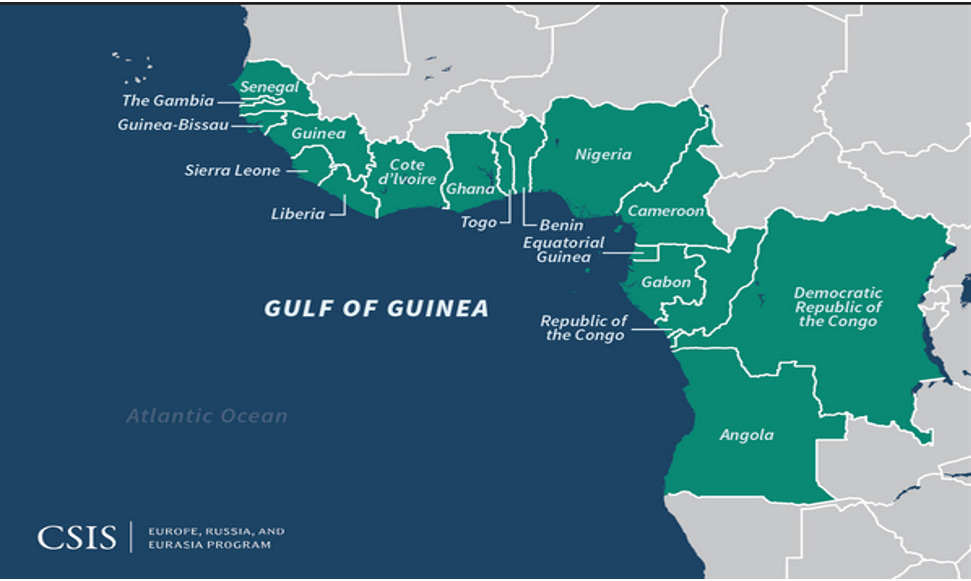
This period of truce in the Middle East allows a look at alternative sources of hydrocarbons and Africa has a unique opportunity to develop its hidden resources while Iran has impacted the Gulf states’ capacity to respond. The Iranian strategy is a gambit designed to re-order global energy flows through the Strait of Hormuz. The consequences have reverberated far beyond the Gulf.
China and Russia have remained effectively neutral but only as interested observers. Approximately 40% of China’s oil passes through the narrow waterway, and 20% of its supply originates from Iran itself. If Beijing allows the strait to be sealed, the consequences would not only be for China, but for Japan and India as well, whose economies could grind to a halt. However, China, and to a lesser extent Russia, have growing investments in Africa for good reason.
The Iranian-backed Houthi forces have not yet moved toward closing the Red Sea corridor, effectively cutting off oil shipments to Europe via the Suez Canal, when both the eastern and western arteries of global oil supply are constricted. In this case, the question remains, will the Gulf of Guinea, long considered peripheral, move to the centre of global geopolitics?

Nigeria possesses one of the largest energy reserves in Africa and might become a country of particular strategic interest as an alternative source of oil for the coalition opposing Iran. However, Nigeria is not alone. Angola, Ghana, Equatorial Guinea, and Cameroon all sit atop significant reserves. Collectively, the Gulf of Guinea represents one of the most under-utilised yet strategically vital energy hubs in the world.
For decades, this region has been overshadowed by the Middle East, but the combination of rising instability in the Persian Gulf, and renewed attention to African energy potential, suggests that the Gulf of Guinea could move from the periphery to the centre of global energy politics. Thus, Nigeria would find itself in a classic Catch‑22 situation.
On the one hand, it has the opportunity to leverage its oil reserves to become a global pivot and a supplier capable of stabilising markets in times of crisis. On the other hand, it risks becoming a battleground for proxy wars, sabotage, and geopolitical manipulation. History offers sobering lessons: resource‑rich states often become arenas for great‑power competition.
The countries aligned with Iran will almost certainly attempt to disrupt any effort to channel Nigerian oil toward coalition forces. Piracy in the Gulf of Guinea, insurgency in the Niger Delta, and covert operations by external actors could all be deployed to destabilise the region and prevent it from becoming a reliable alternative to Middle Eastern supply.
Nigeria’s position is precarious. Its oil reserves are vast, but its infrastructure is fragile. Pipelines remain vulnerable to sabotage, refineries are outdated, and governance challenges persist. Corruption, bureaucratic inefficiency, and political instability have long undermined Nigeria’s ability to capitalise fully on its resource wealth. Yet, in moments of crisis, opportunity often emerges. If Nigeria can stabilise its energy sector and, even more importantly, secure its maritime routes, it could transform its geopolitical standing. The Gulf of Guinea, once dismissed as peripheral, could become a cornerstone of global energy diversification.
The stakes extend beyond Nigeria. Angola, Namibia, and South Africa’s deepwater reserves, Ghana’s emerging offshore fields, and Equatorial Guinea’s LNG potential collectively form a strategic buffer against Middle Eastern volatility. But without regional cooperation, these opportunities may be squandered.

Maritime insecurity, weak institutions, and external interference threaten to fragment rather than unify the Gulf of Guinea’s energy potential. The coalition opposing Iran must therefore recognise that securing new routes and Nigerian oil is not simply a matter of contracts and cargoes; it is a matter of geopolitics, requiring investment in security, infrastructure, and governance.
Nigeria’s energy future embodies both promise and peril. It could become a stabilising supplier, anchoring the Gulf of Guinea as a credible alternative to Middle Eastern oil. But if it succumbs to sabotage, corruption, and geopolitical manipulation it will reinforce volatility rather than reducing it. Nigeria’s decisions will be pivotal. In the unfolding drama of global energy politics, the Gulf of Guinea may prove to be a decisive stage.
In the broader picture, if Hormuz remains effectively closed and the Houthis shut down the Red Sea corridor, Europe will be desperate for alternatives. North Sea reserves are dwindling, and reliance on Russia is politically untenable. The only viable option is West Africa. Nigeria’s Bonny Light crude, prized for its low sulphur content, would suddenly become indispensable. Angola’s deepwater reserves could be tapped with urgency. Ghana’s Jubilee field would gain new prominence.
However, this lifeline will not be uncontested. Russia, though aligned with Iran, may paradoxically benefit from higher oil prices. China, somewhat reliant on Gulf oil, may attempt to secure West African supplies, leveraging its Belt and Road investments. As early supporters of the BRI, South Africa, and many other African countries have been benefiting from cooperation with China in many areas:
The Gulf of Guinea is already plagued by piracy, making it one of the most dangerous maritime zones in the world. If global powers begin to rely on its oil, the stakes will rise exponentially. The US Africa Command may expand its presence, and China, already invested in African ports, may deploy naval assets to secure its supply lines.
West Africa as a whole should prepare. Ghana, with its emerging oil sector, should secure its fields; Angola should leverage its deepwater reserves; Equatorial Guinea and Cameroon should coordinate with Nigeria to ensure maritime security. The Economic Community of West African States (ECOWAS) must rise to the occasion, transforming from a regional bloc into a strategic actor on the global energy chessboard.
Iran’s gambit in the Strait of Hormuz might eventually re-order global energy flows, and the Red Sea corridor could be shut down. Europe, India, and Japan would be forced to look southward, toward the Gulf of Guinea. Nigeria, Angola, Ghana, and their neighbours would suddenly become indispensable, but this invites the collective West to contest the Gulf of Guinea which may become the next battleground of the global powers. Sources
- Edited extracts from Adamu B. Garba II, Executive Chairman of IPI Group Limited https://www.ipi-group-ltd.com/about-ipi-group/#about-us
- South Africa’s oil and gas outlook 2021-34 https://www.oganalysis.com/industry-reports/south-africa-oil-and-gas-market
FORCE ALONE OFFERS LIMITS TO GLOBAL HEGEMONY

A durable sphere of influence has never been built on coercion alone since lasting hegemony requires that smaller nations see tangible benefits in aligning with the dominant power, not to merely fear the consequences of defiance. Economic integration, infrastructure investment, technology transfers, and institutional partnerships create vested interests in stability. These give regional states a reason to cooperate beyond the immediate threat of force.
The current US strategy offers none of these positive inducements. Instead, Washington has chosen to rely on the vulnerability of its neighbours, none of whom possess nuclear weapons or mutual defence pacts with nuclear armed powers outside the hemisphere. That vulnerability is real, but it does not produce compliance over the long term. It produces resentment, evasion, and a determined search for external alternatives.
The absence of military parity accentuates the anarchy dynamic in an International Relations structure where the strongest states rule through power and fear. This recent article asks: “Is Lula Only Now Discovering That Latin America Needs Stronger Defenses After He Abandoned Venezuela To Its Fate?”.
It is becoming clear that the fundamental weakness of the US military strategy is that it cannot outcompete its rivals on economic terms. A Marshall Plan for Latin America would require hundreds of billions in grants and low-interest loans, precisely what no current US administration, Republican or Democratic, has been willing to propose.
China, by contrast, has built ports, railways, and power grids across the region and other continents like Africa, not out of charity but as long-term geoeconomic positioning. China, BRICS+, and other non-hemispheric powers offer Latin American and Caribbean nations something Washington currently refuses to provide, which is genuine choice in trade, investment, and development finance. Thus, multipolarity has endowed the region with vital infrastructure, and these relationships are built on geoeconomics, not hybrid war or military capture.
The United States, has responded to this competition by demanding that hemispheric nations sever their ties with certain states like China, Russia, Iran, and Cuba among them, using the capture or killing its leaders, naval blockades, hybrid war and conventional war as instruments of persuasion but does not offer anything substantive in return nor does it make up for what these states are forsaking.
This is not market competition but the systematic elimination of alternatives through force and lawfare. When a great power must kill or kidnap a head of state to make its point, it is confessing that it cannot win in the economic contest. The multipolar reality of the 21st century makes this strategy even more self-defeating.
Unlike the 1990s, when the Washington Consensus faced no serious ideological or financial rival, today’s Latin America has genuine room for manoeuvre. China, the Global South, and other global actors provide alternative sources of capital, technology, and diplomatic support. Even Argentina, often presented as a model of US-aligned neoliberal governance under Javier Milei, continues substantial trade and financial transactions with Beijing since following the US lead had only offered it impoverishment.
This is not ideological defiance but a pragmatic balance of the natural response of any sovereign state that sees one great power resorting to coercion while another offers profitable partnership. The more the United States tightens its military grip on the hemisphere, the more it incentivises regional states to accelerate their relationships with non hemispheric powers as a counterweight. The demonstration effect of capturing Maduro and blockading Cuba may produce submission in the short term, but it may also produce a quiet and relentless diversification of economic ties away from Washington.
There is a deeper contradiction at the heart of this approach, which is the belief that the United States has no rival capable of imposing costs on it within the hemisphere. Yet a strategy that relies on permanent blockade, periodic capture, and continuous threat requires an endless commitment of naval assets, intelligence resources, diplomatic capital, and domestic political will.
The American public has historically shown little appetite for open ended military adventures in the hemisphere, and the costs of maintaining a coercive order from Alaska to Guyana will mount with each new crisis, exacerbating regional poverty. This possible US overreach, in turn, creates its own checks in the form of domestic exhaustion, international isolation, and the emergence of balancing coalitions.
The logical endpoint of this military approach is not only a restored unipolar order but a neo feudal and neocolonial arrangement where hemispheric nations become quasi unincorporated territories, their economic policies aligned not to their own development but to US strategic imperatives. That arrangement would cancel the sovereign freedom that makes market capitalism meaningful as real capitalism requires the ability to choose partners based on price, quality, and developmental benefit as China demonstrates.
The current US strategy offers a coercive binary choice, aligned with us or face blockade and capture, which is not market competition but the visible US fist guiding every transaction. No system based on that fist has ever proven durable.
Neo-Feudal systems collapse because they offer no upward mobility and no consent and create too much instability. Empires built on pure coercion fragment because the costs of repression eventually exceed the benefits of dominance.
The United States can certainly maintain a military fist over the hemisphere for a time. It can capture leaders, blockade islands, and intimidate governments. But it cannot build a lasting unipolar order on those foundations alone. A durable sphere of influence requires economic leadership, not just military dominance. It requires that neighbours become partners, not subjects, especially in this age. And it requires the willingness to compete on price and quality, not on the threat of force.
Until Washington is capable of competing, its project of hemispheric restoration will remain what it has always been, a brittle and costly fantasy that will be outlasted by the patient geoeconomics of its rivals. Source
- The United States can certainly maintain a military fist over the hemisphere for a time https://www.globalresearch.ca/coercion-not-secure-unipolar-western-hemisphere/5924006