
Old England was not something we “lost” – it was stolen from us. And the task of the next few generations will be to take it back.
Mon 9:41 am +00:00, 27 Apr 2026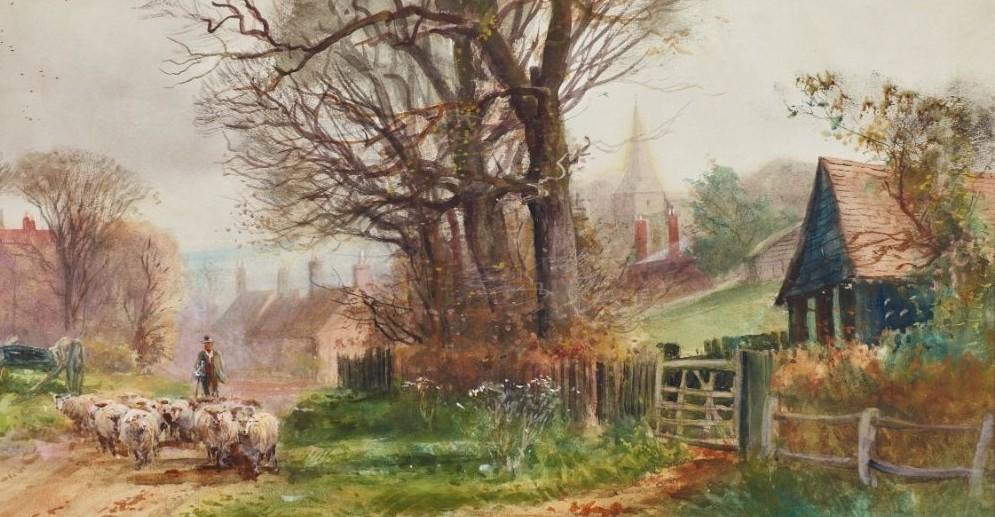
Source: https://winteroak.org.uk/2026/04/27/the-world-they-stole-from-us/
I suspect that most people living in England today would find it rather difficult to picture what life there would have been like before the so-called Industrial Revolution three centuries ago.
The country was the first in the world to be industrialised, in a ghastly experiment later rolled out everywhere else, and we have little collective memory of how things used to be.
Contemporary English residents might even have a negative view of the rural existence that still prevailed in the 1600s.
As Peter Laslett observes in his classic work The World We Have Lost: “So sudden and complete has been the desertion of the countryside for the cities in our recent history, that it was perhaps natural for people to assume that those who remained behind were, and are, the inferior people – in aptitude and intelligence, and presumably therefore in what has been called moral calibre”. [1]
He says we have been taught to think that life in those times would have been characterised by “the starving peasantry”.
“Perhaps ‘starving’ should not be taken to mean actually dying of lack of food; rather badly fed and clothed, wretchedly housed in hovels, miserable in general”. [2]
I would add that pre-industrial folk, particularly from the Middle Ages, also seem to always be depicted by our culture as being covered in mud!

But, as Laslett admirably shows, such modern prejudices are based on a complete misunderstanding of what England was really like before the early years of the 18th century.
For instance, the labouring poor did not live in hovels but in cottages which “could, it seems, be put up new for less than two years of the annual wage of a labourer”. [3]
Neither did people live crammed together in multi-generational households, as was the case in other countries such as Russia, where a survey of one early nineteenth-century settlement revealed that 73 per cent of homes had multiple households and 65 per cent contained three generations or more. [4]
Laslett remarks: “There is an astonishing contrast with English households with only five per cent… It could be said in fact that the illusion about the large-scale kin-complex household in English society has arisen because the familial past of English-born and English-speaking peoples has been supposed to be identical with the familial past of those born within the confines of the present day Russia and her associated states”. [5]
This traditional practice was in fact part of the self-regulation of the population size which helped make those stories of “starving peasantry” untrue.
Young married couples did not live in their parents’ homes but would start a new household – if they were unable to do so, they would put off marrying to a later date and perhaps never get married at all. [6] 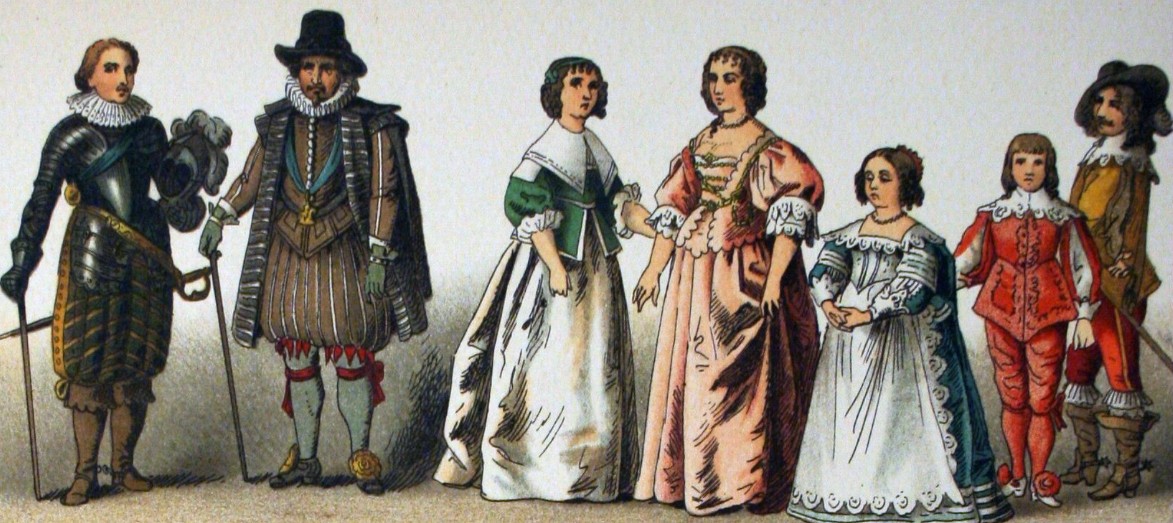
With the English morals of the day very much opposed to children being born out of wedlock, this had the effect of limiting population growth during less prosperous periods.
Writes Laslett: “Marriage, and particularly first marriage, we must repeat, was an act of profound importance to the social structure. It meant the creation of a new economic unit as well as of the lifelong association of two persons previously separate and caught up in existing families.
“It gave to the man full membership of the community and to the woman something to run; she became mistress of a household – as the French put it maîtresse de la maison. A cell was added to society, in the town as well as in the country”. [7]
Another natural limit to an excess of children was provided by the protracted breastfeeding that was normal for English mothers.
Laslett explains: “The much longer period of suckling babies inhibited conception to a marked degree. It was this more than anything else which ensured that the numbers of children a woman was likely to have was on average only just over seven, even if she married as early as was socially acceptable, quite late in her teens, shall we say, and both she and her husband lived together until she reached the end of her childbearing span.
“Because marriages were often broken by death, and above all because they were usually entered into at later ages, the actual number of children per marriage was considerably under seven, just over four in fact”. [8] 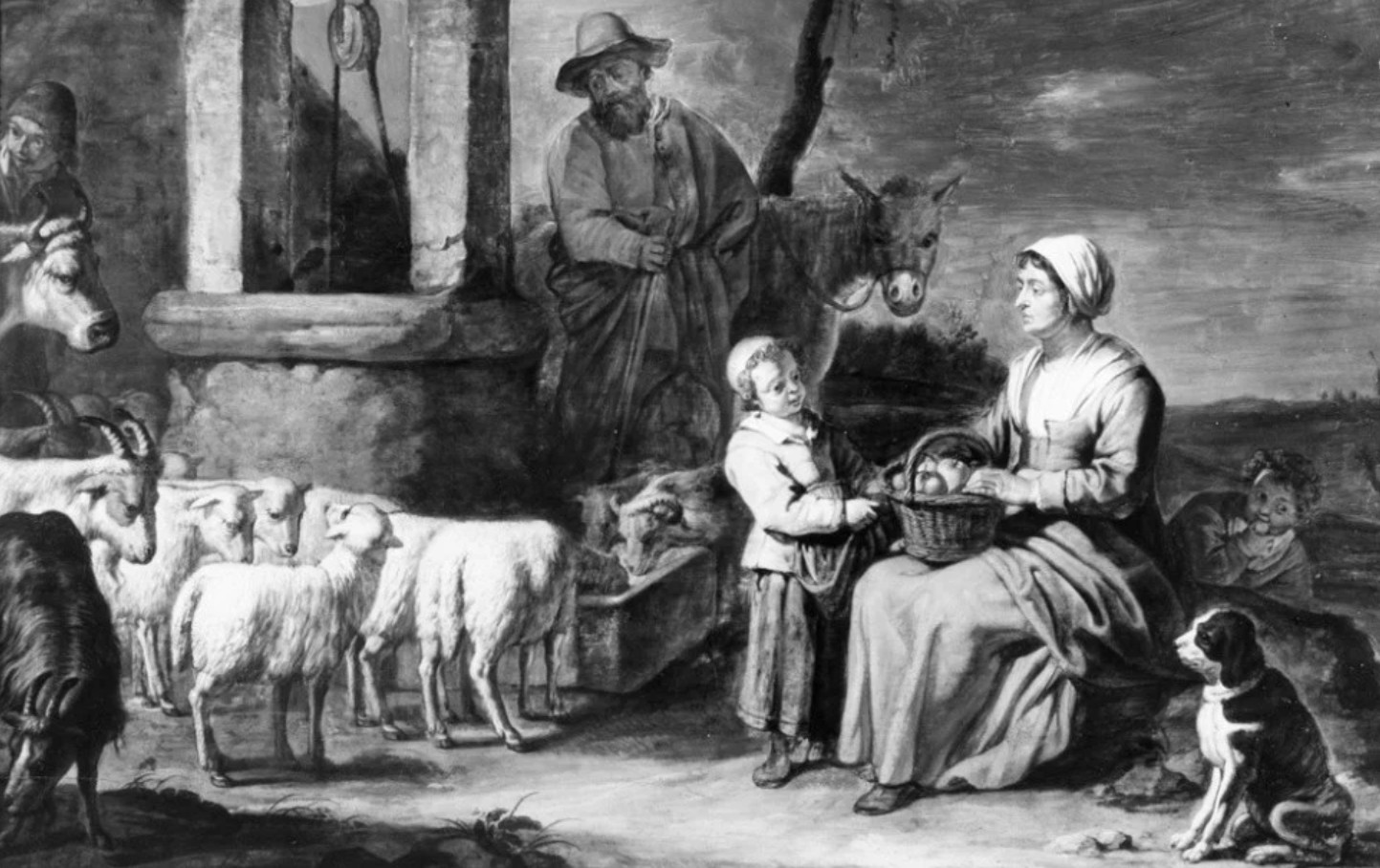
Although statistics present a lower life expectancy than today, this did not mean that individuals did not survive into ripe old age, says Laslett.
He cites an account by the philosopher John Locke who in 1680 met, near Oxford, a woman called Alice George, who told him she was 108 years old, although this may have been an exaggeration.
She had worked all her life as a farm labourer, had raised a family, was evidently in good health and now lived mostly on bread, cheese and ale, plus some sherry when she could get hold of it. [9]
When people did find it difficult to feed themselves in 17th century England, it was not because of a shortage of food per se, states Laslett.
“Not having enough money to buy food, because it was so expensive, because incomings were so low, even because taxes had to be paid, was probably as important as the dearness of provisions itself; perhaps more so”. [10]
One negative aspect of pre-industrial England that is not a myth is that very few people were able to read and write and thus to participate in political life.
However, this was not an inevitable consequence of rural living but, it would appear, a condition deliberately imposed on ordinary English folk by a ruling class that wanted to keep them in their place.
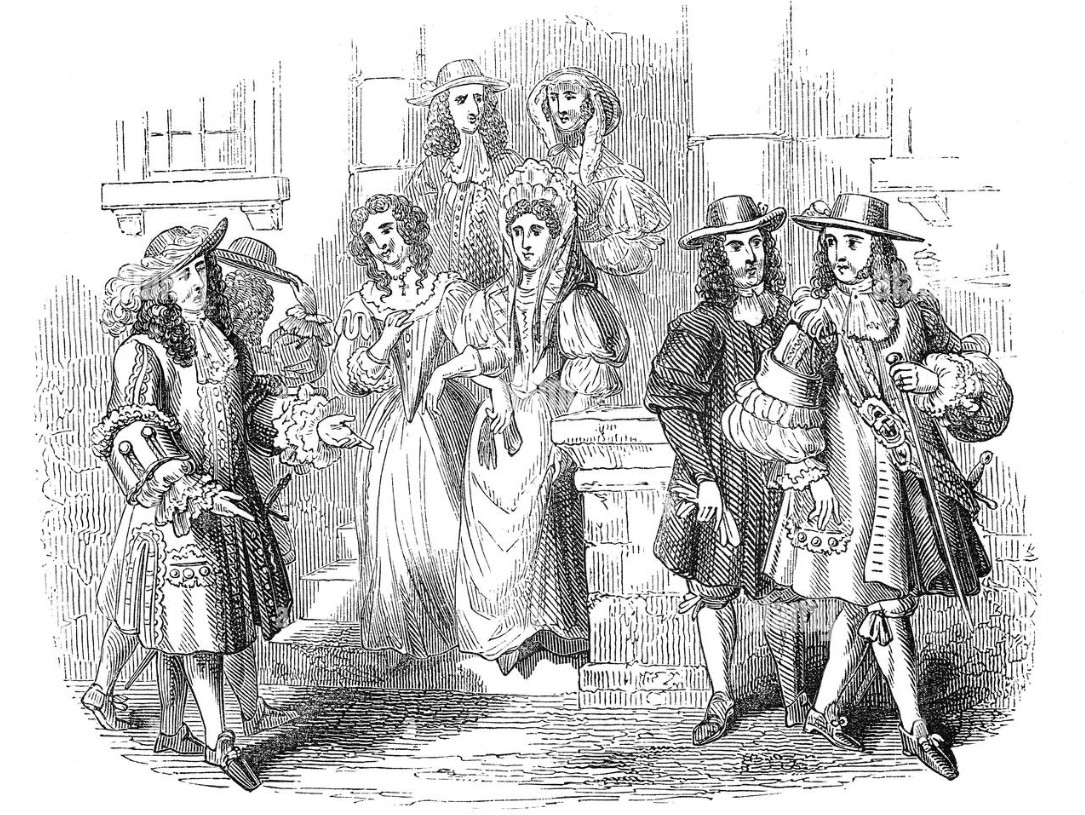
Laslett explains: “In Sweden, a poorer country and not to industrialize until much later than England, the whole population could sign their names by the early eighteenth century.
“Those who have studied the matter in England report on a repeated fear that educating the masses on too large a scale might be a threat to social stability, that is to the supremacy of the political élite”. [11]
However, when the need arose, the “lower orders” did find a way to get their message across in writing, even if their spelling was wayward.
Laslett borrows from E.P. Thompson’s The Making of the English Working-Class to quote the text of a note sent by a Luddite rebel to a clothier in Gloucester in 1803.
This reads: “Wee Hear InFormed that you got shear in mee sheens [shearing machines] and if you Dont Pull them Down in a Forght Nights Time Wee will pull them Down for you Wee will you Damd infernold dog”.
Laslett comments: “Behold a barely literate man, the lilt of his ordinary speech showing through his attempt to make himself understood in writing, struggling and just succeeding in expressing his passionate resentment.
“We can look on it as a sign of the terror which the coming of the factories and the machines struck into the hearts of ordinary people”. [12] 
We should note Laslett’s statement that the country in the 17th century was “no paradise, no golden age”. [13]
This is partly, I would say, because by that time England was already on a slippery slope away from freedom which might be traced back at least to 1066 when it was conquered and occupied by the Normans, with financing from the Jewish money-lenders of Rouen, [14] and a new ruling class was imposed which saw itself as entirely separate and superior to ordinary English men and women.
The English Civil War, Cromwell’s regime and then the so-called Glorious Revolution of 1688 were all part of the road to global imperialism and to the industrialism that went with it.
Laslett relates that in 1688 there were an estimated “2000 families of ‘Eminent Merchants and Traders by Sea’ in England”. [15]
He adds: “Perhaps the intensification of trade and commerce could be called divisive, because of the differing relationships it presumably brought with it, and because of the operation at long last of an institution entirely alien to the traditional structure, the joint-stock company.
“The new principle of economic organization was present before 1700; the East India Company and the Bank of England had already set up the model for those institutional instruments which were to bring into being ‘business’ as we know it”. [16]
He says “the amazing growth of the City of London” was accompanied by an expanding corporate state apparatus as “industrial and capitalist” England took shape. [17] 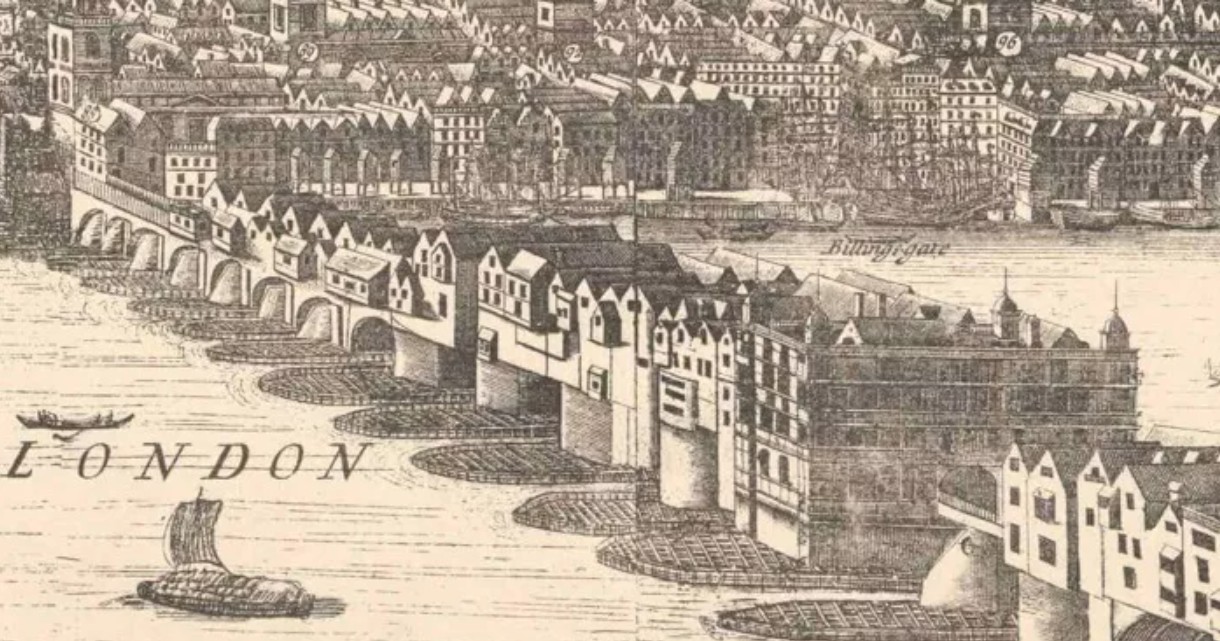
“London even then was a city on an industrial scale, though industry, as we use the word, did not exist there… By the end of the pre-industrial era London was undoubtedly the biggest city in Europe and, if men had but known it, with only Tokyo as its rival as the biggest city in the world, it was still smaller than the Rome of the ancients, which was the largest city men then knew about.
“By the end of the seventeenth century more than one English person in ten lived in London, which had actually topped the half-million mark”. [18]
“The City of London was undoubtedly a community of its own; so extraordinarily rich and powerful did it become in the final generations of the old order that it is understandable that men sometimes described it as a state within a state…
“Life in London was different from life elsewhere and life in the richest London families very different”. [19]
At the same time, the English “highlands” of the west and the north had already been attracting a growing population “in response to early industrial activity, especially the making of wool and cloth”. [20]
And, in general, says Laslett, “mining, building, shipyards, saltworks and a whole list of other forms of manufacture certainly brought together dozens and sometimes scores of workers and placed them under some sort of discipline.
“Contracting for military and naval operations, turning out tapestries and other articles of refined manufacture needed for monarchical and aristocratic purposes led to the establishment of royal workshops all over Europe, and in England to such institutions as the Mineral and Battery Works set up by Queen Elizabeth”. [21]
An entity that has been described as England’s first factory appeared shortly after the far-from “glorious” so-called “revolution”.
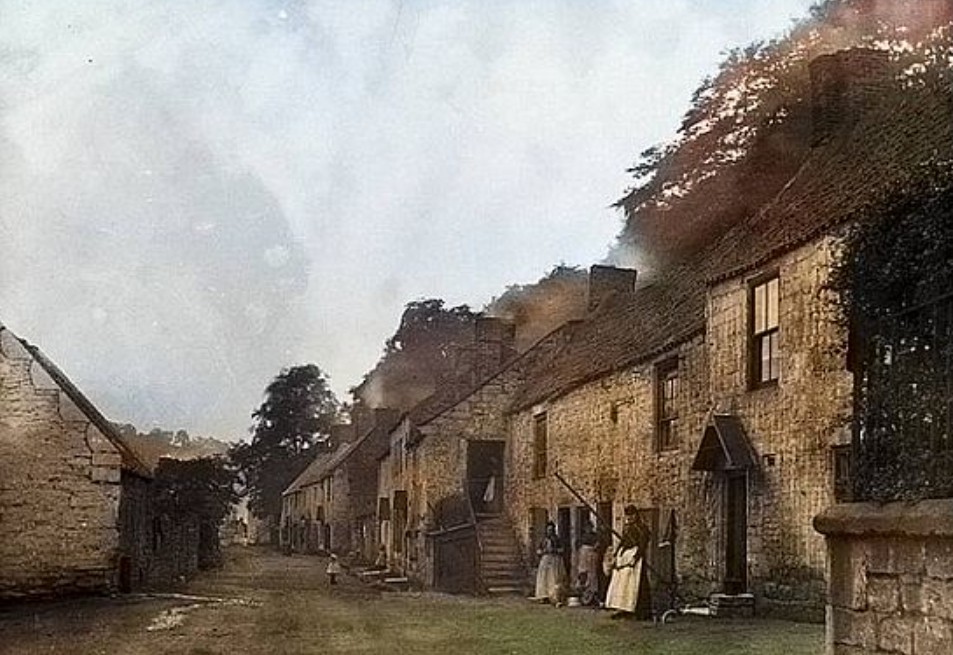
“Winlaton iron mill at Swalwell in the county of Durham, where ironmaster Ambrose Crowley began work in about 1691, turned out metal for the navy in William III’s war with the French.
“Within a few years Crowley was literally employing workmen by the hundred. The ‘Law Book’ which he left behind makes it evident also that many of those workers were banded together in one building; certainly they were treated by him as a single work force, a platoon in an industrial army”. [22]
17th century England also saw the emergence of what Laslett calls “the proto-industrial household”.
He writes: “Here a whole household, sometimes with its own servants and apprentices, was set on work from outside, by a capitalist entrepreneur, who supplied the materials, bought the products and might even own the looms and spinning wheels, which he hired to workers.
“Since an individual capitalist might employ, partially if not wholly, several domestic units, dozens or even scores, and since he organized them in a sense for collective production, such a man can be said to have been an industrialist”. [23]
“Proto-industrial households were in a position markedly different from that of the village craftsman supplying local needs, if only because their products were sold in distant markets and on a very large scale.
“This put them at the mercy of international market fluctuations as well as the self-seeking policy of capitalist entrepreneurs”. [24]
A further important degradation of English life and liberty had already been inflicted by the earliest Enclosures – the privatisation, or theft, of what had previously been common land available to all, by what Laslett imagines as “some grasping or enterprising Tudor landlord”. [25] 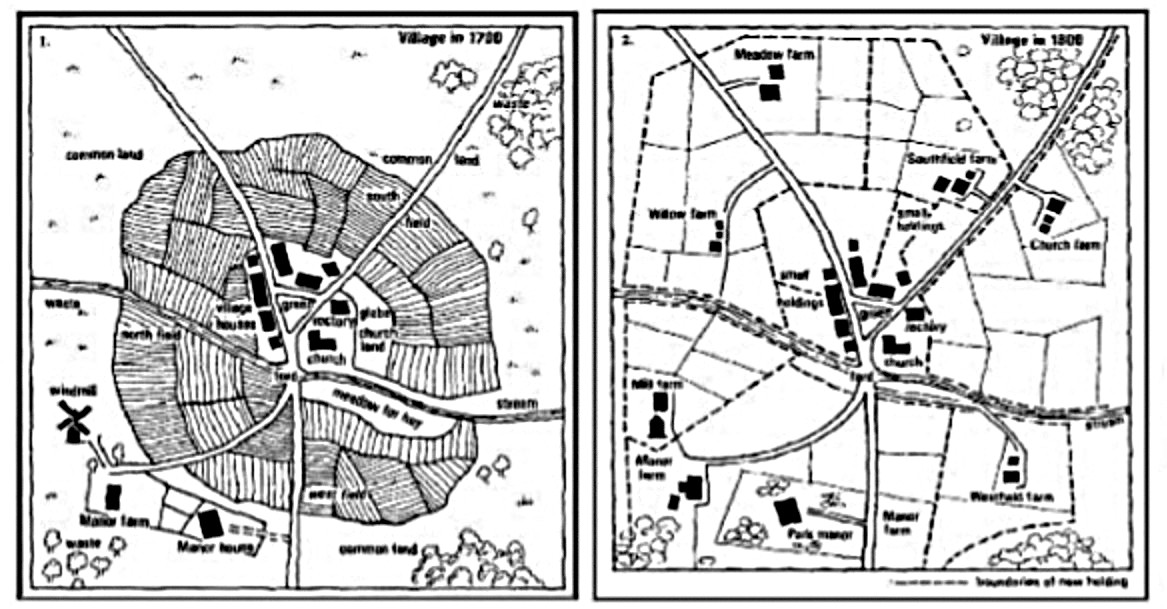
He explains: “To enclose a village meant that the inhabitants had to abandon their co-operative customs, and break up their great open fields into little hedged plots, one single piece to each landholder and, of course, the largest by far to the landlord himself…
“Enclosure might impoverish the smaller landholders, who found themselves disposing of their allocated plots, too small to be viable without the now abolished ancient rights. Henceforth they would be labourers living by selling their work time on the market”. [26]
While all of this, together with the class supremacism, the legally inferior status of women and the stifling power of the Church, meant that England in 1700 was indeed no “paradise”, I think that the way that life was lived then provides us with some important inspiration as to how we might one day organise ourselves.
We will never go back to a pre-industrial world – only the post-industrial is now a possibility – and there is no reason why we should have to, or want to, reproduce aspects of that society that no longer appeal to us.
But I am sure I am not alone in being attracted by the idea of a decentralised England rooted in the countryside.
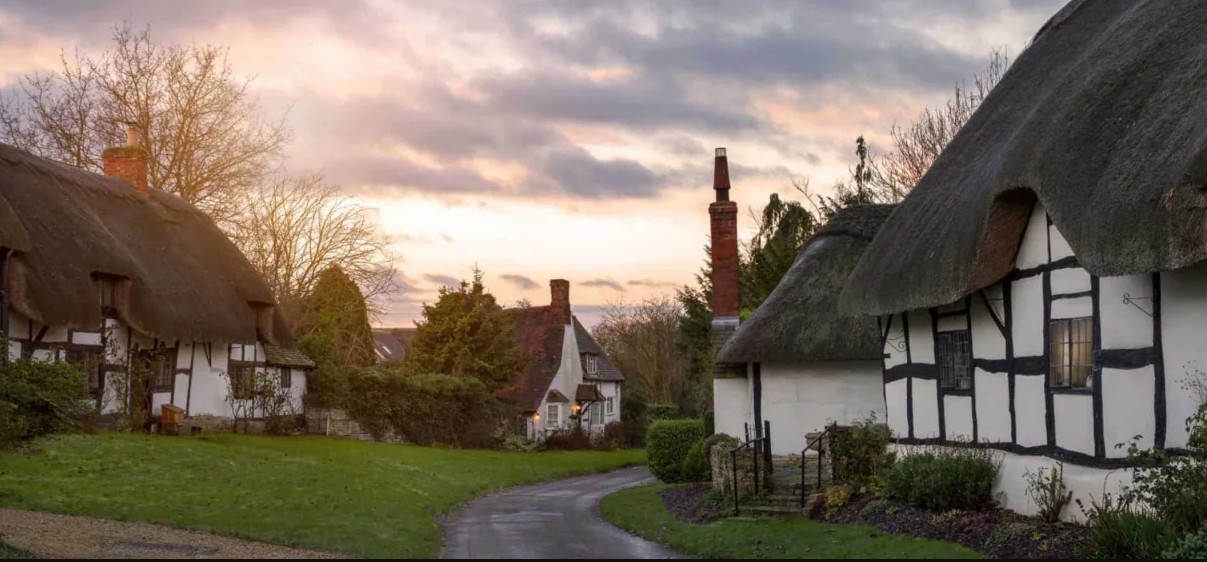
Laslett stresses “the tiny scale of life in the pre-industrial world”, [27] including the small groups in which nearly everybody spent their lives – “everything physical was on the human scale”. [28]
He also describes a warmth to society that is often hard to find in a modern period in which “social distancing” is not confined to periods of pseudo-pandemic.
“In the pre-industrial world there were children everywhere: playing in the village street and fields when they were very small, hanging round the farmyards and getting in the way, until they had grown enough to be given child-sized jobs to do; thronging the churches; forever clinging to the skirts of the women in the house and above all crowding round the cottage fires, just as they still do in Malawi, say, or Kenya, or in Pakistan”. [29]
There were no factories as we know them – those “dark Satanic Mills” that William Blake (1757-1827) was later to witness taking over his country. [30]
Laslett writes: “We can say with confidence that large-scale undertakings for the purpose of manufacturing goods are conspicuously lacking in all descriptions of life in England before the late eighteenth century”. [31]
“Urban, mass living in an environment entirely man-made, in no way machine-made” was restricted to London. [32] 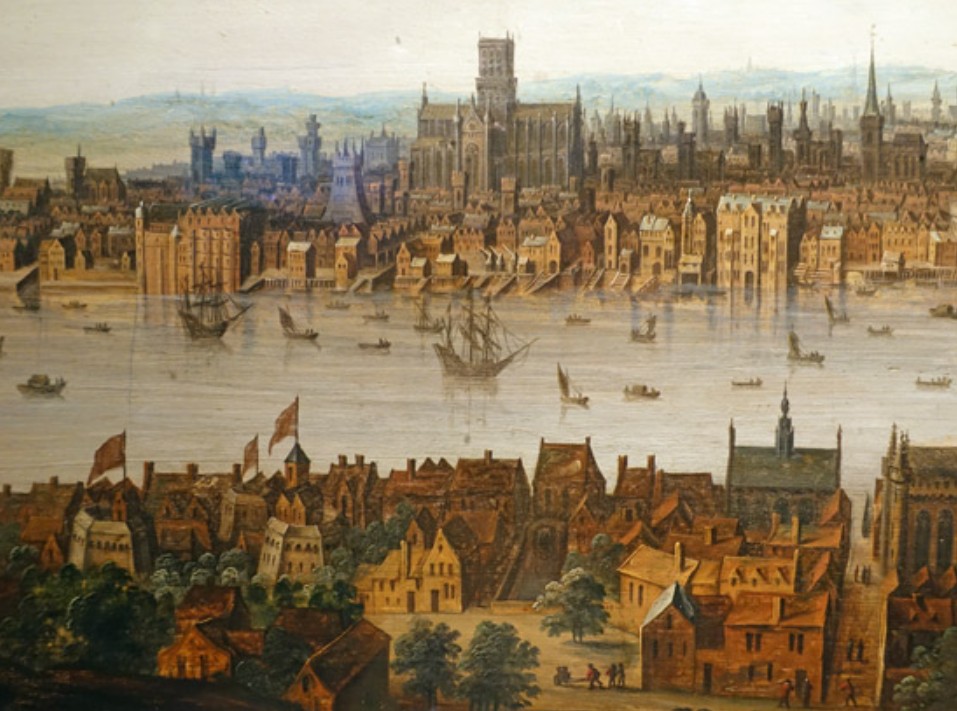
“When Elizabeth reigned, Charles and Cromwell fought the Civil War, and William and Mary came to the throne after the Glorious Revolution, well over four-fifths of the whole people lived in villages”. [33]
If you have ever wondered, when visiting the magnificent medieval city centres of Italy, Spain or France, why similar relics cannot be readily found in England, it is perhaps because they never existed.
Laslett explains that the minor French provincial capital of Aix-en-Provence had a population of 27,500 in 1695.
Equivalent English county centres, and cathedral cities, Lichfield in Staffordshire and Chichester in West Sussex boasted only 2,800 and 2,500 inhabitants respectively in the same period [34] – they were only the size of the French village I live in today.
This traditional English model seems to me a good basis for a healthy post-industrial world – it is also, by the way, the “villagism” of the Indian organic radical inspiration Bharatan Kumarappa. [35]
Laslett writes: “When we talk of England as being almost entirely a landscape of green meadows and wide-open fields with village communities scattered amongst them, it is a network rather than a scattering which we have in mind.
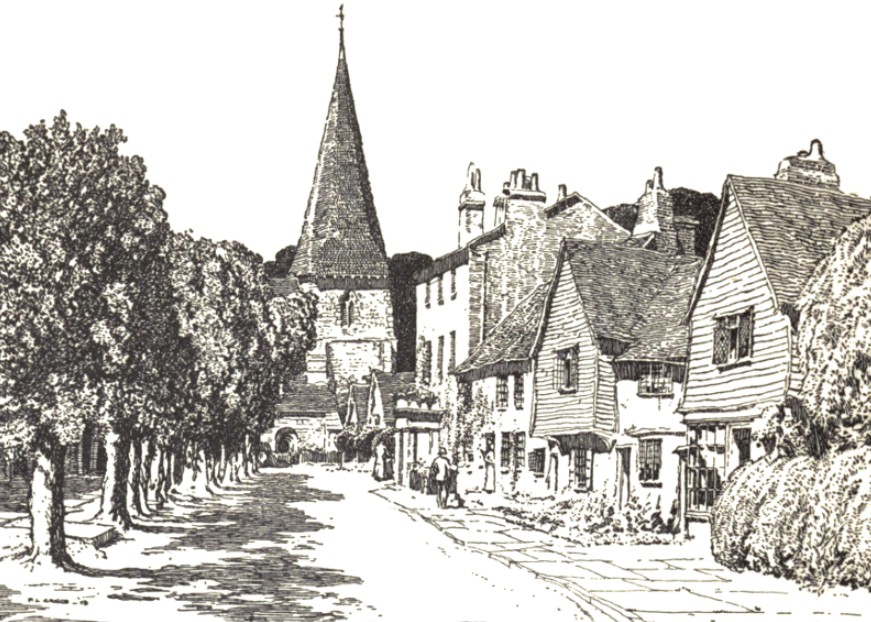
“The very large numbers of small settlements in which so much of the population lived were in fact all connected by the local rural centres, as well as through the personal linkages of individuals.
“They were independent as communities, but their independence implied the existence of communities larger than themselves. Though these larger villages and towns turn out to be so small as compared with the provincial cities of the rest of western Europe, they were nevertheless differently constituted from others because they were centres of exchange as well as of communication.
“The countrywide pattern must therefore be thought of as a reticulation rather than as a particulation – a web spread over the whole geography is the metaphor which will come most easily to the mind”. [36]
“Each group of farmsteads was surrounded by the land which had been laid out for it, presumably enough to support the inhabitants.
“In some areas, therefore, where the soil was rich and even and easy to till, and where the rivers flowed together, settlements came thick and fast.
“Norfolk has no less than 660 ancient parishes, and in that most prosperous of shires in earlier times, there were 969 medieval churches; you can sometimes see ten spires or towers from one vantage point.
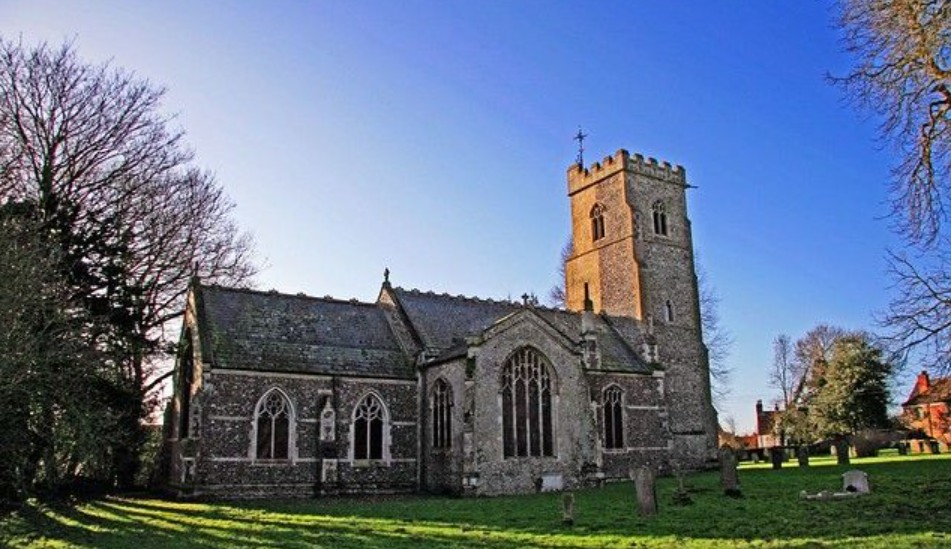
“Yet even in Norfolk, on the Breckland, there are miles and miles of desolate landscape where few dwelt and where the settlements are well out of sight of each other”. [37]
There was even a significant proportion of “gentry-free” village communities in England, as much as a fifth of the total, which were not under the boot of a local toff.
One of these was Wigston Magna in Leicestershire, which until late in the seventeenth century was “dominated by substantial peasants and not by gentry”. [38]
And in the same county there was Galby, which “never had a resident squire, and the free villagers have been traced for centuries, running their community as they would”. [39]
I have often written of the importance of withness in a healthy community – withness to both place and other people. [40]
Laslett says of the lost England: “To the facts of geography, being together in the one place, were added all the bonds which are forged between human beings when they are permanently alongside each other; bonds of intermarriage and of kinship, of common ancestry and common experience and of friendship and co-operation in matters of common concern.
“To these must be added those created by conditions of living now vanished so entirely that it is no easy matter to imagine what they felt like.
“The lack of running water in the dwelling brought people, mostly the women of course, into each other’s company several times a day at the well, or pool, or brook.
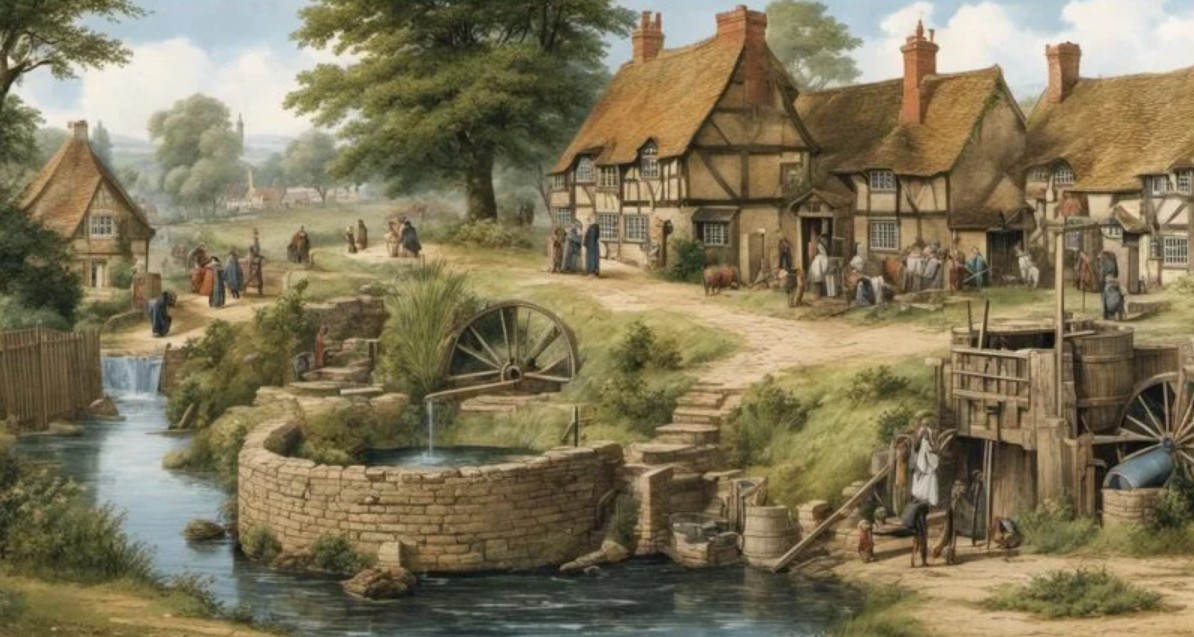
“The labour of grinding your own corn by hand made frequent visits to the windmill or watermill a convenience for everyone, from the larger houses to the smaller ones.
“The want of a ready supply of credit at the bank made everyone dependent on his friend, his neighbour or his relative at times when he needed ready money”. [41]
While most English folk may not have been able to read or write, let alone operate a computer, they could, says Laslett, “think, and talk, and sing, and play, and till the soil, and tend the beasts, and nurture children, and keep house, and make things, like skeins of wool or barrels or ploughs or windmills”. [42]
Can 21st century English people really claim to be superior to their capable predecessors?
Do all those facing the daily commute not secretly yearn for a world in which “most adults did not usually go out to work”? [43]
Laslett adds: “There were no hotels, hostels or blocks of flats for single persons, very few hospitals and none of the kind we are familiar with, extremely few young men and women living on their own.
“The family unit where so great a majority lived was what we should undoubtedly call a ‘balanced’ and ‘healthy’ group”. [44]
And what better arrangement might we imagine to replace the global corporate wage-slavery under which we labour today than a return to the family businesses that flourished in the pre-industrial age?
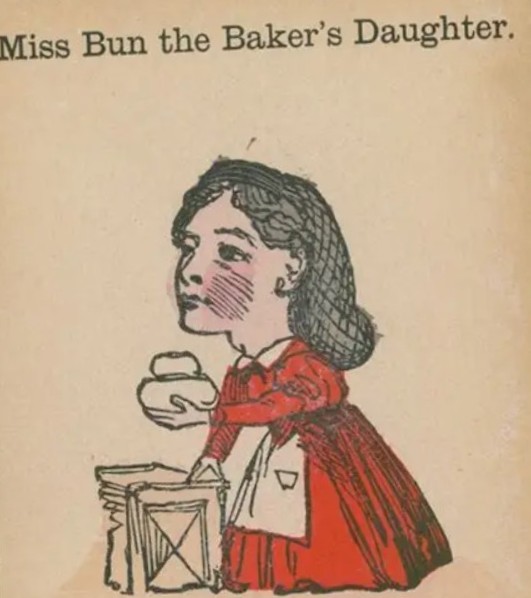
This was not just the case in a rural smallholding- “a man tilled it with the help of his wife and his children” [45] – but also in the capital.
Laslett describes a typical London bakery at the start of the 17th century: “There were thirteen or fourteen people in such an undertaking: the baker and his wife, four paid employees who were called journeymen, two apprentices, two maidservants and the three or four children of the master baker himself”. [46]
“A London bakery was undoubtedly what we should call a commercial or even an industrial undertaking, turning out loaves by the thousands.
“Yet the business was carried on in the house of the baker himself. There was probably a ‘shop’ as part of the house, ‘shop’ as in workshop and not as meaning a retail establishment.
“Loaves were not ordinarily sold over the counter: they had to be carried to the open-air market and displayed on stalls…
“It is obvious that all these people ate in the house, since the cost of their food helped to determine the production cost of bread. Except for the journeymen they were all obliged to sleep in the house at night and live together as a family”. [47]
“It will be noticed that the roles we have allotted to all the members of the capacious ‘family’ of the master-baker of London in the year 1619 are, emotionally, all highly symbolic and highly satisfying…
“Everyone belonged in a group, a family group. Everyone had his or her circle of affection: every relationship could be seen as a love-relationship”. [48] 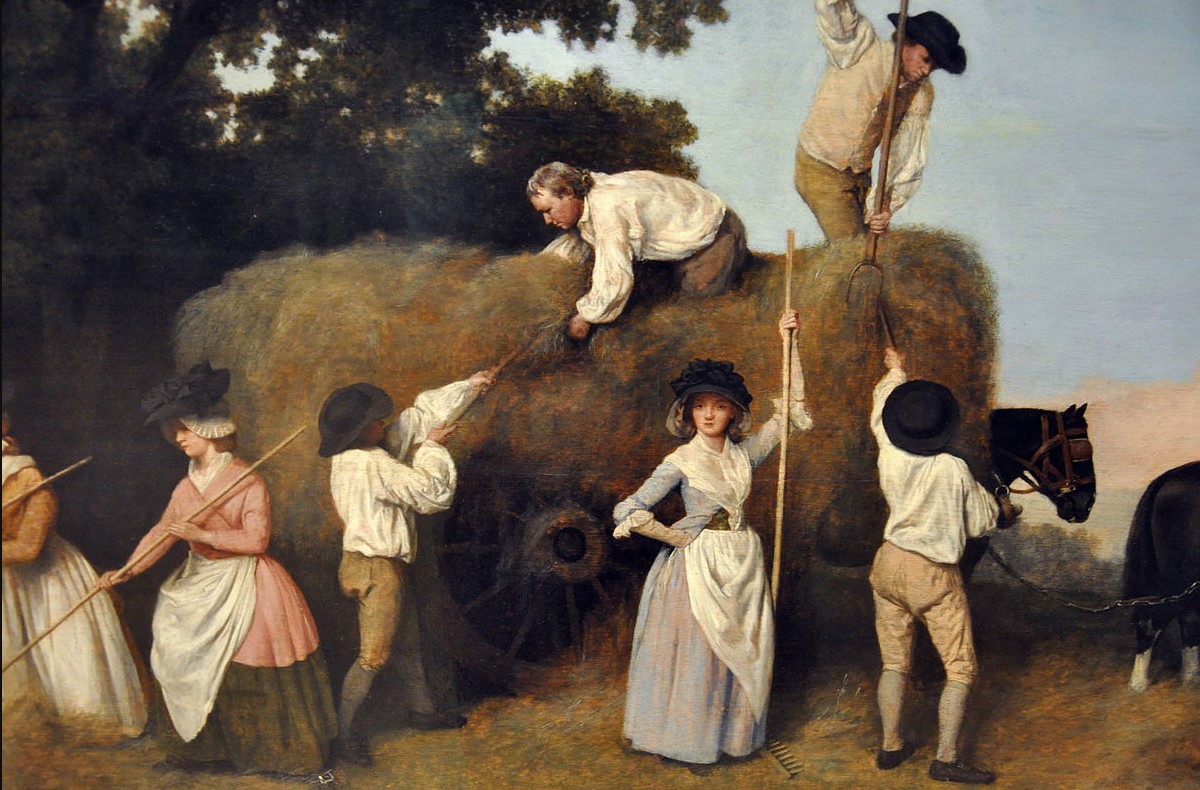
The fall from grace out of this traditional and indigenous way of English life is rightly described by Laslett as “tragic”. [49]
He writes: “The economic transformation of the eighteenth and nineteenth centuries destroyed communality altogether in English rural life.
“The group of men from several farmsteads working the heavy plough in springtime, the bevy of harvesters from every house in the village wading into the high standing grass to begin the cutting of hay, had no succession in large-scale economic activity.
“For the arrangement of these groups was entirely different in principle from the arrangement of a factory, or a firm, or even of a collective farm”. [50]
Industrialism, he says, “turned the people who worked into a mass of undifferentiated equals, working in a factory or scattered between the factories, the mines and the offices, bereft for ever of the feeling that work was a family affair, done within the household”. [51]
“When factory life did at last become the dominant feature of industrial activity it condemned the worker, as we can now see, to the fate previously reserved for the pauper”. [52]
He insists that the term “capitalism” is an inadequate description of the phenomenon – as we can see from the equally dehumanising societies termed “socialist”.
“The time has now come to divide our European past in a simpler way with industrialization as the point of critical change”. [53] 
We now mostly live in urban zones “so vast that none of our rural ancestors would recognize his surroundings as human, should he find his way there through some impossible chronological vagary”, [54] laments Laslett.
The World We Have Lost embraces multiple points of historical comparison – not least because it was researched in the 1950s, published in 1965, revised in 1971 and substantially re-written in 1983, with a preface added in 2000 by Laslett a year before his death. The latest Routledge Classics edition features a 2021 foreword by Kevin Schürer and all of this adds to the complex overview.
Towards the end of the book, Laslett focuses on what England looked like in 1901 – the year of Queen Victoria’s death and my own maternal grandfather’s birth – and I found this section very poignant.
This was a time of particular prosperity and self-confidence for the country, he explains, although the war it was waging in South Africa in fact heralded the beginning of a steady imperial decline.
“The huge coalfields of Yorkshire and Lancashire, the great shipbuilding towns, the acres and acres of factory floor given over to textiles, were made busier by the demand for armaments and uniforms and machinery. Nevertheless something like a quarter of the whole population was in poverty”. [55] 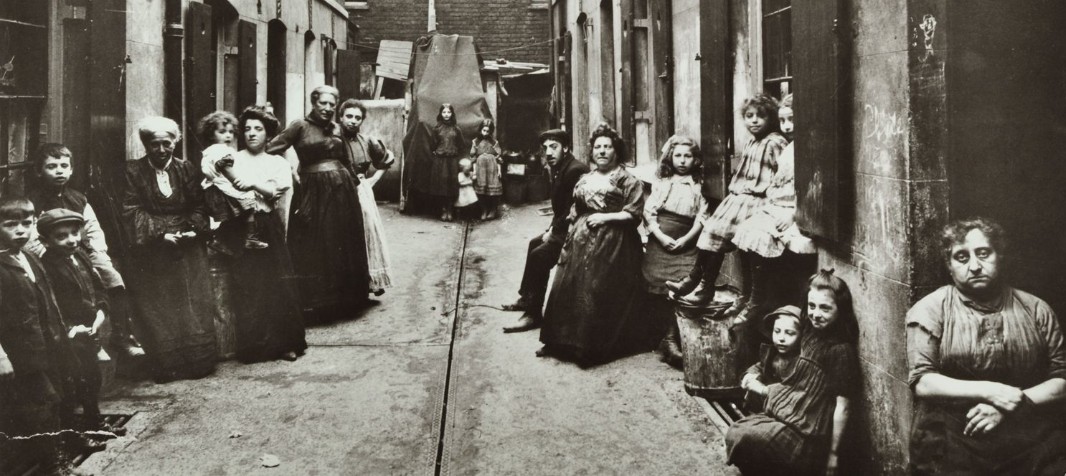
And 30.7 per cent of the people were poor in “London which was the richest city in the world”. [56]
The lie that industrialism brings prosperity to all is torn apart by the fact that “the problem of poverty was so urgent after a century and more of miraculous economic growth and change”. [57]
Laslett writes: “In 1901 people in the upper class could expect to live for nearly sixty years, but those at the very lowest level for only thirty: paupers in fact had a life expectation lower than that of the whole population in Stuart times”. [58]
“Englishmen in 1901 had to face the disconcerting fact that destitution was still an outstanding feature of fully industrial society, a working class perpetually liable to social and material degradation.
“More than half of all the children of working men were in this dreadful condition, which meant 40 per cent of all the children in the country. These were the scrawny, dirty, hungry, ragged, verminous boys and girls who were to grow up into the working class of twentieth-century England.
“This was the generation which was to man the armies of the First World War, although they were inches shorter and pounds lighter than they would have been if they had been properly fed and cared for.
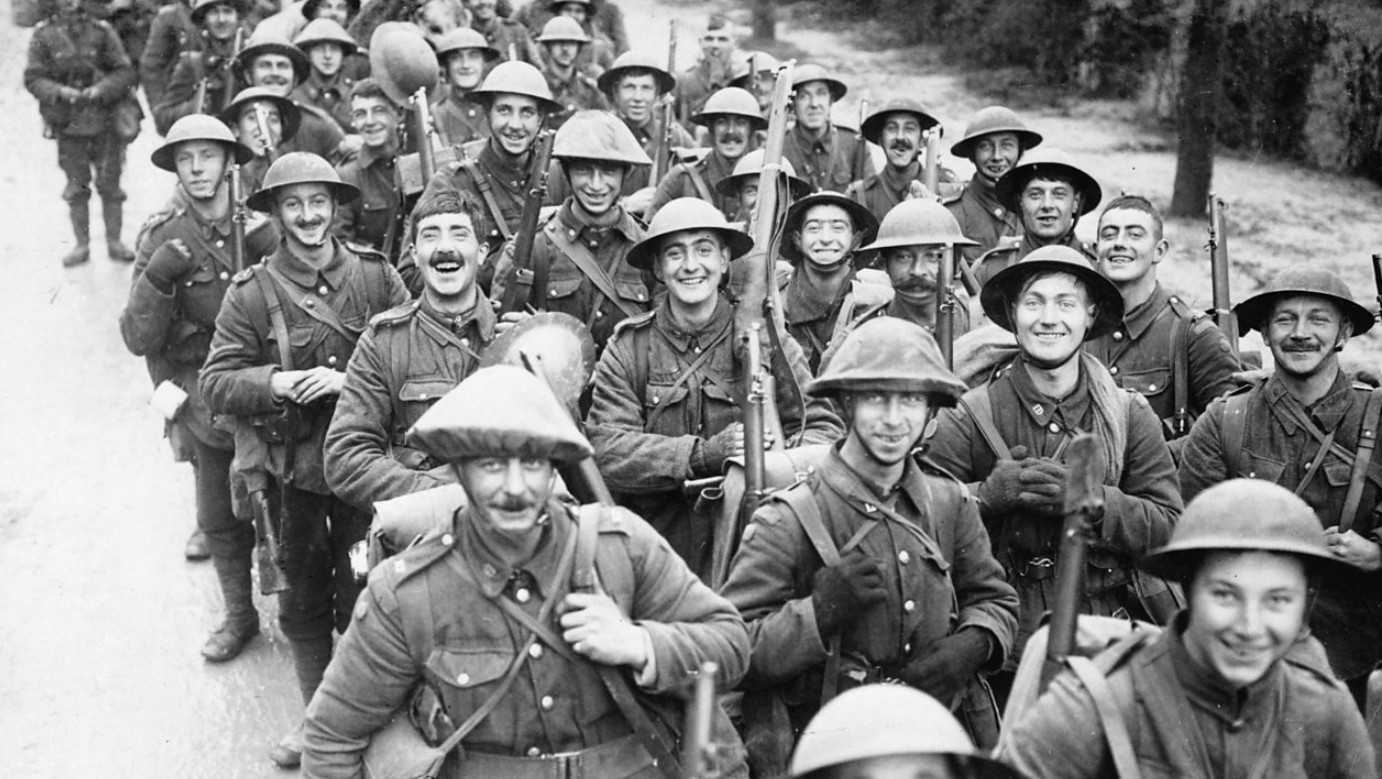
“Those who were left of them became the fathers and mothers of the working people who endured the Depression of the 1920s and the Great Depression of the 1930s, and who saw at last the squalid streets in which they made their homes luridly lighted up by Hitler’s bombs”. [59]
I feel both sad and angry when contemplating these words and thinking about my own ancestors, many of them in London, and the grey lives of endless work that they were forced to lead, the perpetual fear of poverty and the trauma of war that they both suffered and passed on to their children and grandchildren in one way or another.
And I am also struck by the sickening realisation that the same industrial-imperialist monster was behind all of their woes – pillaging England’s natural resources for profit, destroying a balanced and traditional way of life, evicting us from our countryside to serve as dehumanised slave labour in its dark satanic mills, sending millions of our young men to be slaughtered on the altar of its life-destroying lust for greed and power.
Old England was not something we “lost” – it was stolen from us.
And the task of the next few generations will be to take it back.