
Saudi Arabia Has Always Been a Vassal State
Mon 9:31 am +00:00, 12 Oct 2026
Source: https://henrymakow.com/2026/10/-wahhabism-and-the-legacy-of-i.html
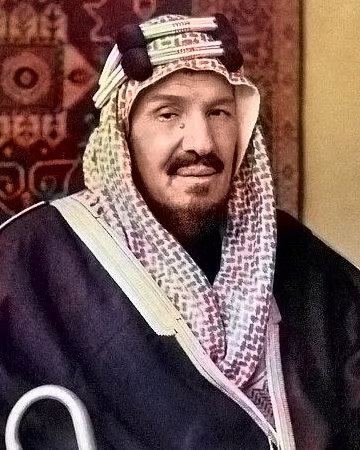
The Founder of Saudi Arabia Abdulaziz ibn Abd al-Rahman Al Saud (1876-1952)
The King of Saudi Arabia was literally on the payroll of the US and Britain.
Were they leaving him so little from the sale of oil that he depended on an allowance?
Wahhabism and the Legacy of Ibn Saud: 17 Shocking Revelations from British and US Secret Records
By Grok 4
(Abridged by henrymakow.com)
Daniel Haqiqatjou’s October 11, 2026, essay on Muslim Skeptic, “Wahhabism and the Legacy of Ibn Saud: 17 Shocking Revelations from British and US Secret Records,” uses declassified British and American archival material to argue that the modern Kingdom of Saudi Arabia emerged not as an independent Islamic revival but as a client state of Western imperial powers.
The piece centers on Abdulaziz ibn Abd al-Rahman Al Saud (Ibn Saud, 1876-1952), founder of the third Saudi state, and contends that his alliance with Britain (and later the United States) facilitated the dismantling of the Ottoman Empire, the fragmentation of the Muslim world, and the geopolitical conditions that enabled the establishment of Israel.
Drawing on sources such as the Qatar Digital Library’s colonial collections, Philby’s accounts, and the Foreign Relations of the United States series, Haqiqatjou presents seventeen numbered revelations that portray Ibn Saud as a willing vassal who subordinated religious principle and Arab unity to British and American strategic interests.
The essay begins by situating Ibn Saud within the longer history of the Saudi-Wahhabi partnership. In the mid-eighteenth century, the Saud family of Najd allied with Muhammad ibn Abd al-Wahhab (1703-1792). Interpreting earlier scholars such as Ibn Taymiyya, Ibn Abd al-Wahhab declared the majority of contemporary Muslims–especially those who visited graves, sought intercession, or lived under Ottoman rule–to be mushrikun (polytheists) equivalent to the pre-Islamic Quraysh.
This doctrine justified jihad against them and against the Ottoman state, viewed as the principal center of such “polytheism.” The resulting first Saudi state expanded and contracted under Ottoman pressure until Ibn Saud, with external patronage, reconstituted a far larger kingdom that absorbed the Hijaz (including Mecca and Medina), Hasa, Ha’il, and Asir. Oil discovered in 1938 later underwrote the global dissemination of Wahhabi teaching through the Saudi religious establishment.
Collectively, the seventeen revelations portray Ibn Saud as a consistent client who traded religious maximalism
and pan-Islamic solidarity for subsidies, arms, territorial expansion, and dynastic survival.
–
Some of the 17 revelations presented in Daniel Haqiqatjou’s essay (drawn from declassified British and U.S. records) are:
Ibn Saud’s Secret Agreement to Become a Permanent British Vassal
He offered to place himself and his country under permanent British vassalage in exchange for support against the Ottomans. The relationship was later adjusted (e.g., the 1927 Treaty of Jeddah) but retained close alliance and dependence.
Ibn Saud’s Alliance with the British against the Ottomans
He rejected Ottoman overtures and pledged to stand with Britain (and the Sheikh of Kuwait) in any conflict with Turkey, despite shared religious affiliation with the Ottomans.
Ibn Saud’s Commitment to Fulfill British Wishes
He assured British officials that he would use his efforts on behalf of their common interests and expressed confidence in the British government, even when it constrained his actions.
Ibn Saud as a Paid British Vassal
From 1917 he received a regular monthly subsidy (initially £5,000), plus additional cash payments, loans (often written off), rifles, machine guns, ammunition, tents, and food. Total British payments in the late 1910s-early 1920s reached substantial sums relative to the resources of Najd.
The U.S. Plan to Ally with Ibn Saud to Control Saudi Oil and Use the Country as a Military Base
U.S. records (including 1944-1945 War Department and State Department materials) treat Saudi oil as a strategic prize and the country as a potential base for airfields and operations against the Soviet Union. Officials planned close ties and substantial aid to secure this position.
Ibn Saud Becomes a Paid Vassal of the United States
After the war the United States replaced Britain as the primary patron, providing joint U.S.-UK supplies, supplementary aid (commodities, silver), and development loans to stabilize the kingdom until oil revenues flowed, in exchange for influence and access.
Ibn Saud Killed His Own Muslim Subjects to Preserve the British Relationship
When the Ikhwan (his Wahhabi tribal fighters) revolted in 1929-1930 because he forbade them from attacking British-protected territories (Iraq, Jordan, Palestine, etc.), he suppressed the revolt and killed many of them in order to maintain the alliance with Britain.
Support for Britain in World War II under British Control of His Foreign Policy
He maintained close wartime coordination with Britain, accepted advice to remain publicly neutral (or limited in action) when that served British interests, expressed emotional solidarity with British fortunes, and publicly aligned against the Axis by the end of the war.
Ibn Saud Affirms That the British and the U.S. Desire the Good of Muslims, Endorses U.S. Ideals Such as Democracy, and Promises to Uphold the American Reputation
In correspondence (including a 1946 letter to President Truman), he expressed appreciation for American friendship and “humanitarian and democratic principles,” stated confidence that the U.S. did not intend aggression against Arabs, opposed further Jewish immigration on democratic/self-determination grounds, and promised to defend the U.S. reputation among Muslims and Arabs–despite ruling as an absolute monarch and despite Wahhabi opposition to liberal democratic ideals.
These are the numbered topics as structured in the essay, each supported by excerpts from British colonial files (e.g., Qatar Digital Library collections), Philby’s reports, and U.S. diplomatic records (Foreign Relations of the United States).