
Stupidity – Why We Need to Use the Word ‘Stupid’ More – Stupid isn’t an insult, it’s a recognition that they’re capable of better
Tue 10:33 am +00:00, 1 Jul 2025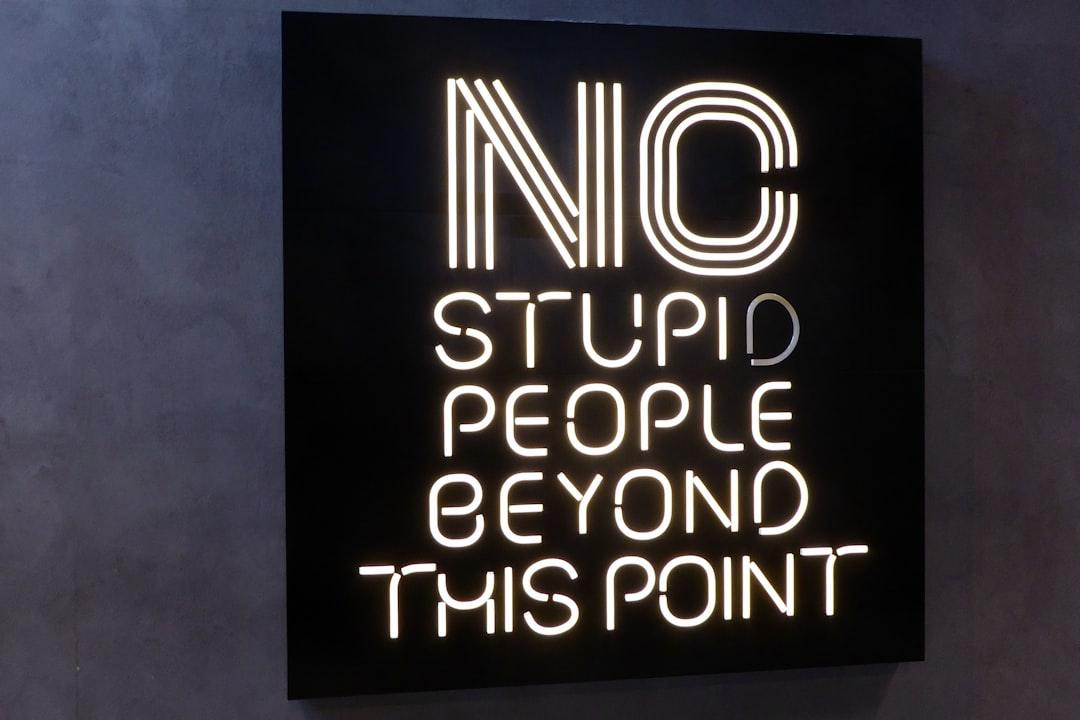
Source: https://unorthodoxy.substack.com/p/why-we-need-to-use-the-word-stupid
There are many people in society, but by raising awareness about this issue, we can reverse course.
I was watching the
video the other day titled Why Stupid People Are Destroying Society1. About three minutes into the video, I had to pause it because the thought came to mind:
“Just what is the definition of the word ‘stupid?’”
Initially, the word has a negative connotation—so if anyone were to call someone ‘stupid,’ it immediately feels like a personal attack.
But after looking up the definition and interpreting it in a different light, I think we need to start calling things more ‘stupid’ when we see such things. And I make the argument that this is a good thing—and a compliment when we do so.
Here, I’ll go through the following aspects of why I think such:
- First, we’ll break down the definition of the word,
- Next, we’ll revisit the proper rules of engagement
- And finally, we’ll discuss why we need to call out more stupid things when we see them.
Without further ado, let’s dive right in.
The Definition of the Word Stupid
From the Oxford Dictionary, we read that the word ‘stupid’ means:
Having or showing a great lack of intelligence or common sense.
The other word that we should probably define as well is ‘intelligence,’ so I looked that up as well, and intelligence refers to:
Ability to acquire and apply knowledge and skills
For completeness’ sake, I looked up the next biggest word, ‘knowledge’ and what it means is:
Facts or information acquired by a person through experience or education
After looking up all three words, I came away with a much better definition of the word ‘stupid.’
Stupid is when:
One does not apply the knowledge and skills—intelligence—they’ve acquired or when they do not apply common sense.
This definition changes everything. When we say someone made a stupid decision, we’re not attacking their intellect—we’re pointing out that they failed to apply it.
It reframes the moment entirely: instead of condemnation, it’s an acknowledgment that they do have strength, skill, and experience—and we’re simply bringing their attention back to it.
The Rules Of Engagement
In a previous article titled How to Disagree During the Holidays, I discuss the four rules for engaging in disagreement.
Disagreeing with someone is one of the most intimate things that two humans can do, as it generates a significant amount of energy as they try to understand the other’s perspective based on their experiences, knowledge, and so on.
A disagreement occurs when two intellects, based on different knowledge sectors, come together and create a rift.
Unfortunately, during the pandemic, when we were locked down, instead of being able to disagree in person—where disagreements are often more fruitful—we were turned into ‘trigger fingers,’ where people would ‘unleash their inner trolls’ onto the screen.
There’s a deep, occult work here with “trolls” and social media that I will delve into later.
What makes this worse is that, as we navigated this new online territory, we soon found our echo chambers: spaces that reinforced our worldview instead of challenging or sharpening it. I talk about this in my article, Blocking People Is Weakening Your Personal Growth—Here’s Why.
From echo chambers to disagreeing inappropriately, we’ve lost the art of debate and the ability to strengthen ideas. Now, everything feels like a personal attack instead of a means to sharpen and improve ideas and knowledge.
To do this, we need to relearn how to engage with ideas we disagree with, and one of the most critical points is that we attack the idea, not the individual.
We’re all souls experiencing this journey. An attack on another soul is an attack on our soul. We who are aware of this can shine a light and be an example to others so they can learn how to rise above petty personal jabs and instead focus on the idea at hand.
There’s a rule of debate that states whoever throws the first personal attack has already lost the argument.
Why We Need to Call Things Out That Are Stupid
In the video, they discuss the work of Carlo Cipolla and his book, The Basic Laws of Human Stupidity. In it, Cipolla discusses four types of people:
- The Helpless: The helpless person is one whose actions produce a loss for himself but a gain for someone else.
- The Bandit: The bandit is a person whose actions produce a gain for himself but a loss for another,
- The Intelligent: An intelligent person behaves in such a way that they produce a gain for themselves as well as a gain for others.
- The Stupid: A person is considered stupid if they cause losses to another person or a group of people while deriving no gain and possibly incurring losses themselves.
Cipolla also has a definition for a “super-stupid” where he states that “the super stupid consistently hurt themselves, and others, through the way they behave.”
Cipolla’s definition is harsher than mine, but I see the rationale behind it. When one’s life consistently consists of a lack of applying intellect to where they continually achieve losses, not only to themselves but to others, this is a “stupid person.”
However, this is also an opportunity—if possible—to bring awareness to the individual.
We’d first need to let the individual know how amazing they are and the potential they have to contribute. I discuss this in How To Disagree because there first needs to be a place of agreement.
Once achieved, then, one can show the opportunity where knowledge and intellect could have been better applied.
Calling one stupid is not an act of degradation; it’s an act of acknowledgment—knowing that one could do something better could live up to something more substantial. We need to call more things stupid when we know there’s a better way of doing things.
Closing Thoughts
Now, stupid is different from those who chose to purposefully remain ignorant or rather “obscurantist”—those who decided to “prevent the facts or full details of something from becoming known.”
These individuals intentionally know what they’re doing, and there’s a nefarious intent here. These individuals require a different approach, but it’s safe to say that we don’t interact with them more often.
The individuals to whom this article applies are those family and friends that we know are smarter than what they’re displaying. It’s going to take work and sacrifice, but if—and only if—they are open to learning about how they can improve, then we can engage with them and show them the opportunities for growth.
We can then point out things that were ‘stupid’ and show how intellect could have been better applied.
One thing to note here is that we all need to make mistakes from time to time because, for one, failure is necessary to gain experience. I’ve often heard, “Fail fast and fail often,” because there are valuable lessons to be learned from failure. However, once we know what needs to be done, we need to stop making stupid decisions.
It will take time and attention, but if we can slowly but surely start to reduce the number of stupid decisions and people in our world, we can move society—our friends and circles—from that of the helpless and stupid into that of the intelligent.
When our families, friends, and close circles are composed of intelligent circles, we’re able to build societies and systems that can stand up to whatever doctrine gets thrown our way.