
Green Gang Secret Society Ruled Kuomintang China Through Narco Trade
Sun 9:53 am +00:00, 23 Mar 2025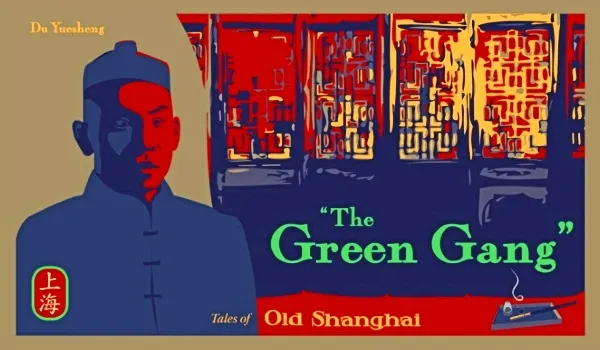
Sounds very much like the usual suspects to me
A Freemasonic type society, with a Chinese flavour
See Chiang’s brother in law:
“Another key player with Green Gang ties was Chiang’s brother-in-law, Shanghai-based T. V. Soong. He received his bachelor’s degree in economics from Harvard University in 1915. He worked at the International Banking Corporation in New York while pursuing graduate studies at Columbia University. He was governor of the Central Bank of China (1928–1934) and Minister of Finance (1928–1933). He founded the China Development Finance Corporation (CDFC) in 1934, which borrowed heavily from transnational cosmopolitan banksters.”
Harvard, International Banking, Columbia Uni, Chinese Central Bank, China Development Finance Corporation, say no more…..
================================
It should be clear that the porous southwest U.S. border and ensuing lawlessness is a booster for drug trafficking by large para-political/criminal organizations that have captured state functionaries. This is malevolent by intent and explains the real purpose behind “President” Biden’s policies.
Currently the Darien Gap in Panama is being utilized by criminal organizations as staging and infiltration transshipment points.
Biden’s border crisis has morphed into a drug crisis as transnational cartels have taken over large swaths of the southern border. Fentanyl seizures at the southern U.S. border have spiked 4,000% this year. This cheaper and plentiful fentanyl is alarming, as it will be used as filler for other drugs, also brought in by the same gangs, and add to their lethalness.
- Horseman of the Apocalypse: Fentanyl
- ‘Fentanyl Is Here:’ Las Vegas Suffers 200% Surge in Overdose Deaths
A Winter Watch core interest in our research and world view is with para-political Crime Syndicate elements. For this we turned to an excellent historical template for understanding this process: the Green Gang of pre-Communist China. Source material is covered in the books “The Shanghai Green Gang: Politics and Organized Crime, 1919-1937” by Brian G. Martin and in “The Soong Dynasty” by Sterling Seagrave.
The Green Gang, also known as the Society for Common Progress, focused on opium and later heroin, extortion, gambling and prostitution. “Gangster tactics” (aka extrajudicial violence) was utilized as was a tight-knit generational familial structure organized into — surprise, surprise — a secret society. The Green Gang’s roots and structure derived from 19th century salt smugglers.
And this one was no Taco Bell misdirection commercial. It brought other made men and associates into the ranks by sworn brotherhood. Competition and rivalry was controlled by a face-saving measure whereby a declining chieftain would swear brotherhood to a rising thug to keep continuity. This included the police and government officials whose ranks were filled with sworn brothers. This sworn method was extended to include elite Shanghai capitalists, as in a literal Carlinian “big club and you ain’t in it” mechanism [Martin, p. 21].
Shanghai in the interwar years was particularly fertile ground for secret society gangs, not least because it was divided between a Chinese run city, the International Settlement, and the French Concession. Additionally, war lords, rather than a central or strong regional government, ruled most of China, including Shanghai, resulting in an absence of law and order. This anarcho-tyranny cleared the path for organized criminal gangs, much like what is developing in the U.S.
California Anarcho Tyrants Prepare to Release 78,000 Hardened Felons into Unsuspecting Communities
One of the means that proved rather effective was bribing the consuls of countries enjoying extraterritoriality in order to obtain the nominal citizenships of these states and the extraterritorial privileges that went with it. The hazy sanctuary city residence status of tens of thousands of para-criminal gangs settling in the U.S. combined with police defunding is a carte blanche Trojan Horse for employing this method.
With this method, the gangster bosses could ensure that any criminal cases involving themselves would be heard before these bribed and corrupted consuls in the courts of the International Settlement and the French Concession, which would invariably dismiss the proceedings. The French made Green Gang kingpin, Pockmarked Huang, the chief of detectives in the French Concession.
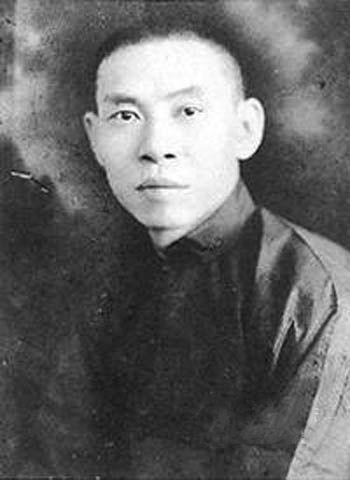
With this protection from prosecution, Big-Eared Du Yuesheng went about taking control over the rackets and quite quickly institutionalized power. He was simultaneously the dominant opium and heroin importer and distributor, the operator of a successful commercial bank, a major municipal philanthropist, the communal leader of organized labor and the operator of a prominent club for the Chinese bourgeoisie.
In the 1920s, the Portuguese, Spanish and Chilean consuls enjoyed a lucrative business by selling the rights of citizenship of their respective countries to a large number of local Shanghai gangsters. These gangsters include the aforementioned Du Yuesheng, who enjoyed Portuguese citizenship, and the Chaozhou narcotics king, Ye Qinghe, who claimed to be a “Chilean protoge” [Martin, pgs. 34-35].
Once the Gang established a strong toehold because of the lawlessness, the abjectly corrupt Kuomintang Party (KMT), under the political leadership of Chiang Kai-shek, was happy to delegate operational responsibilities to thugs and share in the largesse. “The government, in fact, was nothing more than a glorified extortion agency whose main administrative function was to run gambling houses, opium divans and brothels,” Martin wrote [pg. 151]. The result was a para-criminal corporatist model of government, very much as seen in the Fifth Column takedown of the United States today.
The Green Gang formed certain quid pro quid relations with Chiang Kai-shek who curiously became acquainted with the gang while living in Shanghai from 1915 to 1923. In fact the “Encyclopedia Britannica” entry for Chiang Kai-Shek states he “belonged to the Green Gang (Qing Bang), a secret society involved in financial manipulations.”

In 1927, Chaing’s Kuomintang forces were advancing on Shanghai. On April 12 of that year, the gangsters initiated a vicious crackdown (called the Shanghai massacre, or White Terror) on the local Communist Party organizers and labor activists. During the subsequent “reign of terror,” the city’s labor movement was destroyed and 6,000 were executed.
This pact with the Kuomintang strengthened the Green Gang’s grip on official power, so much so that Du Yuesheng was given a seemingly free hand to operate throughout Kuomintang-dominated areas of China.

In the early 1920s, sleazy narco overlord Du Yuesheng had promoted a fake cure for opium addiction. He produced “anti-opium” pills that contained heroin, which sold by the millions. The Shanghai Gang was importing 10 tons of heroin-opium substitute annually from the West.
Following the 1928 Geneva Convention ban on the marketing of heroin, the Shanghai traffickers set up their own refineries. They were so successful that, in 1934, the Shanghai municipal council received a report that heroin was being more widely used than opium. By then, Shanghai had become a major heroin exporter to the United States.
Du Yuesheng supervised a comprehensive narcotics distribution network whilst controlling all aspects of life from underworld operations to local government and municipal finances. As head of the Chung Wai Bank and chairman of the board of directors of the Commercial Bank of China, he easily financed his illicit dealings. Yuehsheng was now by far the most powerful man in China.
In July 1935, he became a key member of the new Opium Suppression Commission, a capture tool that enabled him to ruthlessly suppress all independent operators under government sanction.
A couple examples of U.S. capture:
Another key player with Green Gang ties was Chiang’s brother-in-law, Shanghai-based T. V. Soong. He received his bachelor’s degree in economics from Harvard University in 1915. He worked at the International Banking Corporation in New York while pursuing graduate studies at Columbia University. He was governor of the Central Bank of China (1928–1934) and Minister of Finance (1928–1933). He founded the China Development Finance Corporation (CDFC) in 1934, which borrowed heavily from transnational cosmopolitan banksters.
Kuomintang took power in stages. By 1928, it largely had control over most of urban China. The state was effectively bankrupt, and the para-criminal gangs extorted the Shanghai banks into purchasing national treasury bonds. Soong in particular used the Green Gang as muscle and pressured big businesses into buying up national bonds in exchange for a lack of corporate tax imposed by the government. KMT run government had access to cheap credit, but everybody else was crowded out and paid dearly. Sound familiar?
Ultimately a devastating hyperinflation emerged as between 1935 and 1949, China experienced prices rising by more than a thousandfold. The immediate cause of the inflation is easy to isolate: the KMT government continually injected large amounts of paper currency into the Chinese economy.

The Ministry of Finance also became dependent on the flow of funds from drug trafficking. As more provinces in China came under KMT control, Chiang had turned most of the opium enterprises over to his ally, Du Yueh-sheng.
In the book “The Soong Dynasty” by Sterling Seagrave, this role was dissected (good link). He also lays down the gauntlet in terms of the reach of this para-criminal secret society.
Soong and family then moved into the military hardware business during China’s war with Japan in the 1930s and 40s. A member of the United States Embassy staff noted in 1936 that Ai-ling Soong received “a moderate but invariable commission on all purchases of military planes,” while the British ambassador wrote that Ai-ling’s husband, H. H. Kung, had such a ”preference for his own interests over those of his country” and that he was ruining the economy.
Gen. Joseph W. Stilwell was mystified and angry over the disappearance of huge amounts of lend-lease supplies in World War II; and immense American loans, many of which passed through the hands of T. V. Soong, his brothers or his brother-in-law, were never adequately accounted for.
Seagrave gives us another template for our times with the Chinese experience. There was a “grand strategy” between Chiang/Soong and the criminal gangs in both Canton and Shanghai during early 1927. Later that same year, the revolution in Wuhan was “subverted by the Green Gang until it collapsed from within.”
Still later, “The Nanking government was quite simply a Trojan horse, painted in bright colors by the Soong clan.” Inside this horse “were hidden the generals, secret policemen and Green Gang leaders who actually yielded power in China.” Similar forces, he believes, lay at the heart of the New Fourth Army Incident of 1941, when a KMT attack on Communist troops prompted the collapse of the United Front against the Japanese.
In typical fashion, this para-criminal conspiracy was papered over in the U.S. by Henry Luce’s pro-Soong news network, Soong’s lobbying network, the obstinacy or lethargy or capture of State Department veterans like Stanley Hornbeck, and the incompetence, ignorance or, we would say, culpability of Franklin D. Roosevelt. Do we see a pattern here?

The Kuomintang, after their defeat by the Communists in 1949, fled in two directions. One group, led by Chiang Kai-shek, escaped south from Shanghai and via Hong Kong to settle in Formosa (Taiwan). The other group, led by General Lee, escaped through Yunnan to settle in northern Thailand and Burma.
With CIA support, the Kuomintang remained in Burma until 1961, when a Burmese army offensive drove them into Laos and Thailand. By this time, however, the Kuomintang had expanded Shan State opium production by almost 1,000%, from less than 40 tons after World War II to an estimated 300 to 400 tons by 1962.
From bases in northern Thailand, the KMT continued to send huge mule caravans into the Shan States to bring out the opium harvest. By 1971, these KMT caravans controlled almost a third of the world’s total illicit opium supply and a growing share of southeast Asia’s thriving heroin business. The Hong Kong-based “14K” triad, with its strong links to the old Shanghai Green Gang, was able to link the Kuomintang-controlled highlands of the Golden Triangle to the distribution channels of the USA and Europe.
In the otherwise excellent movie “American Gangster,” Kuomintang control of the Golden Triangle region in Thailand is mentioned by Frank’s cousin, and then the two do the big heroin deal with the KMT general. What was never explained adequately in the movie is exactly how the American gangsters were able to smuggle drugs flown into Ft. Bragg. It was conveniently hidden in the coffins and bodies of dead U.S. soldiers. How does that operation really work?