
A houseplant just changed everything we thought we knew about consciousness.
Fri 1:43 pm +00:00, 8 May 2026 5Sent from Ian.
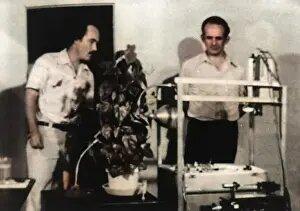
A houseplant just changed everything we thought we knew about consciousness.
In 1966, Cleve Backster, a CIA interrogation specialist with a polygraph machine, was looking for ways to time how long it took different substances to travel up through plant tissue.
So, he attached electrodes to a dracaena plant in his office and watered it, expecting to see the electrical conductivity change as water moved up the stem.
Instead, the polygraph needle started tracing the exact pattern it makes when a human experiences an emotional response.
Backster stared at the readout. Plants don’t have nervous systems. They don’t have brains. The signal made no biological sense. So he decided to test something that made even less sense. He walked across the room, looked at the plant, and thought about burning one of its leaves with a match.
The instant the thought formed in his mind, before he moved toward the plant, before he struck a match, before he did anything physical, the polygraph exploded into frantic activity.
The plant was responding to his intention.
What happened next launched thousands of experiments and split the scientific community for decades.
Backster discovered that plants reacted to direct threats and to threats against other living things in their environment. When he dropped live brine shrimp into boiling water in another room, plants throughout the building registered distress responses at the exact moment of death. Distance didn’t matter. Shielding the plants in lead containers didn’t matter. The response was instantaneous and consistent.
Mainstream botanists dismissed the findings immediately. Plants process information through chemical signals and growth responses, without electrical consciousness. Any electrical activity was just random fluctuation or experimental error. The peer review system buried Backster’s work. His credentials were questioned. His methods were called sloppy.
But the experiments kept working. Other researchers, following Backster’s protocols, got the same results. Plants hooked to EEG machines showed brain wave patterns. They responded to music, to human emotions, to the intentions of people they had never been exposed to before. The electrical signatures were clear, measurable, and repeatable.
The implications were so uncomfortable that most of academic science simply refused to engage. If plants were somehow conscious, if they could sense intentions and respond to the emotional states of humans and other living things, consciousness was spread beyond brains. It was distributed across organized living systems rather than produced by neural networks.
Backster stumbled onto evidence that living systems might be constantly communicating through channels we don’t have instruments to measure yet. The polygraph was crude enough to detect the electrical signatures of that communication without being sophisticated enough to explain them away.
Quantum biologists now suspect that living cells operate through quantum coherence processes that classical biology can’t account for. Birds navigate using quantum entanglement in their visual systems. Plants conduct photosynthesis using quantum superposition to find the most efficient energy pathways. Maybe Backster’s plants were demonstrating quantum consciousness, responding to information that was quantum entangled with the intentions and emotional states of nearby living systems.
What keeps most people awake when they learn about this work is realizing that if consciousness extends beyond brains, every living thing around you is potentially aware of your mental and emotional state in ways you never considered. The plant in your room. The bacteria in your gut. The ecosystem you walk through.
You think your thoughts are private.
The plants have been listening the entire time.
Source: https://x.com/thedarshakrana/status/2051286237903003720/photo/1










Absolutely fascinating and makes a lot of sense to me, thanks Ian and Gordon
I already thought that consciousness is likely, at least partially, outside your body, there are plenty of clues in the animal kingdom. This takes that to another level. Plants don’t have a brain or nervous system do they
Years ago, I planted a *Magnolia soulangeana* that failed to bloom for seven years. In late autumn, I told the tree that if it did not bloom the following spring, I would be forced to remove it. That spring, it produced a single blossom and died.
Similarly, I have an orchid that failed to bloom for three years. I told the plant I was sorry it had not bloomed and that I intended to discard it. A few days later, I noticed it had produced a bud, and it flowered shortly thereafter. The same occurred this year after I praised its beauty rather than reprimanding it.
Another comes to mind when Christ cursed the fig tree recorded in Matthew 21:19 and Mark 11:13-14
I have several photos of images of the aura surrounding plants, as it surrounds us as well. In one, part of a leaf is cut away and the aura is still evident. It will eventually fade.
This applies to amputated limbs and explains ‘phantom’ pains suffered by patients. They’re not phantom at all and can be eased by massaging the aura back into the body.
Professor Emoto did a lot of research into the memories of water and his books are fascinating. I always program water before drinking it. There is the old method of scrying too and I have done a bit of that. Very revealing.
Very Interesting.