Wonder-Weapon Mania Dies Down Revealing Ukraine’s Wire-Frame Reality – Simplicius
Mon 4:07 am +00:00, 25 Nov 2024
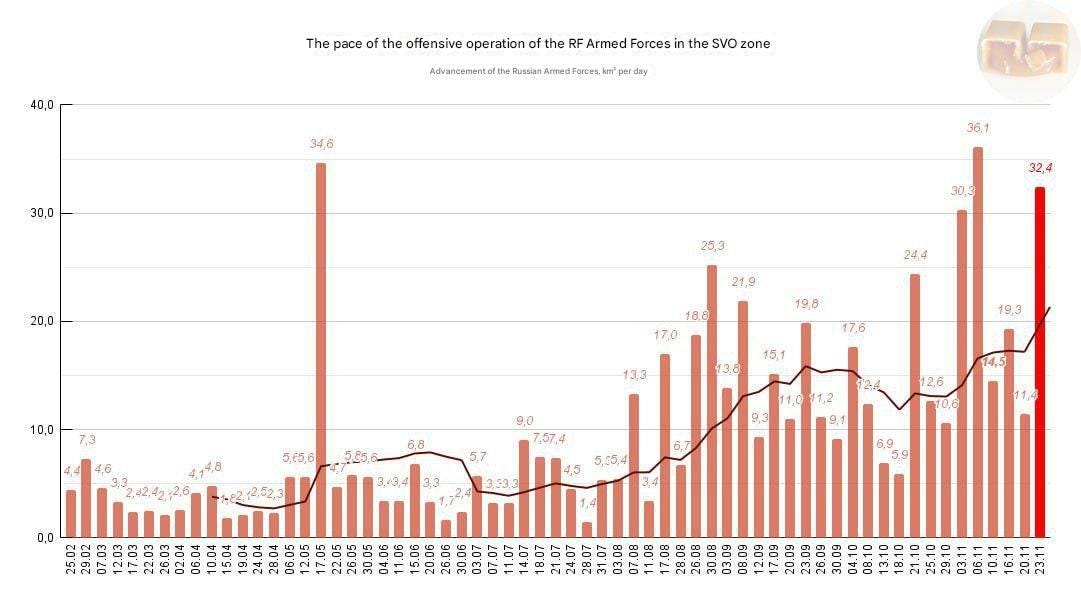
The dual hype surrounding both the Oreshnik ‘secret weapon’ and Ukraine’s ATACMS/Storm Shadow strikes on Russian territory has died down, to reveal the continuing pattern of Russian troop advancement on every front. A new graph has highlighted the accelerating territorial captures in square kilometers of the Russian forces this year from April to November:
From Lost Armour—note the dip in August represents losing Kursk territory:
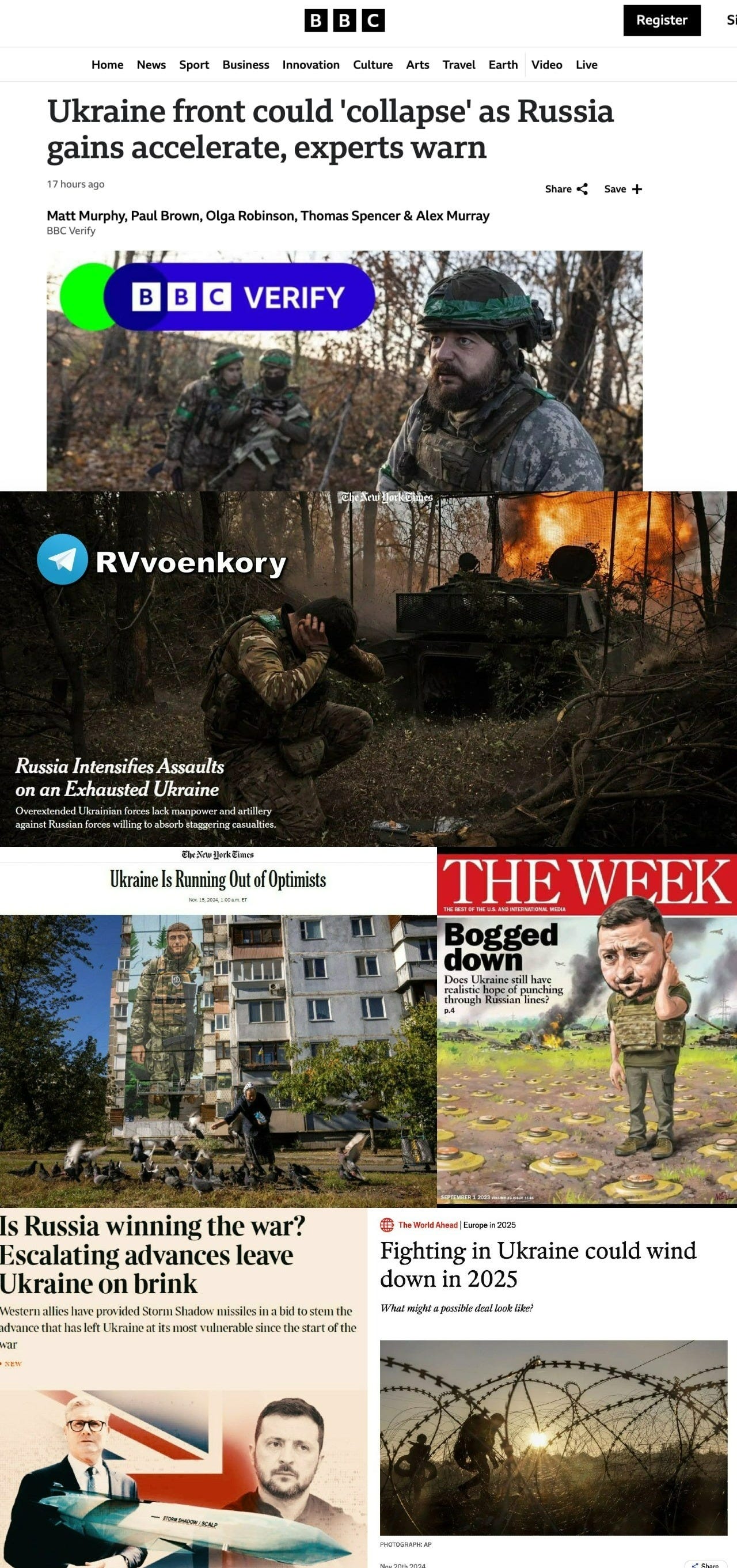
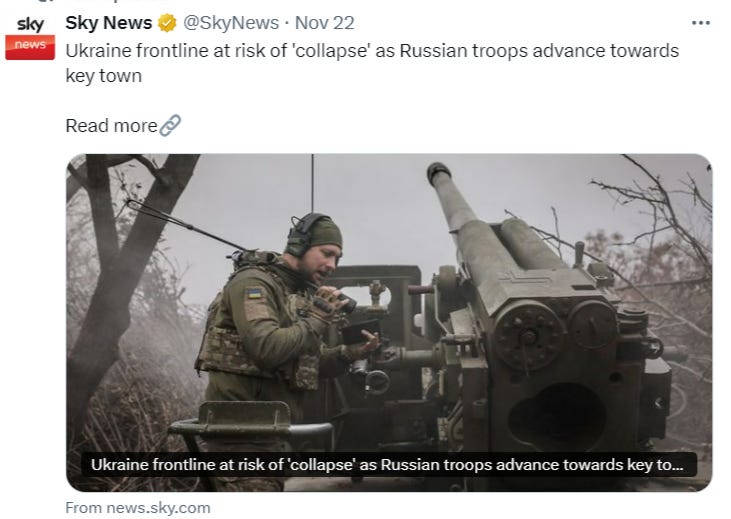
The mood has turned absolutely dour in the shill media which had been doing its desperate best for months to prop up Ukraine’s hopeless cause:
The conversation has entirely turned toward how to wrap the war up, with many ‘insiders’ in the West now claiming all internal debate revolves around how to convince Zelensky to give concessions, while still retaining some form of ‘dignity’ for Ukraine—which is just another way of saying, how to save face, and present the loss as at least a partial ‘victory’. This has naturally led to Trump’s admin picks being a particular focal point as bellwethers of what we can expect from Trump’s approach toward ‘settling’ the war. Unfortunately, some of the recent signals are getting worse in this regard, and seem to indicate escalation as the plan. For instance, Robert Wilkie, who has been appointed to lead Trump’s Pentagon transition team, spelled out exactly how he believes Trump’s team will approach dealing with Putin from day one. He admits he’s not speaking officially for Trump on this, but given that he’s literally leading the Pentagon transition team, it would seem his words carry some weight on this count. Notably, he says that if Russia remains defiant, Trump will majorly increase aid to Ukraine, counter to the “isolationist” ideas about abandoning Ukraine to its druthers:
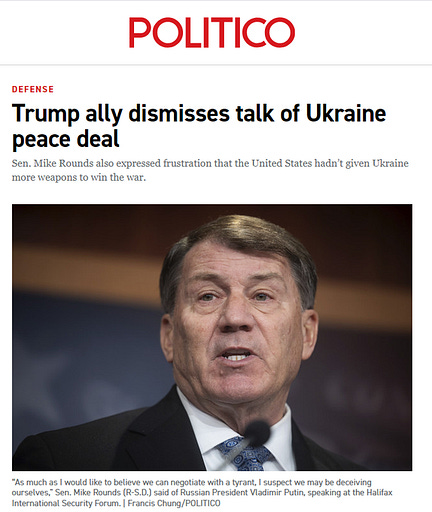
 Another “top Trump ally” said the following:
Trump reportedly appointed other warhawks who are fanatically foaming at the mouth against Russia:
In contrast, Trump’s pick for National Security Advisor, Mike Waltz, just said that escalations from both sides must come to a “responsible end”—so perhaps not all is lost. Either way, shrouded in our ‘fog of war’, the picks have provided some of our first glimpses into what a Trump approach could look like, and it’s not entirely rosy. I’ve written on several other indications before that Trump may attempt to ‘strongarm’ Putin by threatening a major redoubling of Ukrainian aid. Granted, we can argue til the cows come home that these are just neocons impudently speaking out on Trump’s behalf, hoping to subversively influence the coming negotiations. But at a certain point, we have to realize these are Trump’s chosen picks; he’s in his second term already, and knows the ropes, which means we can’t continually make excuses for him, that perhaps it’s some ‘oversight’ or misstep. At some point we must admit that Trump has chosen the people he wants to represent him, and they may very well be representative of his approach, or could likely influence his approach in a major way, particularly given that these people are in positions whose sole job is to influence him on these very issues. As they say, where there’s smoke there’s fire, and one crazy neocon like Mike Pompeo spouting off about Trump escalating could perhaps be dismissed, but a string of them saying the same things certainly has to be considered. The truth is, it’s not threats of more “aid” that is the worry. The US is on the brink of bankruptcy and doesn’t have much of worth that can change the battlefield calculus left even to give to Ukraine. No, the real worry is that Trump will do something extremely gung ho and unexpected in order to brandish his ego and ‘restore the US’ image’ and morale. He’s known for making quick intemperate escalatory decisions like launching missiles at Syria, or killing Soleimani. As such, if Trump’s ego is hurt by Russia’s rebuff, the real danger is his doing something totally erratic like sending US troops directly into some portion of Ukraine, US warships into the Black Sea in contravention of Montreaux, or some other oblique escalation—perhaps a major uptick in RQ-4 drones and ISR activity closer to Crimea, etc., as a ‘show of force’. Trump can’t allow his legacy to be defined as the man who backed down from Putin. With his seemingly unlikely victory, after surviving multiple assassination attempts, Trump could view his ascendancy to power in some messianic light, and believe himself destined to force the world’s ‘strongmen’ to bend the knee to him as de facto global Sovereign, and the resurgent Greatness and Exceptionalism of the American Empire.
Trump’s “peace through strength” mantra is the real biggest threat we face because Putin is the one leader Trump could misread, as Putin has no further room for backing down: the conflict’s resolution is an existentialissue for Russia. It’s the unmovable object versus the unstoppable force. — As another couple ‘interesting’ notes doing the rounds—this article made quite the claim: It states that one of the ideas circulating in Western discussions is to move the Ukrainian army into Europe in order to ‘satisfy’ Putin’s demands for demilitarization:
It sounds too absurd to be true, but alas.
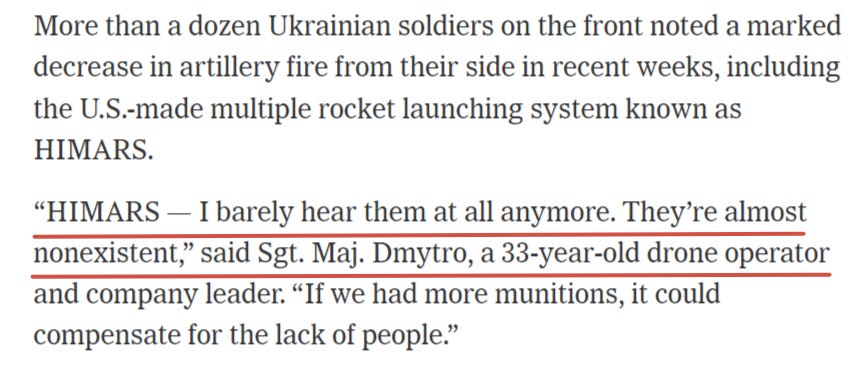
As for the front, a couple articles give us another glimpse of how things are going. This NYT piece confirms something I’ve been saying here, despite a few doomers in the comments section swearing it isn’t true; read what the Ukrainian officer says for yourself and weep:
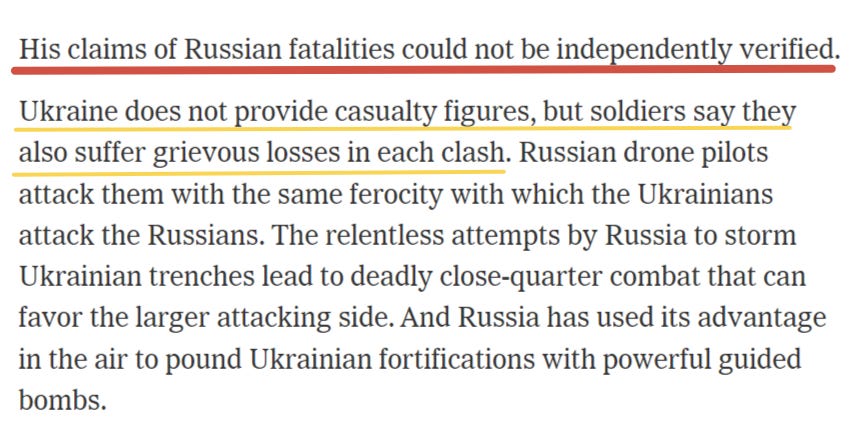
Of course the article is filled with a bunch of other face-saving nonsense about unconscionable Russian losses, claiming hundreds of faceless Russian troops killed in a single assault on a tiny slice of the front. Even the NY Times reporter seemed incredulous, and to the contrary underscored Ukraine’s own heavy losses:
The comical irony is that a paragraph or two later, the Ukrainian drone operator admits they have major communications issues and often target their own via friendly fire. After describing a patch of what they believe to be “Russian” losses, the tragicomic segment explains:
Another Economist article had one big reveal:
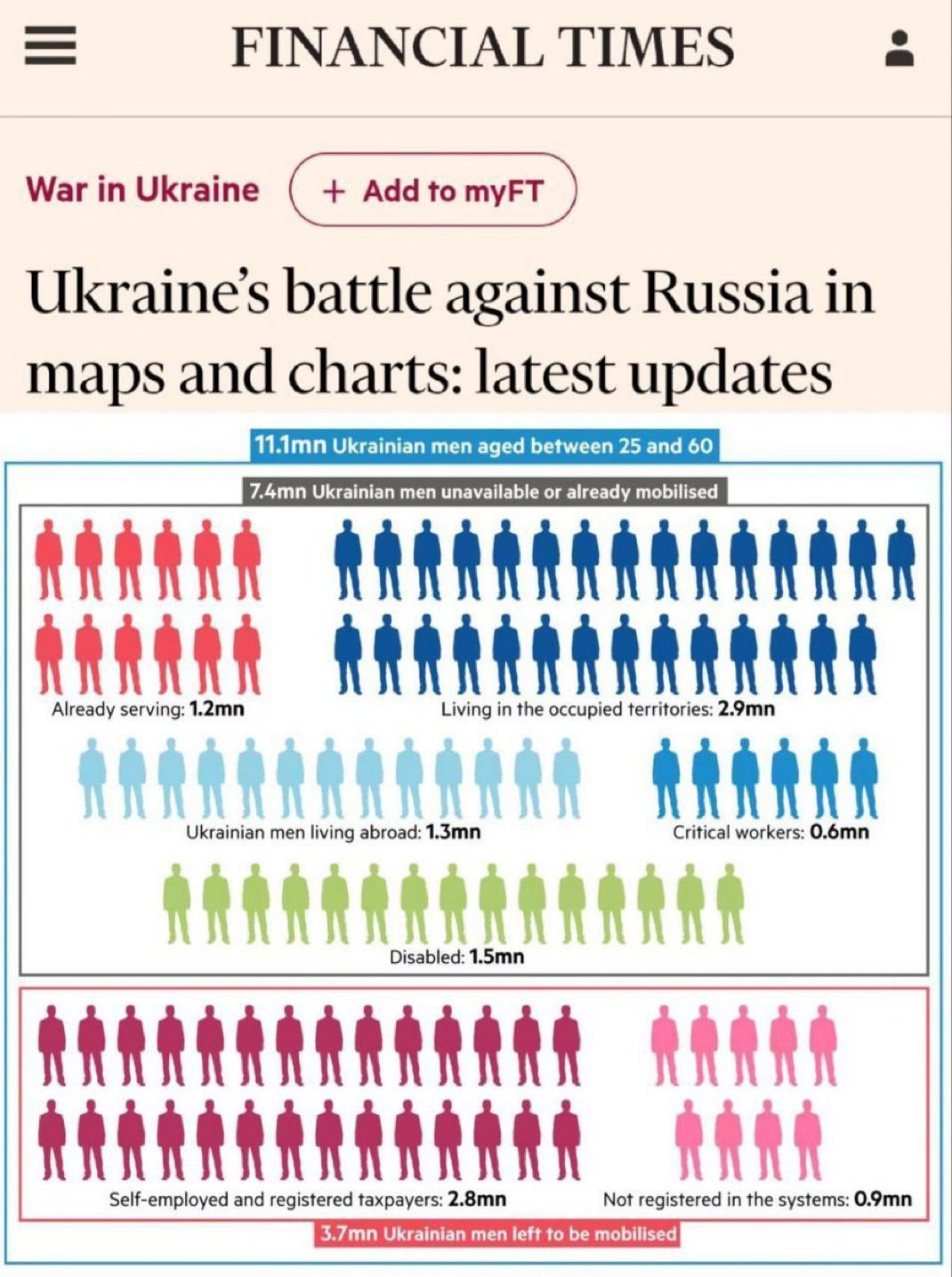
An FT article had a few revealing graphics:
Including this animated map: 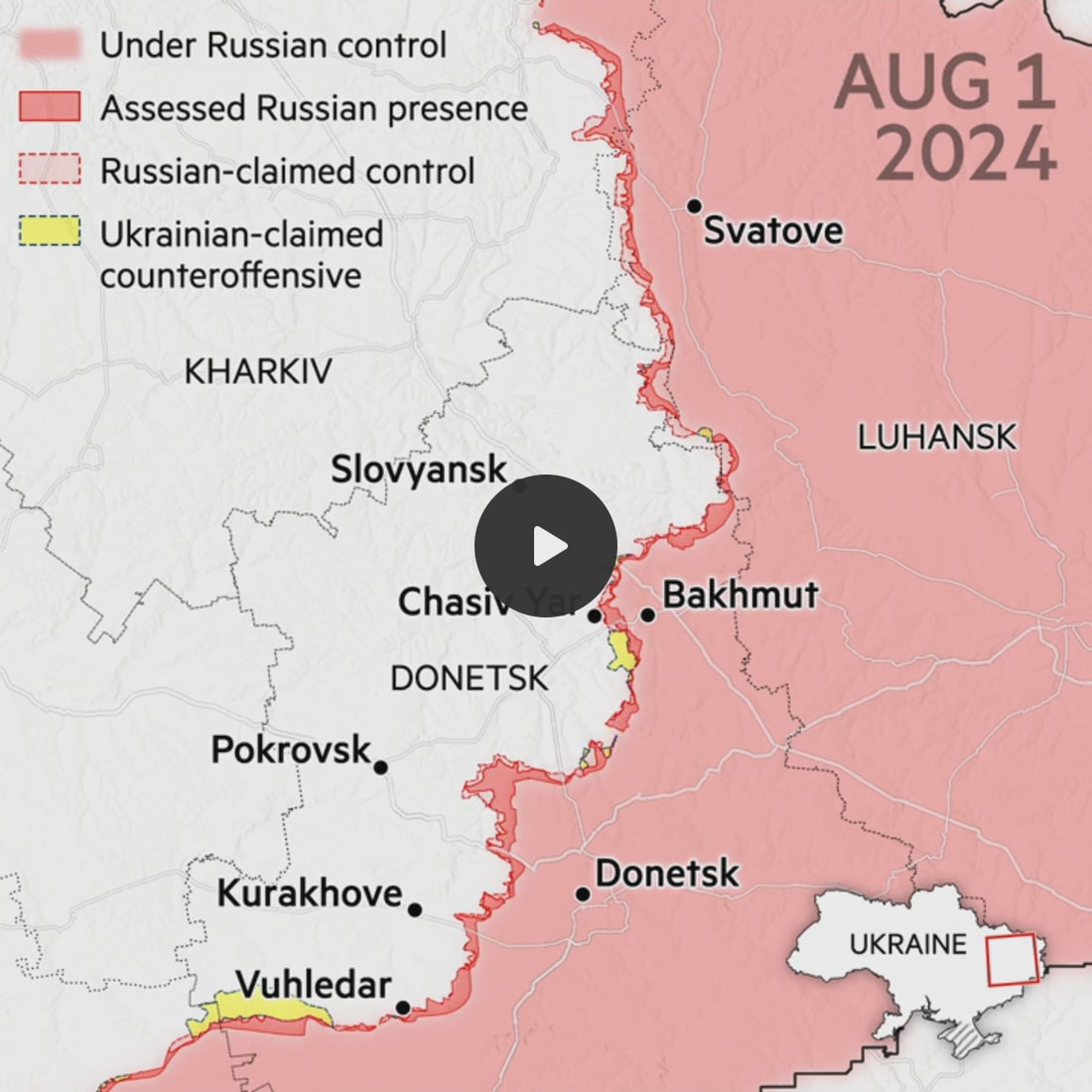 Lastly, another very timely reminder of what Ukraine is fighting for. Lindsey Graham gives us a shockingly frank admission about the war that is a must-see: 
No more a naked and rapacious show of true intentions by US establishment cretins could have been so hideously expressed.
Now to turn to the Oreshnik missile strike with a few timely updates. Firstly, here’s the full address by Putin to his council regarding the success of the missile test. 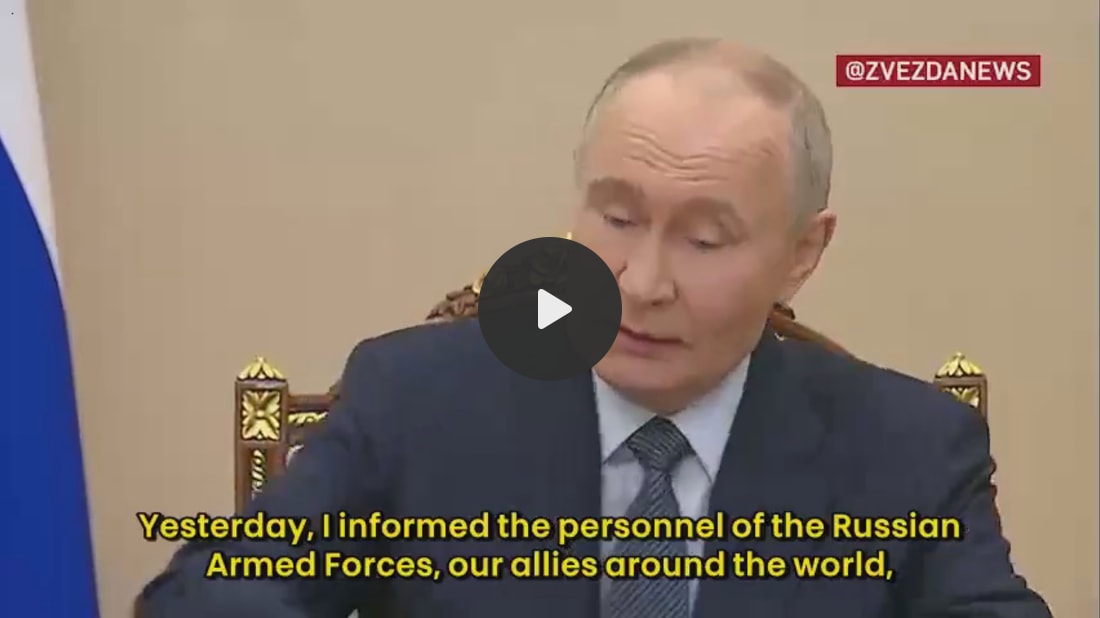 He states:
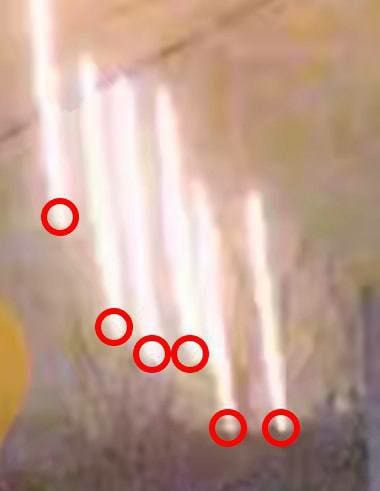
Such a short development phase is mostly impossible for a completely new system made from scratch. As such Putin’s claim that Oreshnik is notbased on previous Soviet lineage is likely a bit of semantic shadowplay. For instance, the delivery vehicle and MIRV/MaRV bus itself could be entirely new, while the delivery rocket is derivative, etc. Russia rarely wastes time in completely new development lines. Even the rocket that took the world’s first satellite Sputnik to space was a repurposed Soviet ICBM. Russia has a habit of calling systems “new” from their own perspective, when they’re clearly derived from previous models; for instance everyone knows the T-90M was essentially a reworking of the T-72B variant. The “weapon” portion is really the payload rather than delivery system or rocket, and as such, the payload design I’m sure is mostly or entirely new. This comprises the actual targetable warheads and their submunitions. New information seems to indicate the missile released six separate warheads, each of which carried six munitions as seen in such groupings during the strikes:
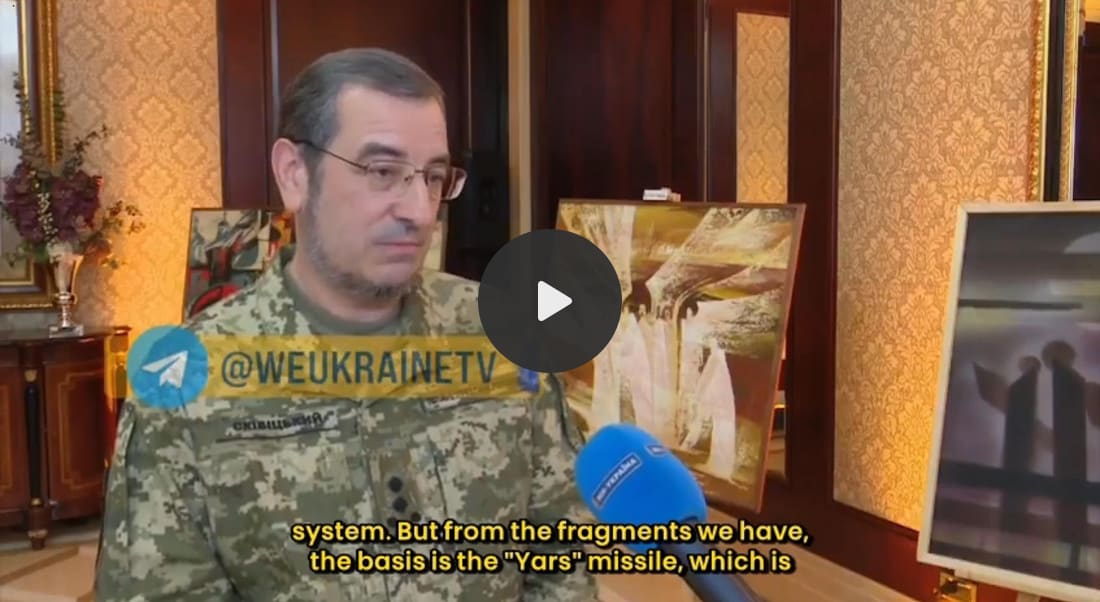
This is the actual new weapons system, but it is likely fired from the standard or slightly modified Yars, Topol, etc. But let’s see what Ukrainian intelligence sources are now claiming. Deputy Chief of the Main Intelligence Directorate Vadim Skibitsky says recovered fragments have indicated the missile is in fact based on the Yars and Topol but with some key improvements, such as in enhanced guidance and telemetry systems:
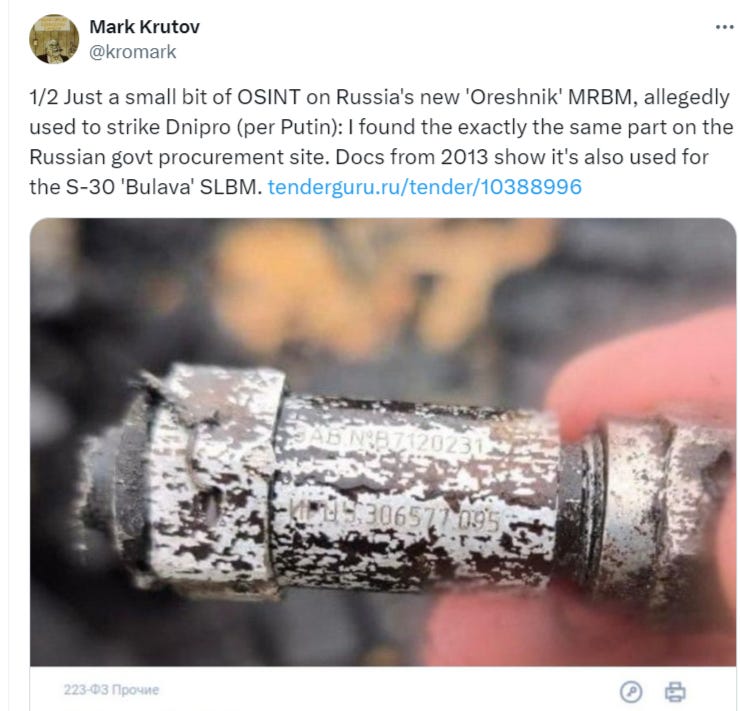
 Other researchers have found that the missile shares parts in common with Russia’s advanced Bulava SLBM, based on one of the recovered serial numbers at the Dnipro attack:
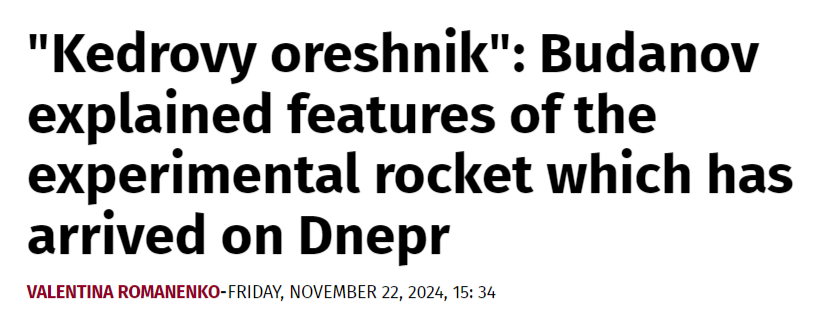
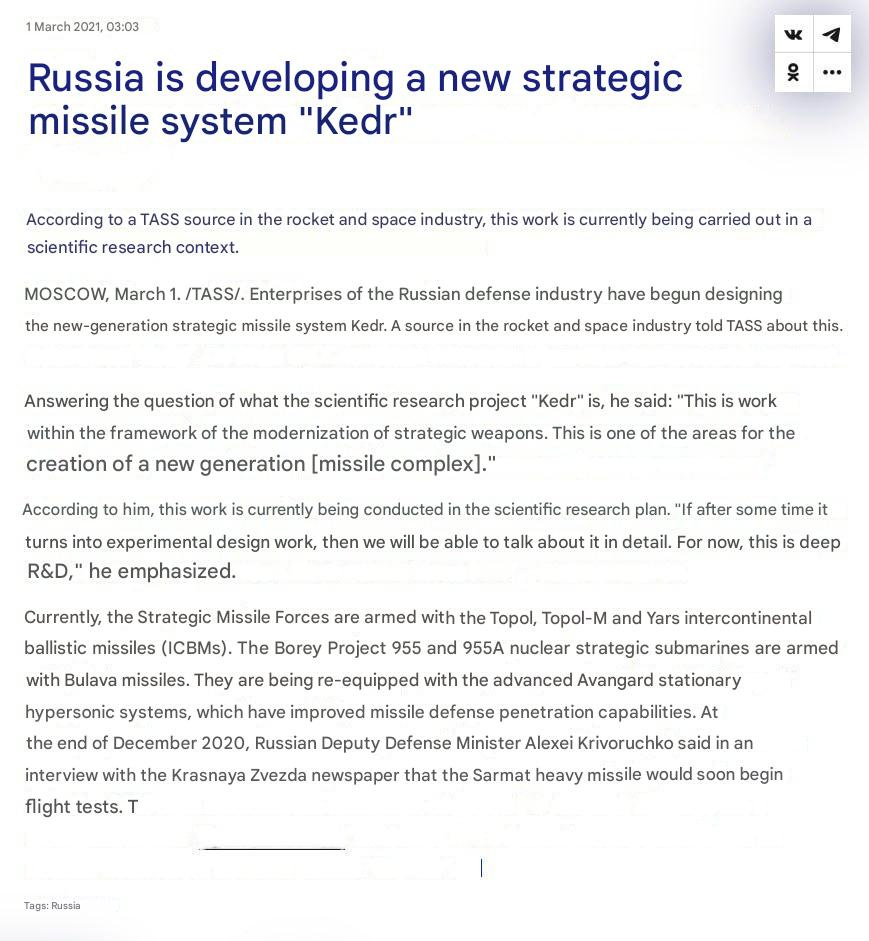
Budanov, on the other hand, claims to have even more knowledge of the ‘Oreshnik’ program. He explained that the program was actually called Kedr, or Cedar:
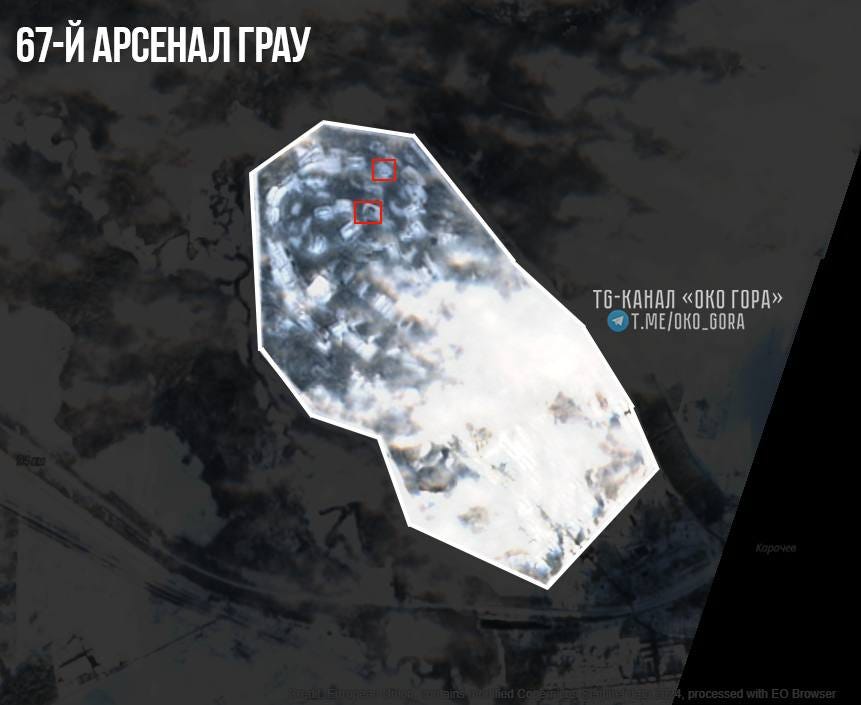
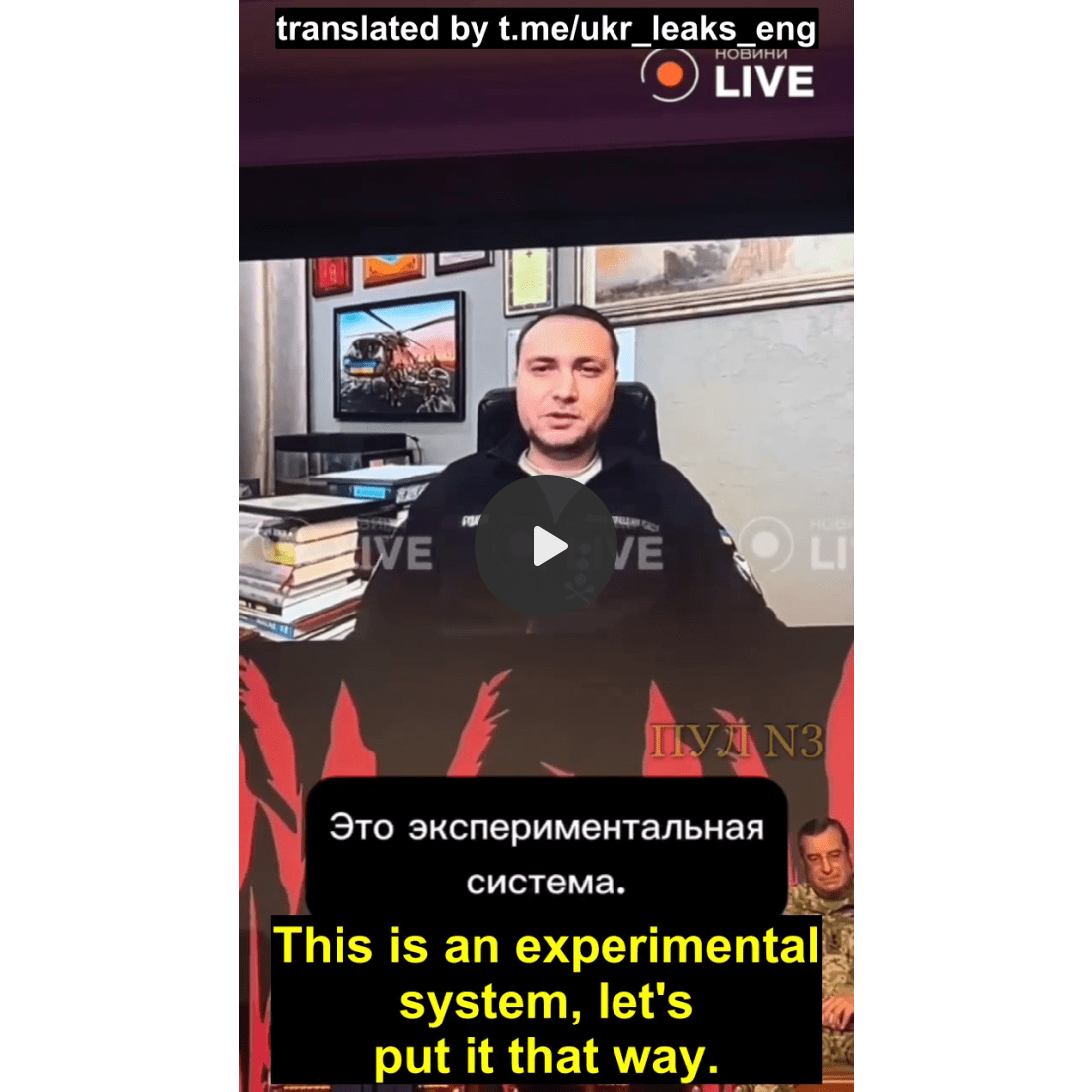 He says “thank god” they are not mass produced yet, but we’ve seen that Putin has ordered that to happen—woe for Budanov. But forget where it came from—the big question on everyone’s minds is: is it actually effective? In his above speech, Putin specifically called the missile a “precision” system rather than a regular nuclear MIRV which doesn’t require exacting precision. There is now fierce debate as to what damage if any was done by Oreshnik. A few hazy commercial satellite photos have shown what some claim is no damage to the Dnipro ‘Yuzhmash’ enterprises:  The problem is the pictures are extremely low quality. Russia doesn’t typically publish BDA photos from its own military satellites presumably so as not to give away their satellite’s capabilities. The West has this luxury because most published BDAs come from Western “commercial” satellite companies, which Russia doesn’t really have to that extent. Note how whenever a strike is inconvenient for the West, very blurry photos are published. But when one fits the narrative, they produce extremely clear satellite photos almost instantly. In Israel, we got blurry photos after the Iranian hit, which bought Israel time to cover up damage to its bases; only after a week or two did better resolution shots appear. Now, with Ukraine’s alleged ATACMS strike on Russia’s 67th GRAU, we got this abomination, proving the attack did no damage:
Recall when Ukraine did actually succeed in hitting Russia’s Toropets arsenal months ago, the clarity of the photos was mindblowing: 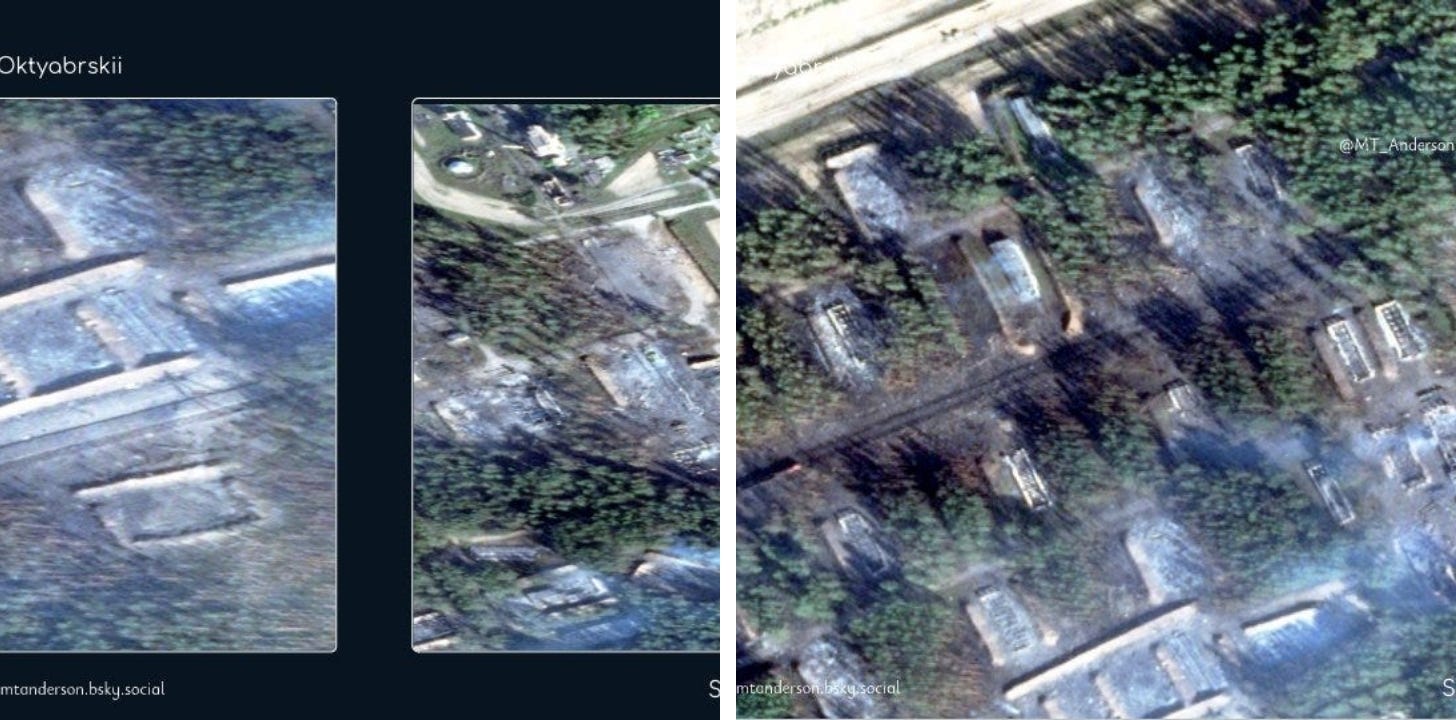 Whenever a strike doesn’t suit the West, there are always those “pesky clouds”, it seems. So here too, we do not have clear photos of Yuzhmash. However, there are some quite interesting eyewitness accounts, though completely unverifiable. Firstly, this report:
Followed by this one:
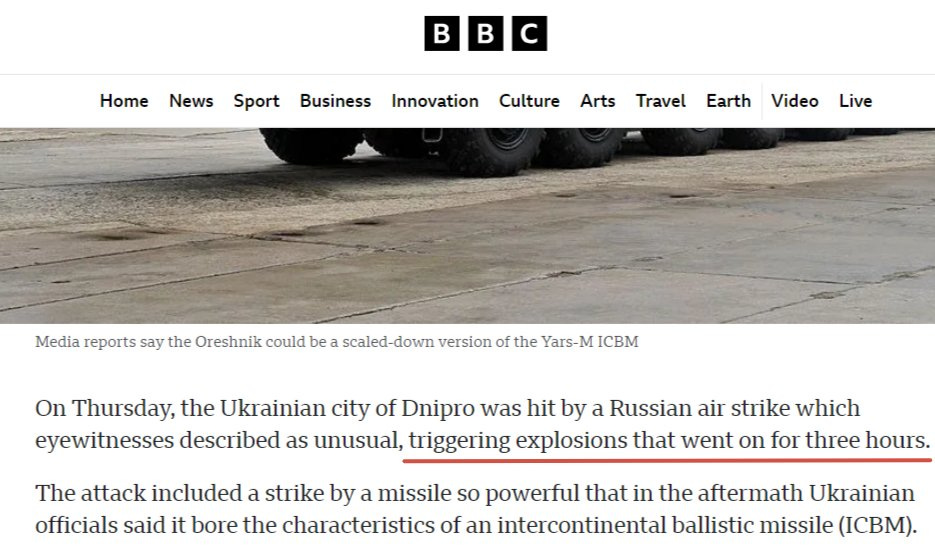
The above comes from an audio of a Ukrainian man who claims he spoke to his ex-classmate who works at the Yuzhmash plant. She allegedly told him the plant has been hit many times before, and there are always some fires which are put out and things eventually repaired. But this time the workshops were turned completely to ‘dust’ and no longer exist. Listen for yourself (first part is AI dub, then original audio): 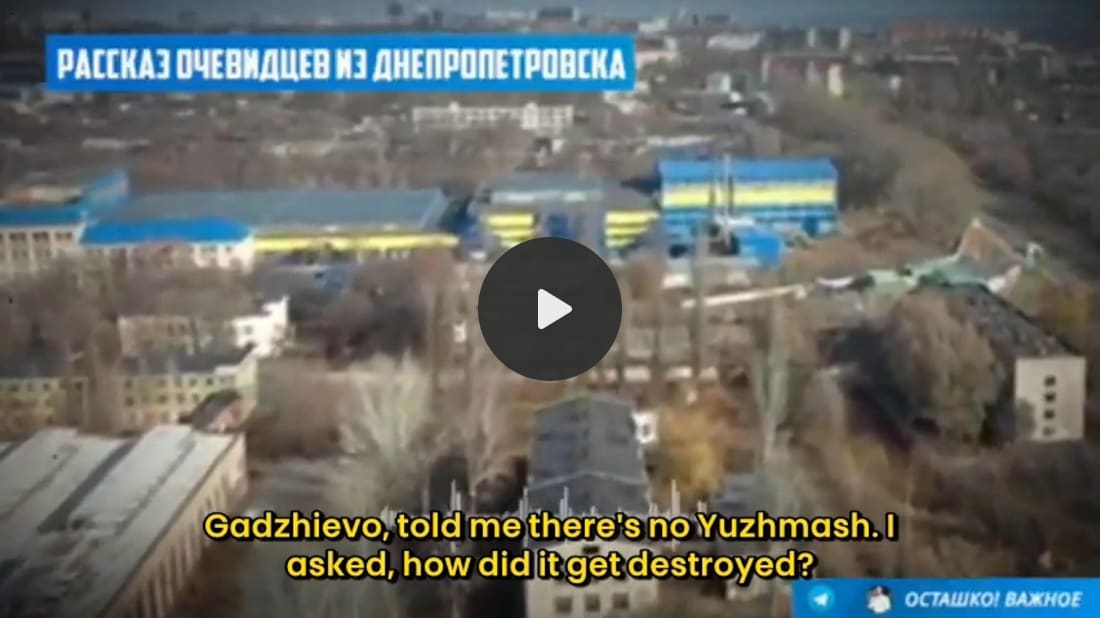 It may seem easy to dismiss the above offhand, but then we have an official word from BBC’s article which claims the uncommonly powerful strike produced “explosions that lasted for three hours”:
How do we square the contradictory sides where images don’t appear to show overt destruction, yet there are reports of massive internal damage? The most plausibly logical explanation is that the workshops are all on lower levels. We know the plant has many levels below and was designed to withstand nuclear strikes, as mentioned in my last report. No sane production would be allowed on the top level when the plant has already been repeatedly targeted by previous Russian strikes. As such, the hypersonic submunitions likely “sliced” through the top layers without creating too much obvious destruction, but vaporized everything further down underneath. It’s sort of akin to how some shooters don’t like to use high velocity ammo because of an effect called “over-penetration” where it actually goes right “through” a person cleanly without damaging them too much. Similarly here the munitions may have sliced through the thin roofs through several levels of subterranean workshops, turning those to “dust” as per the above claims. The fact is, Russia obviously did not intend to destroy the entire enterprise, much of which is empty or defunct, otherwise it would have employed far more missiles and other weaponry. A nuke would not be able to destroy that entire enterprise—one of the world’s largest. As such, it’s foolish to look for massive damage over the breadth of the entire dozens-of-square-kilometer premises. Rather, there are only a few key buildings Russian likely targeted, and higher quality satellite footage of those key spots is required—but don’t expect it any time soon for the obvious reasons. As for the precision, though we have no exact way of knowing just yet, but there is one interesting data point I overlooked in my last analysis. This analyst brought it up:
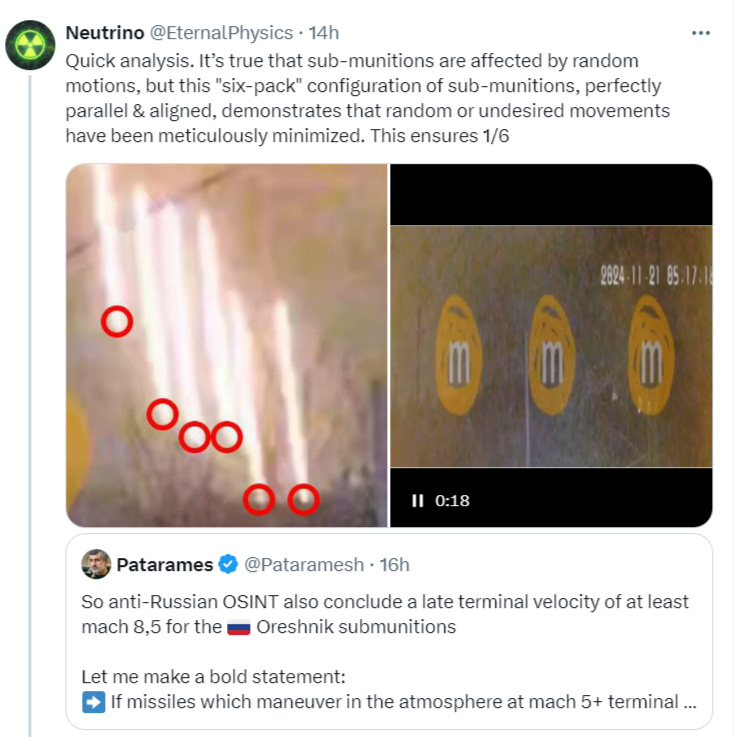
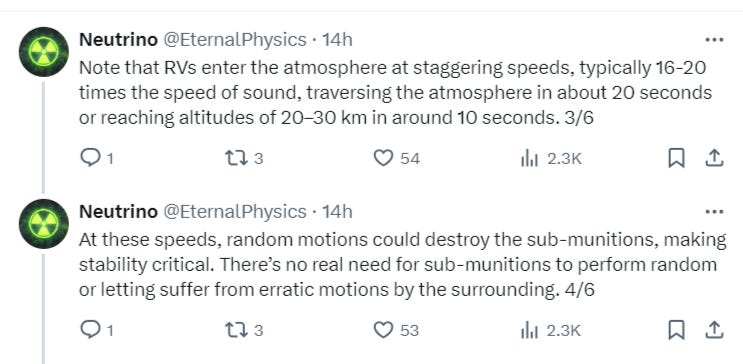
The fact that pushing Mach 10+ the small submunitions are able to retain perfect uniformity means some kind of very precise guidance system appears to be at work. These munitions would have been released likely very high up in the atmosphere, and at such speeds, there are so many powerful countervailing forces to throw them off, that only an incredibly precise guidance system—which Skibitzky mentioned earlier, if you’ll recall—could allow them to retain such uniformity down through terminal phase. It’s not definitive proof, but it’s at least some evidence that a precision guidance system is at work. Lastly, some new photos of the claimed recovered artifacts from the Oreshnik strike: 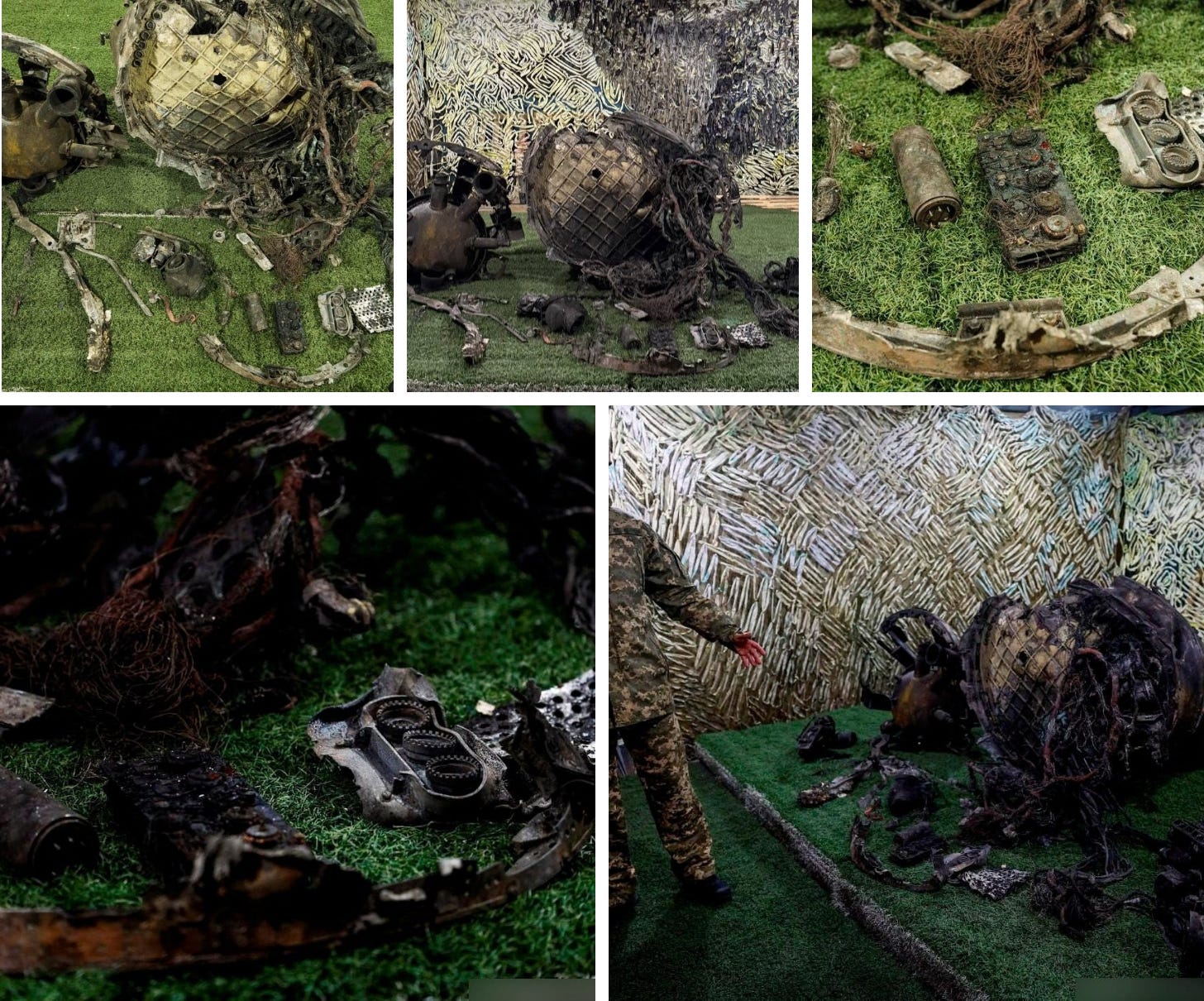 One commentator’s brainstorm:
A Tass article from 2021 describing the candidate Kedr project:
A few last noteworthy videos: A British mercenary was captured in Kursk:  He happens to be from a special signals unit that some reports claim is likely tied to British intelligence. — Now a German 2A4 Leopard was captured and has entered service with Russian forces. 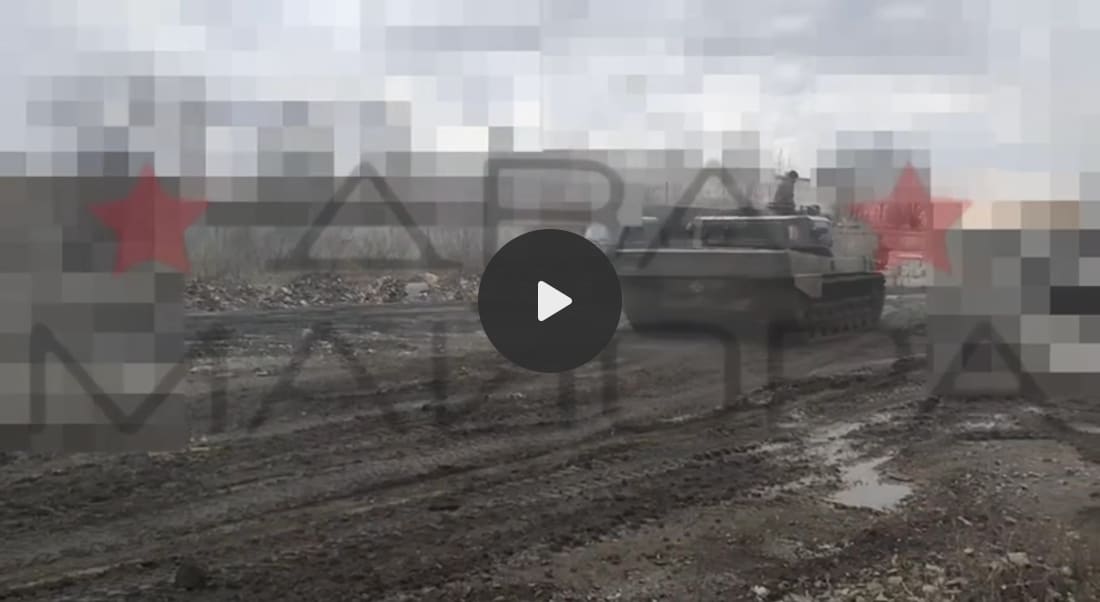 They said German Tigers would again prowl Kursk, but in a display of poetic justice, they are now defending Kursk. Bradleys are starting to enter service in the Russian Army as well: 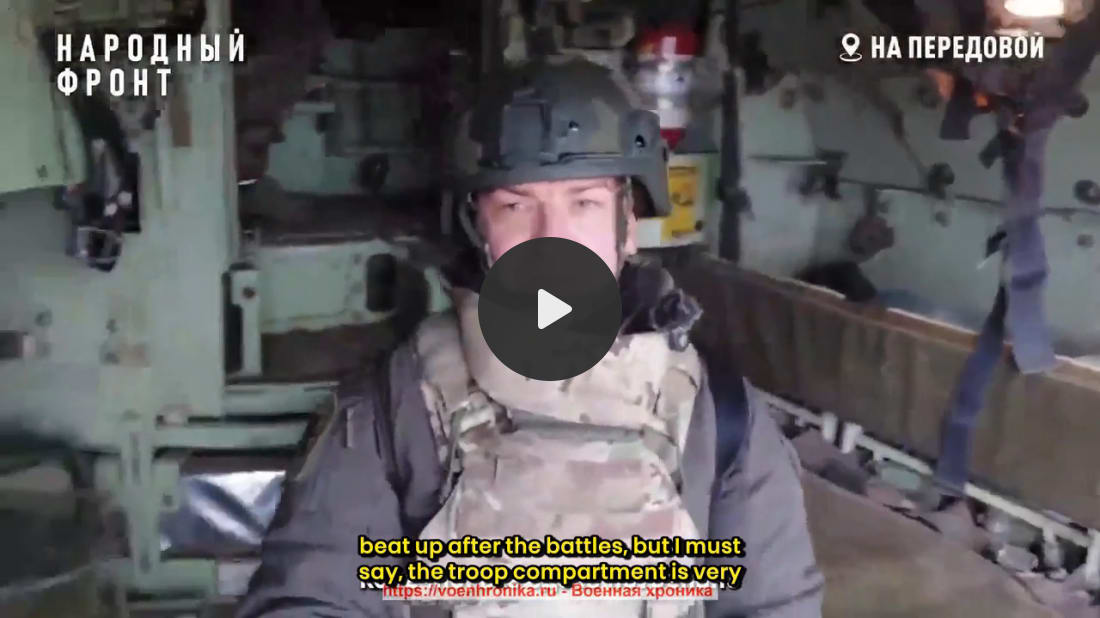 — An interesting unseen outtake from the end of Putin’s momentous speech wherein he made it clear that NATO countries could be targeted by Oreshnik next if Western escalations continue. From a behind the scenes camera, Putin could be seen ending the speech, getting up, and saying: “I think I was quite clear.” 
|