
The Birth of the Protocols – Nick Kollerstrom
Sun 11:13 am +00:00, 26 Jul 2026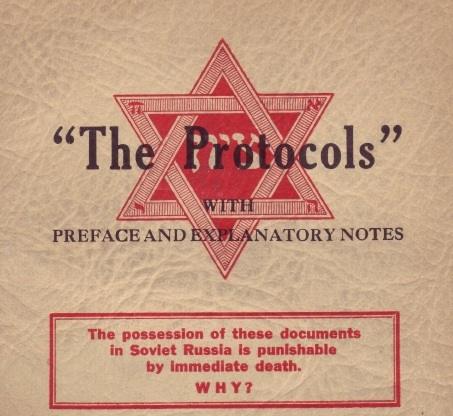
Source: https://www.unz.com/article/the-birth-of-the-protocols/
Nick Kollerstrom is an intelligent and reliable guy
He dissected the Holocaust narrative in his book “Breaking the Spell”
Which led to the destruction of his academic career
It is a highly recommended read, certainly by me anyway 🙂
In this long essay he examines the origins of the famous Protocols, about which he says:
“No other text seems to have been describing the 20th century – and the 21st. It’s been described as the second most read text after the Bible,[16] as permanently in print around the world, translated into every written language, and as the most profound political text since Plato’s Republic.[17]”
==========================
It is here argued that ‘the Protocols of the Learned elders of Zion’ was mainly composed between 1818 and 1864. We here explore the thesis propounded by Henry Makow, that they were composed in Paris by a member of the Rothschild banking dynasty.[1] Some of the ‘forgery’ claims will also be reviewed.
A Brief Background Sketch
In 1815, Lionel Nathan Rothschild trumped the Bank of England, he crashed it in the aftermath of the Napoleonic Wars. He in effect took over the Bank of England, then in 1816 he did much the same with France, its bank was taken over by the Rothschilds: two national banks.[2] Such a thing was totally unheard-of: that, by speculation, a family gained financial power over nation-states. In 1818 the Rothschilds made loans to European governments, beginning with Prussia and following with issues to England, Austria, Naples and Russia.
As the Protocols observed, Freemasonry was employed as a means of concealing the new movement, formulated by the brilliant mastermind Adam Weishaupt in Bavaria: back in the 1780s a Luciferian ‘Illuminism’ began permeating Western Freemasonic lodges, with a philosophy radically different from that which they had earlier contained. Weishaupt wrote: “The great strength of our Order lies in its concealment, let it never appear, in any place in its own name, but always covered by another name, and another occupation. None is fitter than the three lower degrees of Freemasonry; the public is accustomed to it, expects little from it, and therefore takes little notice of it.”[3]
In 1781 the Illuminati hierarchy became added to the first three degrees of Masonry (Masons at the Congress of Wilhelmsbad, 20 December). On returning home, Comte de Virieu, a Mason from the Martiniste lodge at Lyons, reported: “I can only tell you that all this is very much more serious than you think. The conspiracy which is being woven is so well thought-out that it will be impossible for the Monarchy and the Church to escape it.”[4]
What was so powerful about the new movement, what was its terrible potency? It was we are here suggesting a spiritual movement, threatening to destroy the entire established order of things, it was Jewish at its core[5] (‘the doctors of Unbelief’) and it was based upon the godlike way in which paper money could be created out of nothing –with interest charged upon it.
The Inception had begun in 1694, two centuries earlier, with a Dutch king put onto the English throne, and Dutch financiers putting up some gold, and thereby acquiring the magical ability to multiply paper money – it was called, the ‘Bank of England’. It’s a well-told story. We are only here concerned with a creative act, maybe a century and a half later: when did one individual compose the awful twenty-four fold ‘Protocols of the Learned Elders of Zion? We surmise it was one of the 33rd degree, in the Paris Mizraim Lodge, who maybe gave them monthly over a couple of years.
The Rothschilds
Clearly, there is an ‘I’ in the text, a single Author, eg: ‘To-day we shall touch upon the financial program, which I put off to the end of my report as being the most difficult, the crowning and the decisive point of our plans’. (Protocol 20)
The 6th Protocol describes the experience of crashing a national currency, whereby ‘we,’ the dreadful secret ‘we,’ have the power to do that. We are here endorsing Henry Makow’s view, that it has to have been a Rothschild who spoke the words: ‘We are creating huge monopolies upon which even the large fortunes of the goyim are dependent so that they will go to the bottom together with the credit of the states on the day after the political smash.’ That phrase has to be anchored in the historical reality of 1815-8, and written from personal experience.[6]
That text came from no book or tradition, but came in the aftermath of seizing control of the French and British banking systems; only in the wake of such shattering and unprecedented events could the new, financial technique for World Domination come to the cruel and heartless intelligence which composed the Protocols. It could not I suggest have happened any earlier, and may have been a decade or so after these acts – when the stupendous significance of their wealth, plus also maybe the success of Weishaupt’s Illuminism[7], blossomed into the evil plot.
If you will look back at every war in Europe during the nineteenth century, you will see that they always ended with the establishment of a “balance of power.” With every reshuffling there was a balance of power in a new grouping around the House of Rothschild in England, France, or Austria. They grouped nations so that if any king got out of line, a war would break out and the war would be decided by which way the financing went. Researching the debt positions of the warring nations will usually indicate who was to be punished (Economist Dr Stuart Crane[8]).
– the exact policy described in Protocol 2: ‘It is indispensable for our purpose that wars, so far as possible, should not result in territorial gains: war will thus be brought on to the economic ground, where the nations will not fail to perceive in the assistance we give the strength of our predominance, and this state of things will put both sides at the mercy of our international agentur.’
On 19th June 1815 Nathan Mayer Rothschild crashed the English stock market then on 20-21 June ‘the Rothschild family gained complete control of the British economy and forced England to set up a new bank of England, which Nathan controlled outright. In that year Nathan Mayer Rothschild[9] in effect took over the Bank of England, becoming Nathan Mayer, Baron de Rothschild.’[10] Then in France on 5 November 1818 Rothschild agents began buying huge amounts of French government bonds, and ‘Rothschilds gained complete control of France’s finances.’ (Ibid) His son Amschel Mayer is known for saying in 1838, ‘Permit me to issue and control the money of a nation and I care not who makes its laws.’ The Rothchilds profited immensely from wars, funding both sides in accord with the Protocols advice.
‘It is more likely that Rothschild’s grandson, Lionel Nathan Rothschild (1809-1879) or someone like him, is the author,’ Henry Makow conjectured. Lionel Rothschild was cast as the banker “Sidonia” in a novel by Benjamin D’Israeli, Coningsby (1844):
No minister of state had such communication with secret agents and political spies as Sidonia. He held relations with all the clever outcasts of the world. The catalogue of his acquaintances in the shape of Greeks, Armenians, Moors, secret Jews, Tartars, Gypsies, wandering Poles and Carbonari, would throw a curious light on those subterranean agencies of which the world in general knows so little, but which exercise so great an influence on public events. The secret history of the world was his pastime. His great pleasure was to contrast the hidden motive, with the public pretext, of transactions.[11]
James Meyer Rothschild (1792 – 1868) was a 33 degree Scottish Rite Mason, was advisor to two kings of France, and became the most powerful banker in the country following the Napoleonic Wars. He and his sophisticated Viennese wife were at the center of Parisian culture. One could here add, that the text was composed by a teetotaller, from its comments about alcohol and the goyim.
The grand serpent, coiling in its 24-fold dark splendor, threatening to embrace the world, was it born then? The Mind that conceived it was, as Solzhenitsyn observed, of ‘well above normal abilities,’ its plan being ‘more complicated than a nuclear bomb.’[12] That is not the text we have now, because it was polished up prior to its debut at the First International world Zionist Conference in Basel in 1897.
The Text of Maurice Joly
Some readers – or maybe most – will believe that the Protocols were a ‘forgery.’ A forgery of what? We here define this concept, as meaning, that the Protocols were composed around the end of the 19th century. There are several allusions to events at the end of the 19th century in the text, eg the notion of having politicians who can be manipulated through having some stain upon their character: ‘some Panama.’ The Panama crisis happened in 1892. If you believe it’s a forgery, you will believe it was composed after that date, and done by a member of the Russian secret police the ‘Okhrana’ – going to Paris and writing it in French, that’s the story.[13]
In 1864, a book by Maurice Joly was published, Dialogues in Hell,[14] which had clearly overlapping material from the Protocols. One had copied from the other. That fact is the starting-point, upon which everyone is agreed. Henry Makow’s hypothesis is here being explored, whereby Joly copied, having seen the proto-Protocols, and not vice-versa.
Maurice Joly, “a Jew whose real name was Joseph Levy, was a lifelong Mason and member of the ‘Lodge of Mizraim,’” explained Henry Makow, “He was the protegé of Adolph Cremieux (Isaac Moise Cremieux 1796-1880) the head of the lodge and a Minister in the Jewish-backed government of Leon Gambetta.”[15] That connection with the Mizraim Lodge is important.
Joly’s text had been viewed as a polemic against Napoleon III, who arrested him for it. Few would read that text today, unless studying French literature – whereas, millions all around the world are continually reading the Protocols, on account of the doomy, hope-terminating manner in which it seems to be describing how our world is unfolding. No other text seems to have been describing the 20th century – and the 21st. It’s been described as the second most read text after the Bible,[16] as permanently in print around the world, translated into every written language, and as the most profound political text since Plato’s Republic.[17]
Less than one-sixth of the Protocols text overlaps with the Joly text.[18] That degree of overlap may hardly be enough to indicate its derivation. The Joly text is standard Machiavellian philosophy, about how politicians need to cheat and lie, etc: whereas the Protocols are prophetic of what was to develop through the 20th century, they reach into the future, which might have meant little to Joly. For Joly, despotism was to be achieved without violence: “violence plays no role” (p. 174); “I who have taken as final policy, not violence, but self-effacement” (p. 226) – whereas the Protocols describe a program of routinely bumping off enemies in secret.
Comparing two of the Protocols texts (with thanks to Henry Makow): Joly’s Dialogues say: “Everywhere might precedes right. Political liberty is merely a relative idea. The need to live is what dominates states as it does individuals,” which is compared to the First Protocol: “From the law of nature right lies in might. Political freedom is an idea but not a fact, and one must know how to use it [political freedom] as a bait whenever it appears necessary to attract the masses … to one’s party for the purpose of crushing another who is in authority.” (Protocols 1) The difference here could hardly be more striking: Joly is reflecting on matters as a political theorist, while in contrast we can hardly doubt that the Protocols author is describing actual practice, what has been and is being accomplished.
Joly’s Dialogues say: “Revolutionary ferment which is suppressed in one’s own country should be incited throughout Europe” expressing a standard Machiavellian tactic for a nation-state (much practiced from London we may note during the heyday of the British empire), and this is comparable to the 7th Protocol: “Throughout all Europe … we must create ferments, discords, hostilities.” But, there is no reference to suppressing these in one’s own country. The Author does not have a nation-state to promote, all European states have to submit!
There is nothing anti-Semitic in the Joly text, it contains no hint of a Jewish plot. Whereas, the Protocols are about nothing else. Had the Russian Okhrana wanted to incite anti-semitism – supposedly, we are told, the reason for the ‘forgery’ – why on earth would they have wanted to allude to this text?
Maurice Joly knew something terrible. He had to picture in 1864 a descent into Hell to describe it – and was jailed for his efforts. It was said of him, ‘It is his lasting achievement to have uncovered in the analysis of his own times the vulnerabilities of modern politics to a new form of tyranny.’[19] What new tyranny was that? The sole and precise goal of his Dialogue, he affirmed in the opening words, was to describe: ‘… one political system in particular that has not varied in its methods for a single day since the unfortunate and, alas, already too far away date of its inauguration…The supernatural duration of certain successes [in this field] is furthermore intended to corrupt honesty itself; but the public conscience yet remains, and the heavens will one day interfere in the games being played against it.’
Whatever could he have meant? He is here claiming, that he wrote his book to warn about a terrible political scheme, which had already begun, which he saw as never deviating from its aim since it was conceived, which appeared to have a supernatural ability to corrupt ‘honesty itself’ – and, it would require heaven to intercede in order to put a stop to it! His message was, he averred, applicable to all governments, not to one in particular. Bear in mind that Joly was under a Masonic oath of secrecy and so cannot say anything more direct.
I suggest that these very important words of Joly are compatible with a composition date in the 1840s for the Protocols: it was a ‘far away’ date and yet clearly within his personal memory. That was the time of Marx and of the great revolutionary ferment in Europe.
From France to Russia[20]
Mr Sergius Alexandrovich Nilus published the Protocols in 1905. He had served in Tsar Nicholas II’s court as its Minister of Foreign Religions and had commanded a detachment of Don Cossacks, being decorated for heroism. He averred: ‘It is nearly four years since the Protocols of the Elders of Zion came into my possession.’[21] His Russian text derived from a French original,[22] there is very wide agreement on this point.
In 1884 the daughter of a Russian general, Justine Glinka, was in Paris to obtain political information on behalf of the Tzar, which she was communicating to General Orgevskii in St. Petersburg. She employed Joseph Schorst,[23] a member of the Jewish Freemasonic Mizraim Lodge in Paris,[24] who one day offered to obtain for her a document of great importance to Russia, on payment of 2,500 francs. This sum was duly sent from St. Petersburg, paid over and the document handed to her. She translated it into Russian and then handed it over to Orgevskii, who in turn handed it to his chief, General Cherevin, for transmission to the Tsar. Cherevin, being under certain financial obligations, may have been pressured not to transmit it and instead filed it away.

Justine Glinka on her return to Russia dwelt in a place called Orel, where she gave a copy of the Protocols to the marechal de noblesse of this district, Alexis Sukhotin, who showed it to two of his friends, Stepanov and Nilus. That was in the year 1895, and we have a signed and witnessed testimony to this effect, which there seems no reason to doubt.[25] That could be the earliest date for the definite existence of this document.[26]
Nilus’ son testified at the Berne trial (of 1935, concerning the Protocols) that he had seen Stepanov hand over a manuscript in French of the Protocols to his Father in June of 1901.[27] As we’ll see in the next section, there are various bits of the Protocols which could only have been composed in the 1890s. Stepanov printed and circulated a text privately in 1897, while Nilus published it in 1905 as a chapter in his book The Great Within the Small, a copy of which was deposited in the British Library.
The Protocols were first published in September 1903 in ten issues of the St. Petersburg periodical Znamya as ‘Protocols of the Sessions of the World Freemasons’ Alliance and of the Sages of Zion:’ no copies remain.[28]
Birth of Zionism
The year 1897 is ‘considered the start of practical Zionism’[29], i.e the quest for a Jewish homeland. Theodore Hertzl’s book came out the year before. It is unthinkable that the Protocols could have been composed around that time, but not allude to it. The complete absence of this theme from the Protocols strongly indicates that they were composed much earlier, before Zionism had blossomed. The ‘learned elders’ did not dare to add in Zionic plans to the hallowed Protocols, that would have been too massive an adjustment.
Think carefully of the successes we arranged for Darwinism, Marxism, Nietzeism. To us Jews, at any rate, it should be plain to see what a disintegrating effect these directives have had upon the minds of the goyim’ (Protocol 2)
We may doubt whether the banker dynasties did arrange such successes – maybe for Marxist-Leninism, for Stalinism and for Bolshevism, but not these intellectuals as such. However, the authors (plural) wanted to claim such for the Zionist conference at Basel. Also the use of ‘to us Jews’ is not generally characteristic of the main text, written (as Henry Makow has argued) by one individual. Only at the end of the 19th century not its middle could the success of such intellectual ‘anti-Christ’ movements have been averred. The ‘us Jews’ suggests a plural authorship, as the learned ‘elders of Zion’ handled and prepared the final manuscript.
There is almost something satirical about such a claim, which in turn fuels claims of these texts being a ‘forgery.’[30] Likewise, the text extols the misleading of Youth with nihilism via Leon Bourgeois, the French Minister of Education around 1990: ‘one of our best agents, Bourgeois’ (Protocol 16). Was that comic satire? Let’s just say, it was an add-on. Or, they threaten to blow up cities with the Metro-underground, which was constructed at a similar time. Was that a joke? If these fin-de-siècle touches were added by ‘Elders of Zion’ with a Talmudic dislike of Christian culture, then they were but adding glitter to the main deep and terrible argument, formulated much earlier in the century.
We here concur with Peter Myers: ‘My argument is that Joly did not create these parallel passages ex nihilo, but modified an existing revolutionary text (precursor of the Protocols), reworking parts of it to suit his attack on Napoleon III’. Thus, Leon Bourgeois, French Prime Minister in 1895-6, frequently spoke in favor of a system of teaching, and in 1897 these speeches were published in a book, L’Education de la democratie francaise. Then, a passage in Protocol 10 has the Elders recommend the election of presidents with some ‘Panama’ in their past. This refers almost certainly to Emile Loubet, Prime Minister of France when the Panama scandal reached its climax in 1892.
As for the Paris underground, the Metro, plans for it were announced in 1894, but it was only in 1897 that the municipal council granted the concession: in view of the threat in the Protocols to blow up capital cities from the underground railways. In 1896 the Russian Minister of Finance Sergey Witte proposed the introduction of the gold-standard in Russia, in place of the gold-and-silver standard then in force; and in 1897 it was in fact introduced. This too figures in the Protocols – in Protocol 19 there is the observation that the gold standard has ruined every state that has adopted it. But, above all, there is the title of the ‘forgery’ itself. One would normally expect the mysterious rulers to be called Elders of Jewry or Elders of Israel – as we have seen, the first Zionist congress [was] at Basel.[31]
But we’re not going all the way with Mr Meyers:
The year of the congress was 1897. All in all it is practically certain that the Protocols were fabricated sometime between 1894 and 1899 and highly probable that it was in 1897 or 1898. The country was undoubtedly France, as is shown by the many references to French affairs.[32]
He has shown some impressive final text adjustments in 1897, the very year of the Congress – but, we should not confuse this with the composition of the masterpiece itself. That year is when they were finished, not composed.
Was it a Forgery …
In 1921, forgery claims appeared in papers of New York, Paris and London. I here wish to argue, that the incoherence and implausibility of these stories, is itself evidence against the ‘forgery’ claim.
The first of these appeared in the New York American Hebrew of 25 February, featuring testimony by the rather notorious Catherine Radziwill[33], a Russian princess. She claimed to have been living on the Champs-Elysees in Paris in 1904 (but, she never did[34]), when a member of the Russian secret police came by and showed her the French original of the Protocols he was just forging. Did he show it to a society gossip like Ms Radziwill, who had just been jailed for two years on charges of fraud and theft? That reminded her of an earlier draft of the same document she had been given in 1885.[35]
The next forgery claim appeared in a Paris newspaper, a testimony by Count Alexander du Chayla, entitled Nilus and the Zionist Protocols on May 12th. (NB, in no way can the Protocols be described as ‘Zionist’) Du Chayla, who had been paid to write this text, impugned the character of Sergius Nilus, claiming Nilus had obtained them via the Russian Okhrana secret police,[36] and had known the Protocols were a forgery when he published them. But, we may wonder, would the Russian police really want to entrust this prized document to a Russian monk, who would do nothing with it for several years?[37]
Would they really want to rely upon him, to translate it back into Russian? Such claims contradict the preface with which Nilus accompanied the work. Lord Sydenham in a letter to the Spectator of 1921, wrote of Nilus: ‘He was I have been told by a Russian lady, absolutely incapable either of writing any portion of the Protocols, or of being a party to a fraud;’ Lord Sydenham expressed puzzlement that no-one had translated Nilus’ 1805 book from the Russian, which contained the Protocols as one chapter, as would ‘give some idea of the man.’[38]
Next, The Times (16-18 August 1921) revealed the important fact that the Maurice Joly text of 1864 had overlaps with the Protocols – but it hugely exaggerated the claim, averring that there was little in the Protocols not found in the Joly text. It had its Constantinople correspondent discover the Joly text. As Makow points out, this was deception, which only worked because at that time the Joly text was generally unavailable: ‘Napoleon III’s police had seized it.’[39]
On the 100th anniversary of the Protocols’ publication, there would appear to have been no better story available, for the Protocols’ origin, than that of Ms Radziwill: her account in The American Hebrew provided the main story, many years later, for The Lie that Wouldn’t Die by Israeli lawyer Hadassa Ben-Itto (2005). This book forgets to mention that Ms Radziwill was convicted several times of fraud and forgery[40], or that French author André Marois called her a “mythomaniac,” concluding: ‘in her life, everything was only deception and lies’[41]. It described how Radziwill’s story fell into two parts, twenty years apart: first 1885, then 1905. Firstly, in 1885 the Okhrana sent unnamed agents to Paris to draft the document, i.e. it was composed by nameless police bureaucrats, Russians writing in French; then, an attempt to convey it to the Emperor fails (would it really be the role of the police to concoct a false document then try to delude the Emperor with it?). It then gets shelved for twenty years. The point of composing it in the first place remains unclear, though at one point Ms Ben-Itto explains, ‘the objective being the wholesale expulsion of the Jews from Russia’ echoing Ms Radziwill’s New York claim. Why would Russian police want to do that, and if they did, why compose it in French? The authoress here even concedes: ‘Who would believe that Russians in Paris had forged a document in French to be published in Russia in the Russian language? It all seemed illogical and unrealistic.’ (p.80) Indeed it does, and had she pondered this a bit longer she might have refrained from writing her book. Why go to all the bother of concocting such an inflammatory manuscript, then leave it on a shelf for twenty years?
In 1905, a need was experienced ‘to develop and enlarge the original into a better and more modern form’ and so, despite the old text being stored in a Russian archive, Russian agents again get sent to Paris to update the text – during which the Russian police agent gets to show the document to Princess Radziwill, showing her the top-secret forgery.
She narrated this story in 1921 in New York, unaware that the Protocols had actually been published in 1903, a fact which kills her tale. Should not The Lie that Wouldn’t Die have just mentioned this? Later on, it narrated the account of Du Chayla, as he gave it at a trial in 1933-5 in Berne, which has the Protocols ‘forged abroad sometime between 1896 and 1900’ (p.293). Should not this contradiction of the earlier story have bothered her? One reviewer observed of this book, ‘The result is a peculiar mix of fact and fiction, a kind of historical novel with invented episodes, dialogues, and inner monologues. The book was enormously successful among critics.’[42]
We’re here in a realm of comic-book storyland, and synchronously enough a bestselling comic did appear in 2005 to spread the message.[43]

Comic: Can you spot the fallacy? Copies of Joly’s book had all been confiscated, The Times had to go to Constantinople in 1921 to find a copy.
… or a Prophecy?
1920: Henry Ford commented: ‘It is too terribly real for fiction, too well sustained for speculation, too deep in its knowledge of the secret springs of life for forgery.’ (Dearborn Independent July 10.
1921: ‘Are they a forgery? But how can one explain then this terrible prophetic gift that foretold all this before hand? The Times, 8 May.[44]
1991 Milton Cooper, in his conspiracy classic Behold a Pale Horse reprinted the Protocols, and added: ‘Every aspect of the plan to subjugate the world has since become reality, validating the authority of conspiracy.’ p.267.
2009: Henry Makow, Illuminati: ‘The authenticity of the Protocols is self-evident to any informed individual with an open mind. They describe the world we live in’.
2012: Web-philosopher Kevin Boyle has described the Protocols as ‘a work of genius written (obviously from experience) by a banking oligarch that describes our modern condition with an accuracy and clarity that no mainstream public commentator comes close to matching.’
That’s over a century after they appeared!
If ….
If such a sinister plot did exist, then it would have affected the process of disclosure, whereby the Protocols emerged into the light of day. Let’s take a closer look.
1878 The first person to write about what is considered to be the Protocols content, was Maurice Joly, who shoots himself 14 years after writing his text. What did he see? Had he seen its very Source?
1884 Mr Joseph Schorst like Joly was a member of the Mizraim ‘Grand Orient’ Masonic Lodge in Paris. He steals a copy of the great secret. He is the Betrayer of the Protocols, and tries to save himself by fleeing to Egypt, but is there murdered. We’d like some more details about this life and death – but alas, it’s all gone.
1897 In Russia a Mr Philip Stepanov, friend of Alexis Sukhotin, prints off some copies of these Protocols, translated into Russian by Justine Glinka. No copies remain[45].- but copies must have reached Sergiei Nilus, and Pavel Krushevan, Editor of the St Petersburg newspaper Znamya.
1903 The editor Mr Krushevan published the Protocols in ten successive issues. No copies remain. His paper folded right after publication and he himself experienced an attempt upon his life, and thereafter takes care to have his own cook with him.
1905 Sergiei Nilus publishes ‘The Great within the small’, one chapter comprising the Protocols of Zion. This has never been translated into English, and only one copy remains,[46] that deposited in1906 with the British library. It’s still there! That was later used by Victor Marsden for his classic English translation, published in 1923. Marsden himself died in 1920 immediately after doing the translation. A Morning Star journalist seems to have done an earlier translation which appeared in 1919.
1906 A separate Russian translation appears, published by Georgi Butmi*.
1917 In Russia after the Bolshevik Revolution, ownership of the Protocols carried a death penalty, which remained in force in the 1950s.
1920 The New York publisher Putnam & Son was about to publish an English language copy of the Protocols, when pressure was exerted upon the publisher threatening him with bankruptcy, and he instead gave notice of its cancellation.
1920 The Peer Lord Northcliffe, founder of the Daily Mail and owner of The Times, wrote an article for the latter (anonymously, 8th May, see above), wondering about the text and marveling at their prophetic tone; saying, “An impartial investigation of these would-be documents and of their history is most desirable.” Over the next couple of years he was declared insane, lost his paper, believed someone was trying to poison him, then died. This was the last British newspaper account of the Protocols, not to call them fraudulent.
1920 Matvei Golovinski Okhrana agent dies aged 55, so the next year he could be given credit as Author of the Protocols.
1921 Mutually-contradictory newspaper accounts describing how the Protocols were ‘forged’ appear in Paris, New York and London. The Times owner Lord Northcliffe appears as no longer in control of his own newspaper, and an account radically different from the previous year’s is published.
1924 Sergiei Nilus was arrested by the secret police (‘Cheka’) in Kiev, imprisoned and tortured. The president of the court told him that this was in return for him “having done them incalculable harm in publishing the Protocols.” After being released for a few months he was then again led before the secret police, the GPU or Cheka in Moscow, and confined. Freed in 1926, he died two years later.
1927 Henry Ford, America’s richest man, had to apologise in public for having allowed a series of articles in his paper The Dearborne Independent to discuss the Protocols as if they were genuine.
1933: a criminal charge was brought against some members of the Swiss National Front, seeking to prohibit publication of the Protocols. Many witnesses were called by the Plaintiff but those called by the Defendants were not allowed to speak, or only one was allowed. After a two-year trial, the Court prohibited publication and the judge declared them to be a ‘forgery’. That decision (May 14, 1935) was announced in the Jewish Press before being delivered by the Court.[47]
* Two Russian translations: A US philosophy professor expressed the matter as follows: “There were two independent Russian translations of the Protocols, the one published by Nilus and another, differing in some particulars, published by a man named Boutmi in 1905. It is the latter from which was made the French translation published by Revision in 1989. It is obviously of importance to collate the two versions.’[48] That may be so, but no-one has done it. A brief glimpse of insight appeared in a testimony given at the 1935 Berne trial:
Butmi was the publisher of another version of the Protocols, and you will notice that there appear in his version remarks by the translator [i.e., of the French into Russian] who maintained and underlined that these Elders of Zion have nothing to do with Zionist organization. The translator wished to correct Butmi, who had argued in his foreword that there was much in common between the Protocols and the Zionist organization.[49]
The unnamed translator here appears as having been present with Georgy Butmi, and added some argumentative comments after Butmi had written his foreword. We concur with this translator, that the document had no connection with Zionism. This is the second time we hear about a translator, the first translation being made by Justine Glinka in Paris. This story appears as another nail in the coffin of ‘forgery’ claims: if Russian police agents had composed the text in Paris, would they really have allowed two different translations to emerge in Russian?[50]
Conclusions
I. If, then, the Protocols are genuine, they are the revised programme of illuminised Freemasonry formed by a Jewish lodge of the Order’ – Nesta Webster, World Revolution, 1921, p.307.
That may be the best answer we are ever going to get as to where this document came from. Nesta Webster wisely concluded that ‘So striking, indeed, are certain analogies not only between the code of Weishaupt and the Protocols, but between the Protocols and later secret societies, continuations of the Illuminati, that a continuation of idea throughout the movement becomes evident.’[51]
The problem is, that the ‘we’ of the Protocols has some sort of deep identity which seems timeless, and is not like anything else. It has a fourfold character, being in turn banker, Jew, Mason and ‘Illuminati’’.
II. Concerning the various forgery-narratives, we may concur with Henry Makow: “In my opinion, the outlawing of Protocols on pain of death in Bolshevik Russia[52] and its execration in the West today proves its authenticity. If your plan for world domination leaked out, what would you do? Would you admit it? No, you’d employ an army of ciphers to stigmatise the document as a hoax motivated by ‘prejudice’ and ‘anti-Semitism.’ They have executed this damage control perfectly, a measure of their power to deceive even in the presence of the truth. This is the only conspiracy that has prevailed in spite of the blueprint being freely available” – Illuminati, p.112
III. The French Okhrana agents Golovinski and Rachovski were victims of posthumous identity-theft by those wishing to construct forgery-narratives.[53] Matvei Golovinski conveniently died in 1920, immediately prior to Radziwill naming him as Author of the Protocols. Hardly anything is available about his biography – although, there is a comic you can read about him. In the meantime I suggest he was not in Paris in e.g. 1998 or whenever the writing-the-Protocols story requires him to be there. His Father knew Dostoevsky, which has led to allegations of stylistic similarity to Dostoevsky’s Legend of the Grand Inquisitor (1894); but, this is really going too far! Suffice to say that if Golovinski had had any such Russian inspiration, the idea of his going to Paris and composing it in French would become even more absurd.
IV. Few copies of Joly’s Dialogue remained in Europe in the 19th century, after Napoleon III’s police had confiscated them, and its unlikely that a copy existed in St Petersburg. Do you want to believe, that Okhrana agents in Russia sent agents to Paris, with instructions to use this hard-to-find text, which was entirely devoid of anti-Semitic remarks, for the sole purpose of whipping up anti-Semitism? That story is never going to make sense. It’s not clear whether Paris libraries had a copy, presumably why Wikipedia claims that the Okhrana obtained their copy of this text in Geneva. But in that case, how would they have known that they wanted to look for it? (Another account has the son of Joly, Charles, coming to St Petersburg in 1902 to meet Golowinski and give him a copy of the book, this unlikely story appeared in 2001)[54]
V. More reliable versions of the story involve an early text being given to the head of the Okhrana in Russia, Mr Nikolai Tcherevine (or, ‘Cherevin’), who died in 1896. The Princess Radziwill had a long-term relationship with him, the most important in her life according to her biographer.[55] She is part of the Mystery of the Protocols, because he would have told her something about this. An investigation of Cherevin’s biography or correspondence in this regard would be valuable. Likewise there is no reason to doubt the signed-and-witnessed testimony of Philip Stepanov, to the effect that he possessed a copy of the Protocols in 1995 (see Note 22), also that he had received his copy from Alexay Sukhotin.
VI. Nilus received the text in French, according to Testimony at the 1935 Berne trial: M. Du Chayla averred that Nilus had received it indirectly from Rachovskii the Okhrana agent in Paris, while Nilus claimed he had received it from Mr Sukhotin. But, if Russian police forged the document in Paris, would they really entrust it to a monk, in a vague hope that he would one day translate it into Russian? If they composed it to stir up anti-Semitism in Russia, then that could only ‘work’ with the document in Russian. Du Chayla averred at Berne that Nilus knew it had come from the Okhrana: would that not make him even less likely to bother to translate it into Russian? Such a harebrained tale would only work if Nilus were an agent of the Okhrana, which even Du Chayla did not suggest. This narrative is locked in self-contradictions! In fact Nilus totally believed that the Protocols were genuine, just as later on he totally believed that the 1917 Bolshevik revolution (with murder of the Russian royal family) was an expression, in practice, of the Protocols’ deeply-laid action-plan.
VII. “There remains a small space to cross before all states of Europe will be locked in the coils of the symbolic snake by which we symbolize our people.” Protocol 2 (Greek citizens, please note) We live in a world today where only a very few nations still do not have Rothschild-controlled central banks – Iran, Syria, North Korea – and such nations are the ones which may get bombed into submission until they do.
Nations therefore experience terrible problems from debt, nearly all are in debt – or, imagine that they are – a situation reminding us of the definition of Goy stupidity, kindly provided in the Protocols:
How clear is the undeveloped power of thought of the purely brute brains of the GOYIM, as expressed in the fact that they have been borrowing from us with payment of interest without ever thinking that all the same these very moneys plus an addition for payment of interest must be got by them from their own State pockets in order to settle up with us. What could have been simpler than to take the money they wanted from their own people?
But it is a proof of the genius of our chosen mind that we have contrived to present the matter of loans to them in such a light that they have even seen in them an advantage for themselves. (Prot. 21)
The sole remedy against the remorselessly-unfolding plan would be, to terminate that which began in 1694, and instead have states able to create and control their own usury-free money – not anonymous foreigners – and without interest at source[56] whereby it would hardly be possible for anyone to grow rich by owning a bank. An Islamic type of banking has to be the answer. The Protocols gloat that the Goyim cannot ever find where the centre of despotic power is located[57] – true, but we don’t need to: all we would need is a real money system, that does not continually enrich the Hidden Ones. The chains of illusory debt have to be broken.