
War! Military ‘needs £70bn to prepare Britain for war’
Thu 10:55 am +00:00, 25 Jun 2026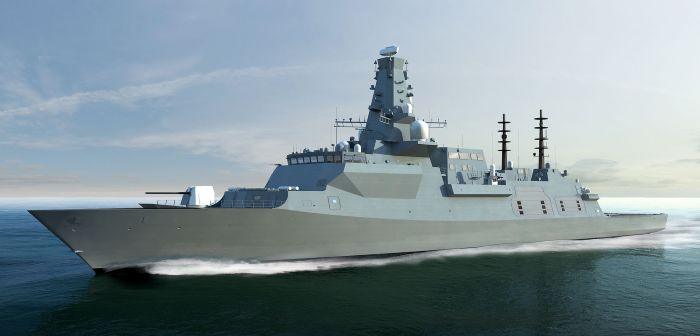
Source: https://www.thetruthseeker.co.uk/?p=328294
Money that Britain doesn’t have
Pictured above, a Royal Navy Type 26 frigate. A new report argues that the Royal Navy needs to purchase eight new Type 26 submarine frigates on top of the eight already ordered
Britain’s military needs an extra £70bn to make it war-ready, a report has warned.
A study published by the Centre for a Better Britain, a Right-wing think tank, said the Armed Forces were facing “terrible” shortfalls in equipment and finances after 15 years of underinvestment.
The paper claimed the country faced “a significant risk of war with a peer power” such as Russia, and that the military “risks catastrophic failure” if gaps are not plugged.
It argued that at least £7bn would need to be spent on new missile defences to counter the threat of attack posed by drones and hypersonic missiles.
The RAF would need an additional £5bn to buy 50 new F-35A stealth jets, which can carry nuclear bombs, to “plug the air defence and offensive strike shortfall”, the paper added.
Britain pledged to buy 12 F-35As last June but there are fears this could be cut to save money after the Treasury refused to provide enough cash to fund the long-delayed Defence Investment Plan (DIP).
Dr Lee Rotherham, the report’s author, accused Rachel Reeves, the Chancellor, and her predecessors of adopting a “dangerous routine of trying to bumble through, by bluff and on the cheap” when it came to military spending.
“Hoping to scrape through by good luck and the skin of our teeth is not an option. We increasingly run the risk of being called out,” he added.
According to the report, the Royal Navy would need almost £10bn to purchase eight new Type 26 submarine frigates on top of the eight already ordered and 10 additional general-purpose Type 32 frigates in addition to the five being built..
A further £250m would be needed to expand the Royal Marines’ fighting force alongside £170m for the Army’s Ranger unit.
The report also calls on additional fleet support ships, minehunters, surveillance planes, missiles and amphibious landing ships to restore Britain’s war-fighting ability.
Sir Julian Lewis, the Conservative New Forest East MP who chaired the defence committee from 2015-2019, said the report’s findings provided “credible calculations of the expenditure needed to restore our ability to defend ourselves”.
Writing a foreword for the study, Sir Julian said: “Must we wait for the worst to happen before providing the resources we need? Far better to invest in them now, so the war plan need never be implemented.”
The release of the report came just hours after Sir Keir Starmer resigned as prime minister, plunging the Government into chaos.
The PM had faced repeated criticism over delays to the DIP, which is almost a year behind schedule. Aeralis, the plane-builder, which called in administrators last month, blamed the chronic delay for its financial woes.
Sir Keir’s resignation on Monday came a week after John Healey, the former defence secretary, and Al Carns, the former Armed Forces minister, both quit over a lack of money from the Treasury for the DIP.
The financial settlement was due last autumn and was meant to outline what Britain would spend on the military over the next decade but has been stuck in limbo after the Treasury refused to fund it.
Andy Burnham, the newly installed MP for Makerfield, is the front-runner to replace Sir Keir in No 10.
It’s not clear what role Mr Burnham will have in the DIP if he becomes PM. The Government previously said it would be published by the Nato summit in Ankara, Turkey, on July 7.
Industry insiders said they had been “left in the dark” over Mr Burnham’s defence priorities. “People don’t really know who he is and what he stands for,” one source said. “The whole defence industry feels pretty in the dark about his philosophy on national security.”
Mr Burnham previously set out a 10-year approach to defence and security, as well as a 10-year approach to public investment and procurement. He also said he was “not at all squeamish” about cutting the welfare bill to fund his plan.
The Government said it remains committed to funding the military, having introduced the biggest sustained increase in core defence funding since the Cold War.
A spokesman for the Ministry of Defence said: “This Government is delivering a generational increase in defence spending – hitting 2.6 per cent of GDP in 2027 and investing over £270bn across this Parliament.
“The Strategic Defence Review sets out our path to warfighting readiness – creating a new hybrid Navy with world-class submarines and cutting-edge warships, investing in air and missile defence, munitions, and increasing the size of the Army.”