
Is America Winning or Losing the War with Iran?
Tue 11:05 am +00:00, 10 Mar 2026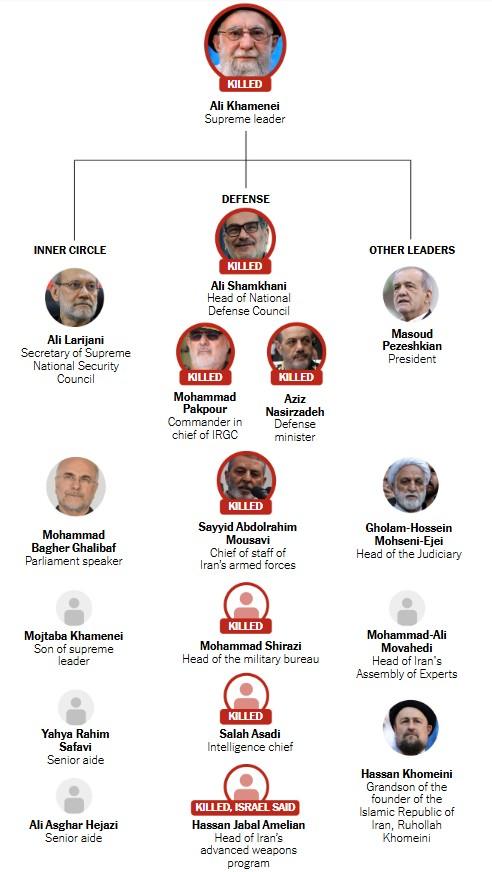
Source: https://www.unz.com/runz/is-america-winning-or-losing-the-war-with-iran/
A balanced and thoughtful assessment from Ron Unz
Mainstream, but still
=============================
For centuries, modern nations had generally conducted their wars in rather gentlemanly fashion, usually making efforts to comply with all the laws and international treaties regulating such conflicts.
A war might often begin with a downcast ambassador delivering a diplomatic note to the accredited government, informing its political leadership that unless certain crucial demands were immediately met, a state of war should be assumed to exist by noon the following day. After performing that doleful duty, the diplomat and his staff would return to their embassy, pack their bags, burn their secret documents, and take the next train to the frontier.
Even Japan’s infamous December 7, 1941 surprise attack at Pearl Harbor had supposedly been intended to preserve all these legalistic niceties. From what I’ve read, the Japanese ambassador and his aides had been instructed to personally hand-deliver a declaration of war to our president perhaps five or ten minutes before their country’s planes were scheduled to begin dropping their bombs on our anchored fleet at the other side of the world, thereby complying with the letter of international law though massively violating its spirit. But delays in decoding diplomatic instructions or other such accidental errors led to a snafu in which the military attack actually came before the official declaration of war that legally enabled it, resulting in a lasting legacy of hard feelings between our two countries.
However, America has always prided itself on its innovations, and in recent years we have applied this approach to the initiation of military conflicts, following the lead of our Israeli mentors in that regard. A perfect example came in how we began our current war against Iran.
Iran was extremely eager to avert such a military conflict, so just as in the past we successfully lured them into several rounds of lengthy peace negotiations with the personal envoys of President Donald Trump.
According to media reports, considerable progress had been made in the talks, and the Iranians had already agreed to many of our demands. They were considering doing so on others as well, making greater concessions than anyone had originally expected. The negotiations therefore adjourned for a couple of days, and were scheduled to resume on the following Monday.
The Iranians naturally had to think long and hard before agreeing to all our terms. Therefore, they held a full meeting of their top leadership to decide whether to do so.
But prompting the Iranians to hold such a high-level meeting had apparently been the underlying goal of our entire negotiating strategy. As the New York Times reported the next day, with so many of Iran’s leaders thus gathered together in one place, they were all killed by an Israeli missile strike, an attack that essentially constituted our official declaration of war:
Israel, using U.S. intelligence and its own, would execute an operation it had been planning for months: the targeted killing of Iran’s senior leaders.
The United States and Israeli governments, which had originally planned to launch a strike at night under the cover of darkness, made the decision to adjust the timing to take advantage of the information about the gathering at the government compound in Tehran on Saturday morning.
The leaders were set to meet where the offices of the Iranian presidency, the supreme leader and Iran’s National Security Council are located.
Israel had determined that the gathering would include top Iranian defense officials, including Mohammad Pakpour, the commander in chief of the Islamic Revolutionary Guards Corps; Aziz Nasirzadeh, the minister of defense; Adm. Ali Shamkhani, the head of the Military Council; Seyyed Majid Mousavi, the commander of the Islamic Revolutionary Guards Corps Aerospace Force; Mohammad Shirazi, the deputy intelligence minister; and others.
That same Times article published a helpful chart showing just how much of Iran’s top military and national security leadership had been eliminated in that sudden, unexpected missile attack.

Led by the heavy coverage in the Times and the Wall Street Journal, all of our subsequent mainstream media accounts emphasized the devastating nature of the blow that America and Israel had struck against Iran’s political and military leadership, immediately followed by the massive bombing campaign that was unleashed in its wake. All these articles suggested the total success of our military strategy, while naturally soft-peddling the completely illegal and rather treacherous aspects of using the ruse of peace negotiations to launch a surprise decapitating strike, killing so many of Iran’s top leaders.
If Japan’s 1941 surprise attack on Pearl Harbor had been combined with the simultaneous assassination of President Franklin Roosevelt, several members of his Cabinet, and most of our military high command in Washington, I daresay that the American media would have portrayed such successful Japanese operations in a rather unflattering light.
My own article was published less than 48 hours after the initial missile strike that began the war, and given my lack of military expertise, I took a very cautious approach to summarizing the outbreak of the conflict.
Once again, we used the ruse of ongoing peace negotiations in hopes of luring our adversaries into a false sense of security. Our initial strikes against top Iranian leaders were quite successful, and by the end of the first day Iranian sources confirmed that we had successfully assassinated Ayatollah Ali Khamenei, Iran’s 86-year-old Supreme Leader, as well as the country’s defense minister and numerous other top military commanders…
Despite those leadership losses, the Iranians almost immediately responded with a barrage of medium and long range ballistic missiles, exactly as they had previously threatened to do, striking our own major military bases in the region as well as sites in Israel. Strict censorship and the fog of war makes it difficult to accurately assess the total amount of damage visited upon either side in the conflict.
Although all our media outlets were reporting our total military success, I emphasized the potential difficulties we faced in attacking a country comparable in size to all of Western Europe and with a population of over 90 million. I noted that knowledgeable military experts had issued similar warnings.
For example, Col. Larry Wilkerson, the longtime chief of staff to Colin Powell, had argued that we might face challenges greater than those in any previous war since the Korean conflict that we had fought to a draw three generations earlier. Indeed, just before the outbreak of the war, our media had carried stories making many of these same points:
Although all our major media outlets had uniformly been fiercely hostile to Iran, during the last few days before the American attack, a flurry of news stories had suddenly appeared emphasizing the severe difficulties that we might face in any such war, and these seemed based upon leaks by top Pentagon sources.
The Israeli government of Prime Minister Benjamin Netanyahu had been the leading force pressing Trump for an immediate attack, but the Financial Times quoted an Israeli report that America would probably exhaust its available munitions after just a few days of combat, with many American military experts having said the same thing.
If these facts were correct, a war against Iran seemed the height of folly. How could we win a war if we would mostly be out of missiles and bombs in less than a single week?
But the larger concerns I emphasized were political ones, and both before and after the attack, these were expressed by thoughtful individuals all across the ideological spectrum.
Tucker Carlson has spent the last decade as America’s leading conservative media figure and a crucial Trump supporter. Just before our attack on Iran he hosted his fellow FoxNews alumnus Clayton Morris of the popular Redacted podcast. Both of them agreed that an attack on Iran would be disastrous and absolutely contrary to American national interests, also noting that only about 20% of Americans favored the idea.
A couple of days later, an outraged Carlson immediately condemned our attack on Iran as “absolutely disgusting and evil.” Other very prominent figures in the MAGA movement such as former GOP Rep. Marjorie Taylor Greene and Alex Jones denounced Trump’s Iran War in equally scathing terms. Greene declared “We voted for America First and ZERO wars,” condemning the administration as a “bunch of sick fucking liars.”
Journalist Glenn Greenwald noted the gigantic hypocrisy that Trump had successfully returned to the White House in 2024 by running as the candidate of peace, but had now begun the biggest war we had fought in at least the half-century since our debacle in Vietnam. In a Tweet viewed several million times, Greenwald denounced Trump’s official “pro-peace” candidacy as having constituted “One of the most shamelessly fraudulent presidential campaigns in American history”
Chas Freeman ranks as one of our most distinguished diplomats, and he also served as an assistant secretary of defense. In an interview immediately after the attack, he warned that our government had reduced the entire world to a complete state of lawlessness, with fateful consequences for all nations, certainly including our own. Prof. Jeffrey Sachs of Columbia University made some equally disheartening points in an interview on the same YouTube channel.
I reported the huge doubts that Freeman raised about the course of the war:
Along with many military experts, Freeman also argued that Iran might actually be better positioned to win a long war of attrition against its American and Israeli foes, perhaps having far greater stockpiles of ballistic missiles.
Even more importantly, the Strait of Hormuz is the world’s most critical oil chokepoint, a narrow waterway off the Iranian coast through which one-fifth of all oil shipments must pass, along with a similar fraction of LNG exports. The Iranians controlled that transit route with their huge numbers of short-range missiles, and had repeatedly threatened to close it if attacked. When the vastly weaker Houthis had closed the Red Sea to cargo shipping during 2024 and 2025, repeated attempts by American carrier task forces to reopen it had proven dismal failures.
Having served as our ambassador to Saudi Arabia at the time of the Gulf War, Freeman is extremely well versed in the geopolitics of oil and he pointed out that the military dimension of any such closure is completely secondary. Once the Iranians declared that they would enforce a blockade and target oil tankers, insurers would immediately pull their coverage, so few if any such vessels would even take the risk of such passage. Indeed, according to news reports, tanker traffic has already dropped by some 70%, and if the closure continues for another week or two, we can expect to see a huge spike in world prices of oil and natural gas, severely straining the world economy.
- Trump’s Iran War as America’s “Suez Moment”?
Ron Unz • The Unz Review • March 2, 2026 • 7,100 Words
Despite such longer-term difficulties, once war began our media outlets uniformly portrayed Iran’s military prospects as very bleak, presenting a narrative that I initially found reasonably plausible and convincing.
According to these accounts, the annihilation of Iran’s top leadership had severely weakened that country’s military reaction, with its retaliatory missile strikes being scattered and disorganized. Our media portrayed the Iranian response as something close to the temporary, desperate thrashings of a beheaded nation, lacking the necessary command and control that might render it effective.
Indeed, according to numerous articles in the Times, the Journal, and other outlets, although Iran did possess a huge arsenal of ballistic missiles, we had already destroyed a large fraction of all the necessary launchers. We were now successfully hunting down and eliminating most of the remainder, while also bombing the entrances to the underground storage sites.
This analysis seemed supported by the very rapid decline in the daily number of Iranian missiles fired, which had dropped by 85% or more after just the first couple of days. And even as the number of Iranian missiles sharply declined, our very effective air defenses were shooting down perhaps 90% of those few missiles that were launched at the territories of our Gulf State Arab allies or Israel.

We were also told that we had successfully eliminated most of Iran’s limited air defense network, giving us near complete control of the country’s skies and allowing our overwhelming air power to complete the country’s military destruction. Thus, we were headed for a sweeping victory within just a few days, exactly as Trump and his top aides had boastfully promised. His Iran War would be almost as easy a victory as his successful raid on Venezuela and capture of its president a couple of months earlier.
On the face of it, such an extremely one-sided military outcome should hardly have been so surprising. Indeed, it almost seemed foolish in hindsight to have expected anything else.
The Iranian defense budget for 2024 was estimated at $8 billion, less than 1% of the trillion dollars that we ourselves used. So we were outspending the Iranians by better than 100-to-1 in military matters and we had a population that was nearly 4 times greater. How could the outcome of any war between our two nations possibly be anything different than what the media was reporting, especially given that we had begun by successfully decapitating the opposing leadership?
As might be expected, our sudden, devastating surprise attack on Iran produced serious concerns elsewhere, notably in Russia. Our website soon republished an article by a prominent Russian policy analyst named Ivan Timofeev that summarized many of these:
The massive airstrikes by Israel and the United States on Iran were not entirely unexpected. Strike forces had been building up in the Persian Gulf for months. Iranian-American negotiations had stalled and offered little prospect of success. Yet the killing of Supreme Leader Ali Khamenei, members of his family, and several senior Iranian officials have sent shockwaves far beyond the region.
Iran has responded with missile strikes on Israel and US facilities in the Middle East. The repercussions were immediate: disruptions to oil shipments in the Persian Gulf and instability in financial and transport infrastructure in the UAE and Qatar…
For Russia, the crisis offers hard lessons.
- Lesson 1: Sanctions are rarely the final stage
- Lesson 2: Pressure is long-term
- Lesson 3: Concessions do not guarantee relief
- Lesson 4: Leaders are increasingly targets
- Lesson 5: Internal instability invites external pressure
- Lesson 6: ‘Black knights’ have limits
- Lesson 7: Balance must be credible
…Iran is not defenseless. Its missile and drone strikes demonstrate capacity and resolve. Actions such as attempting to restrict navigation through the Strait of Hormuz show a willingness to raise costs. Yet the US and Israel appear to judge Iranian retaliation as painful but acceptable.
Deterrence depends not merely on capability but on the adversary’s sensitivity to damage. In prolonged confrontation, tolerance for loss can increase. The 20th century demonstrated how political escalation can erode restraint even in the nuclear sphere.
Russia possesses far greater retaliatory capacity than Iran. But that alone does not guarantee stability. An opponent who calculates that the damage is bearable may continue escalation. The Iranian crisis reveals a deeper mood emerging in global politics: fatalistic determination. Major powers appear increasingly willing to absorb risk and accept instability, which may be the most troubling lesson of all.
The events in Iran are not an isolated regional episode. They are part of a broader transformation in the international system. It’s one in which sanctions evolve into strikes, negotiation coexists with attrition, and leadership itself becomes a target.
- Iran Under Fire: Lessons Moscow Cannot Ignore
Ivan Timofeev • RT • March 4, 2026 • 1,100 Words
Given past attacks on Russia’s nuclear deterrent capability, the assassinations of several top Russian generals, and our apparent attempts to assassinate Russian President Vladimir Putin, the implications of our decapitating first strike against Iran and its leadership were surely not lost upon the Russians.
In the case of Iran, our surprise attack had achieved total tactical success and all early indications were that we would win an easy military victory. But success in combat operations is not necessarily the same as winning a war, and I still suspected that we might suffer a long-term strategic and geopolitical defeat as a consequence of our thoughtless decision.
According to Wikipedia there are some 200 to 260 million Shia Muslims in the world, and, we had treacherously assassinated the 86-year-old Ayatollah Khamenei at the height of the holy month of Ramadan. Among that huge global religious community, Khamenei was probably second in influence only to the 95-year-old Grand Ayatollah Ali al-Sistani of Najaf, Iraq.
Moreover, we had killed most of Khamenei’s family in our attack on his personal compound, including his wife, daughter, son-in-law, daughter-in-law, and four-year-old grandchild. His son and newly appointed successor Mojtaba Khamenei thus entered office mourning the death of his own family.

In that same wave of initial missile strikes, we had killed 165 little girls at their elementary school in another city, and also destroyed numerous other schools and hospitals, killing huge numbers of Iranian civilians.

In all of these military matters, we have now modeled our war-fighting methods upon those long employed by our Israeli ally, perhaps with far-reaching consequences for our country’s future.
- Zionist Israel as the Assassination Nation
Ron Unz • The Unz Review • June 23, 2025 • 11,800 Words
Although the severely biased Western media failed to appropriately cover these horrific atrocities, they were broadcast throughout the world while also inflaming Iran’s population of over 90 million, greatly reducing any possibility that country would accede to any American demands.
Furthermore, Iran as expected announced that it would block the Strait of Hormuz to nearly all cargo traffic. Passage through that very narrow waterway could easily be interdicted by short range missiles, drones, or even old-fashioned land artillery, all of which could be concealed all along the long, mountainous shoreline. We had previously had no success in breaking the Red Sea blockade of the far weaker Houthis, so I saw little chance of America successfully overcoming those Iranian efforts.
After a couple of weeks, the large resulting loss of global oil supplies would be devastating to the American economy and that of the rest of the world. Oil prices yesterday soared well above $100 per barrel, with some estimates that they might soon reach $150 or even higher levels. Moreover, the wealthy Gulf Arab states are also heavily dependent upon food shipments using that same route, and if those were cut off they could begin to suffer huge domestic problems, perhaps prompting them to desperately lobby for peace.
While all these broader strategic considerations were certainly on my mind, everything else that I read indicated that our forces were winning a swift and sweeping military victory over Iran. But I was still not entirely convinced of even that situation.
America possesses many powerful strategic weapons, but perhaps the most powerful one of all is our outstanding propaganda machinery, absolutely unmatched by any combination of its rivals across the world. In past decades such clever but dishonest propaganda had successfully convinced the bulk of our citizenry that we were winning huge victories in Vietnam and in Iraq even while the reality was actually quite different.
My old friend Bill Odom had been the three star general who ran the NSA for Ronald Reagan, and in a 2008 article I described his total outrage over the lies and deceit surrounding our disastrous Iraq War:
- The Life and Legacy of Lt. Gen. William Odom
Ron Unz • The American Conservative • September 8, 2008 • 2,500 Words
The Iraq War had merely been one of many such American media deceptions and I had fallen for some of these in the past. So I carefully reserved judgment on the actual course of the Iran War until additional information began to come out. Lacking military expertise, I would need others to digest the fragmentary evidence and render their verdicts on the combat situation.
Within 48 hours some of this began to happen. Col. Daniel Davis and Commodore Steven Jermy are experienced military analysts, and I watched Prof. Glenn Diesen interview them on his channel. In those discussions, they both made numerous excellent points, and neither of them seemed to think that the war was going very well for the Americans.
Alastair Crooke was a former senior MI6 officer who had spent decades in the Middle East and that same day he too provided a perspective on the war quite different from that presented in our media.
Those early interviews left me suspicious, but the crucial turning point in my military evaluation came a couple of days later when I watched one of Tucker Carlson’s shows on the conflict, a segment that I’d strongly recommend to everyone.
The first half provided a very interesting, crucial perspective on the origins and motives behind the war, a war that Carlson greatly feared might spiral out of control, becoming a global religious conflict pitting more than two billion Christians against a comparable number of Muslims.
But he devoted the second half of his show to an interview with a military analyst named Brandon J. Weichert, whom he considered quite knowledgeable and objective. Although very much a right-wing Trump supporter, Weichert was extremely concerned about the course that the war was taking.
According to Weichert, all the public warnings of our generals had been entirely correct. We’d apparently burned through our available supply of stand-off munitions and thus had gotten ourselves into a serious fix.
Although rather elderly and slow, the Tomahawk cruise missiles constitute the bulk of that arsenal, and in just the first four days of combat we’d already expended some 10% of our entire stockpile, representing an astonishing eight years of new production. Indeed, according to some other estimates I later heard, we’d actually now fired off something closer to 20% of our entire global Tomahawk inventory. So in some sense, America was undergoing something approaching involuntary unilateral disarmament as a consequence of our needless Iran War.
Meanwhile, the Iranians were successfully holding out, destroying all our military bases in the Gulf States and bombarding Israel, leaving us fewer and fewer options for achieving any sort of military victory.
Indeed, Weichert seemed quite concerned that there might be growing pressure on Trump or on the Israelis to use nuclear weapons as their only hope of achieving a military victory. This would be the first and only use of nuclear arms on the battlefield since Hiroshima and Nagasaki more than eighty years ago, and would obviously take the entire world in a very dark and dangerous direction.
The next day, a well-regarded military affairs blogger calling himself Simplicius revealed that the Iranians had effectively blinded our forces by destroying most of our strategic radars in the region. These ultra-high-end radar systems had a price-tag of around a billion dollars each and we could only build one or two per year. Yet in just the first few days, Iranian drone attacks had destroyed nearly half of our entire global inventory:
In particular, NYT and other outlets have now confirmed total attrition of US’s irreplaceable AN/TPY-2 radars meant for THAAD and other high end systems. This radar has an upwards of $1 billion dollar price tag and numbers only in the dozen range total. Only one or two units of these can be built per year at the very most. Iran just potentially destroyed 50% or more of the US’s entire global stock of this rare and irreplaceable system…
Some analysts have the count as follows:
Iran has managed to hit multiple high ended US radars worth more than $3 Bn which form critical core of US BMD (Ballistic Missile Defense) in Middle East:
Muwaffaq Salti Air Base: AN/TPY-2
Umm Dahal: AN-FPS-132
Prince Sultan Air Base: AN/TPY-2
Al Ruwais & Al Sader Air Bases: 2x AN/TPY-2
Even heavily pro-American propaganda OSINT accounts are forced to concede the losses:
The shock of the outcome cannot be understated: Iran is literally blinding the US in the region. And following that, it is launching its most advanced hypersonic Khorramshahr-4—also known as the Kheybar—ballistic missiles at Israel, which are now impervious to interdiction. They are said to release upwards of 80 submunitions in a tight pattern.
Thus, according to Simplicius, the Iranians were doing much, much better than he or anyone else had ever expected.
- Iran Blinds US With Unprecedented Campaign of Strikes on Region’s Strategic Radars
Simplicius • Substack • March 5, 2026 • 1,400 Words
The following day, another lengthy podcast interview confirmed these same claims and painted an equally bleak picture for the ongoing American war effort.
Before leaving the military to become a very popular history podcaster, Darryl Cooper had spent his long service career working with missiles and air-defense systems, and he was very much a Trump supporter, voting for him all three times he had been on the ballot. But he regarded our current military effort as a disastrous failure, and said so.
According to Cooper, the reason that the waves of Iranian missiles had so greatly decreased was that there wasn’t much left to shoot at. Most of the American bases in the region had been almost totally destroyed, and we might never bother returning to any of them.
Our stockpiles of munitions and air-defense interceptors had been exhausted, and we had abandoned all of our Arab allies, letting them get hit as we shifted our remaining defensive systems to Israel, something that they will certainly long remember.
The Iranians had achieved complete escalation dominance. Given the total military disaster and lack of options we faced, Cooper joined Weichert in hinting at the danger that Trump or Israel would turn to the use of nuclear weapons in the desperate hope of salvaging some sort of victory.
Rather than fighting a war of choice, our attack on Iran had been a war of whim, and we had lost any shred of our military honor in the way we had fought it, doing so totally outside the Western tradition. While the Iranians were still honorable, we had fought in the most craven way imaginable.
Cooper’s extremely harsh verdict was echoed in stinging fashion by Australian blogger Caitlin Johnstone, who characterized Trump’s attack on Iran as “Even dumber and crazier than the Iraq War” in a post of that title, a sentiment also Tweeted out by journalist Mehdi Hasan:
And a commenter ridiculed Trump and his misbegotten war against Iran in similar fashion, suggesting that against all odds he had managed to overcome Bush’s record-setting stupidity.:
In this case one thing has to be said of Trump; he’s not afraid of trying for the impossible and actually succeeding where everyone thought such a goal was unreachable and just given up.
It’s kind of admirable in a bizarre “little engine that could” way.
In the future, grade one teachers could inspire their naive charges by telling them about a dolt President who was so stupid that everyone though he was so stupidest man in all of history until another President step up to the plate and proved himself even more stupider.
It will give the young’uns self-confidence and patriotic pride.
Both Weichert and Cooper seemed quite knowledgeable about all these military matters, and the same was true for the Simplicius blogger. Everything that they were saying appeared correct or at least reasonable based upon existing evidence. But none of these individuals possessed the credentials that might impress skeptical third parties, so I was very glad to hear the views of a renowned academic who certainly had those in spades.
For decades MIT Prof. Ted Postol has ranked as one of our foremost experts on military technology, especially on matters involving missile systems, and during his long career he had regularly dealt with groups of three- and four-star flag officers on terms of full equality or better. But he also frequently attracted the enmity of corporate lobbyists for his candid and often less than flattering evaluations of the extremely pricey weapons systems that they marketed to our gullible government.
Although he retired from from his academic post about eight years ago, he has maintained a strong interest in his technical specialty. So while his past briefings would have been restricted to the topmost ranks of our military services, they are now available to anyone who bothers watching one of his interviews on YouTube. I found his March 5th discussion with Col. Daniel Davis particularly enlightening.
As Postol explained, the widespread media claims that our air defense interceptors had been successful against Iranian ballistic missiles seemed utterly fallacious. In fact, these false claims were easily disproven by numerous videos circulating on the Internet that instead revealed the utter ineffectiveness of those defensive systems.
I had promoted his interview in a comment in which I noted his conclusions:
In the videos he’s showing, almost none of the Israeli or American anti-missile systems ever hit their target.
The Israelis fire three Patriot interceptors at an incoming Iranian missile—all of them miss.
The Israelis fire a dozen Iron Dome interceptors at an incoming Iranian missile—all of them miss.
The anti-missile intercept success rate seems somewhere between 0% and 5%.
Pretty soon the Israelis and Americans will be out of interceptors and totally defenseless. But since the interceptors anyway don’t really work, maybe that not such a big deal.
Meanwhile, the dishonest MSM declares that almost all the Iranian missiles are being successfully intercepted and shot down. And Trump has demanded UNCONDITIONAL SURRENDER!!!
The whole thing is like a Monty Python skit…
Postol went on to explain that many of the media reports of an 85-90% successful intercept rate had apparently come from the work of a Stanford political scientist named Scott Sagan, whom Postol ridiculed as an academic fraud:
TED POSTOL: Since I’ve been carrying on about academics and fraud — there’s this guy, Scott Sagan. He’s the head of the Center for International Security and Cooperation at Stanford. He just published an article in the Bulletin of the Atomic Scientists where he claimed an 87% intercept rate for the Iron Dome. And we just saw what that intercept rate is — closer to well below 5%…
There you go, Mr. Great Guy. And he, incidentally, just banned me from going to seminars at Stanford. I’m now banned by Scott Sagan. What he likes to do is he goes behind your back and makes false claims.
DANIEL DAVIS: Well, come on, man. How can anyone claim an 87% success rate? In that one video you showed, that had a whole swarm of missiles coming down…
TED POSTOL: I mean, you just don’t understand it. He’s got more titles — I don’t know how he puts an article in because he’s got so many titles on his article, I don’t know where there’s space for the stuff. This is the kind of academic fraud that has now become the standard at Stanford University.
All of this demonstrated the transformative impact of technological changes and the powerful information channels that they have enabled. In past decades, Sagan’s exclusion of Postol from that Stanford seminar would have relegated the latter and his views to total obscurity. But now because of the Internet and its YouTube platform, Sagan might be speaking to 40 individuals or perhaps 400 while Postol’s contrary ideas were reaching a global audience of 400,000.
According to Postol’s analysis, the Iranians seem to be firing their ballistic missiles from individual underground locations all covered by thin layers of topsoil. Such firing positions could not possibly be detected by our satellites or even by overflying aircraft or drones, and therefore could not be targeted and destroyed. Other military experts have noted that many or most of the targets that we had allegedly hit were apparently just cardboard decoys, so these were probably the destroyed mobile missile launchers about which our government had apparently been bragging.
Furthermore, Postol explained that the newer Iranian ballistic missiles were now often equipped with multiple decoys or with submunition warheads, with the latter able to produce a saturation bombing of a targeted area.
He emphasized that the Iranians had an enormous supply of large attack drones, each armed with a 200 pound warhead sufficiently powerful to destroy a radar system. So the American and Israeli defenders couldn’t ignore such attacks and would be forced to expend one or more $4 million interceptors on a drone that probably only cost $10,000 to $30,000.
Even worse for their opponents, the Iranians had equipped some of their drones with Iridium satellite communications systems able to broadcast video images back to their human controllers, thereby allowing the precise targeting of particular buildings or military sites.
All of these technological factors seemed to be giving the Iranians a major edge in the current state of combat.
Sunday evening Prof. Diesen released an additional hour-long interview with Postol, in which the latter refined and expanded his discussion of most of these same points.
Among other things, he explained that he had spent the last three decades regularly explaining to top Pentagon officials how easily their anti-missile defensive systems could be defeated by these simple counter-measures, and the Iranians were now demonstrating that this analysis had been entirely correct.
But even more importantly, he emphasized his huge concerns that the war with Iran might be about to go nuclear. He repeatedly described Netanyahu as “a homicidal maniac” who might be about to use nuclear weapons against Iran because Israel lacked any other option for coping with the relentless bombardment of Iranian ballistic missiles and drones.
Worse still, the Iranians were themselves a threshold nuclear power, and if they were attacked with nuclear weapons, nothing could stop them from quickly assembling perhaps ten small atomic warheads and launching some of those against Israel in retaliation, thereby producing the sort of nightmare scenario of nuclear war that the world has dreaded for more than three generations.
Postol greatly feared that such a nuclear exchange would not remain confined to the Middle East and could easily lead to full-scale global nuclear war.
With Postol and others convinced that the world is facing a major risk of nuclear war, there seem to be few good options, so it may be worth exploring which might be the least bad ones.
Let us consider that Iran has now successfully imposed a tight blockade of the Strait of Hormuz without deploying a single naval vessel and without firing a single shot. In my article last week, I argued that China could impose an equally tight air/sea blockade of its own recognized province of Taiwan using very similar means.
Two weeks ago, an important New York Times article reported the implications:
A Chinese blockade of Taiwan, the officials said, could choke the supply of computer chips made on the island and bring the U.S. tech industry to its knees…
“The single biggest threat to the world economy, the single biggest point of single failure, is that 97 percent of the high-end chips are made in Taiwan,” Treasury Secretary Scott Bessent said last month at the World Economic Forum in Davos, Switzerland, slightly overstating industry estimates. “If that island were blockaded, that capacity were destroyed, it would be an economic apocalypse”…
A confidential report commissioned in 2022 by the Semiconductor Industry Association for its members, which include the largest U.S. chip companies, said cutting the supply of chips from Taiwan would lead to the largest economic crisis since the Great Depression. U.S. economic output would plunge 11 percent, twice as much as the 2008 recession…
But now, more than ever, it has become clear that Taiwan is critical to America’s economic survival, especially as artificial intelligence — which is built using chips made in Taiwan — drives the U.S. stock market and fuels economic growth…
…the Semiconductor Industry Association hired McKinsey to take a look. They started with a basic question: What would happen if companies couldn’t get chips from the island?
A summary of the resulting report opened with a map of Taiwan detailing how integral the island is to the global economy. Taiwan enabled roughly $10 trillion of the world’s gross domestic product. It made chips for iPhones and more than half of so-called memory chips for cars, and it led in assembling A.I. chips…
Other reports, including one by Bloomberg Economics, a research service, estimate a conflict would cost the global economy more than $10 trillion.
Therefore, I argued that a simple Chinese declaration of an air/sea blockade of Taiwan would produce an immediate collapse in America’s current AI Bubble and its entire financial system:
Over the last few years, the gigantic AI boom has driven the market values of major tech companies to unprecedented heights. There have been very widespread claims that we are experiencing an obvious AI Bubble, with trillions of dollars being budgeted for capital expenditures in that sector. Indeed, by some estimates America would probably have already fallen into a recession during 2025 if not for the enormous spending on data centers and other AI related projects, with AI accounting for 40% of all American GDP growth last year. Our economy has also been propped up by the consumer “wealth effect” produced by the huge rise in Tech stocks, almost all of that driven by the AI boom.
The seven largest corporations by market value are all Tech companies, largely boosted by their AI prospects, and their total value is over $20 trillion. Other Tech companies, whether public or private, add many trillions of dollars in additional market value…
I could easily imagine the largest, most heavily over-valued Tech stocks dropping by 50% or more, erasing many, many trillions of dollars in investor wealth. Over-leveraged hedge funds would surely go under, worsening the pain. Wall Street might see one of the worst collapses in its entire history…
I think that every major Tech executive and wealthy investor would apply enormous pressure on the American and Taiwanese governments to surrender…
The American government would have no other possible options.
…at this particular moment in time, a Chinese blockade of Taiwan would amount to placing its hands around the windpipe of all the West’s leading technology companies, all of Wall Street’s wealthy investors, and to a considerable extent the entire American economy.
So now is the right time for China to strike and burst the bubble of President Donald Trump’s American Empire.
- How China Can Burst the Bubble of Donald Trump’s American Empire
Ron Unz • The Unz Review • January 19, 2026 • 10,100 Words
I think that the result would be the sort of American financial collapse that might produce a swift surrender, forcing the immediate end of the Iran War and saving the world from a looming nuclear disaster.
Related Reading:
- Trump’s Iran War as America’s “Suez Moment”?
- Zionist Israel as the Assassination Nation
- The Life and Legacy of Lt. Gen. William Odom
- A Forceful Russian Response to NATO Recklessness
- Marked for Death by a Reckless America?
- Iran Under Fire: Lessons Moscow Cannot Ignore by Ivan Timofeev