
BREAKING: Chemotherapy Drugs Reactivate Dormant Cancer Cells — Triggers Metastasis
Sat 7:30 pm +00:00, 26 Jul 2025 2
ER Editor: This needed to be said officially. Cancer treatments have been another deadly scam played on us.
********
BREAKING: Chemotherapy Reactivates Dormant Cancer Cells — Triggers Metastasis
New landmark study reveals that standard cancer treatment can backfire — with devastating consequences.
Nicolas Hulscher, MPH
Chemotherapy is supposed to kill cancer — not bring it back. But a groundbreaking Cancer Cell study by He et al has revealed that common cancer drugs like doxorubicin and cisplatin can reawaken dormant tumor cells, triggering deadly metastatic relapses — especially in the lungs.
These “sleeping” cancer cells, known as disseminated tumor cells (DTCs), can lie hidden for years before reactivating. This study is the first to directly prove that chemotherapy itself can wake them up.

METHODS
Researchers used mice with breast cancer to model how chemotherapy affects dormant cancer cells. They developed a genetic tracing tool called DormTracer, which labels cells that go into dormancy and reveals if they later start dividing again.
Key steps:
- Mice received chemo (doxorubicin or cisplatin), then dormant tumor cells were tracked over time
- Advanced imaging and genetic markers distinguished cells that stayed dormant vs. those that “woke up”
- Some mice received senolytic drugs (to eliminate damaged stromal cells) or NET inhibitors (to block immune system traps)
They also examined breast cancer patients’ tumor tissue and blood before and after chemo — checking for inflammation, immune activity, and relapse signals.
KEY FINDINGS
- Chemotherapy Reactivates Dormant Cancer Cells
- Using DormTracer, the team showed that chemo-treated mice had a surge of previously dormant cancer cells re-entering the cell cycle.
- These reawakened cells formed aggressive lung metastases weeks after chemo — even in cases where the primary tumor was gone.
- This effect was specific to dormant cells; chemo suppressed active tumors but inadvertently activated the sleeping ones.
- Neutrophil Extracellular Traps (NETs) Are the Trigger
- Chemotherapy didn’t just hit cancer cells — it also caused fibroblasts in the lung to enter a state called senescence (biological aging).
- These senescent cells released pro-inflammatory signals that activated neutrophils — a type of white blood cell.
- The neutrophils formed NETs — sticky webs of DNA and enzymes like MMP9 and neutrophil elastase — which remodeled the lung microenvironment and directly triggered dormant DTCs to awaken.
- SASP Proteins (C3, MIF, CXCL1) Drive This Chain Reaction
- The senescent fibroblasts released a toxic cocktail known as SASP (senescence-associated secretory phenotype).
- Three key factors — Complement C3, Macrophage Migration Inhibitory Factor (MIF), and CXCL1 — were identified as major drivers of NET formation.
- Mice engineered to lack C3 had far less NET activity and lower rates of metastasis after chemo.
- Blocking NETs or Clearing Senescent Cells Prevents Relapse
- Administering DNase I (which breaks up NETs) or GSK484 (a PAD4 inhibitor that blocks NET formation) completely prevented chemo-triggered metastasis in mice.
- Giving Dasatinib + Quercetin (a senolytic combo) cleared out the senescent fibroblasts and shut down the entire cascade — resulting in both primary tumor control and no relapse.
- Importantly, this combination didn’t reduce chemo’s effectiveness at shrinking the primary tumor.
- The Mechanism Was Confirmed in Humans
- In breast cancer patients, lung metastases had higher NET density and elevated C3, MIF, and CXCL1 levels after chemotherapy.
- Blood samples showed C3 and MIF spiked after treatment — especially in patients who later developed lung relapse.
- These markers could become predictive biomarkers for relapse risk in future screening.
This study flips the script on conventional cancer therapy.
Chemotherapy may control the primary tumor — but it can also fuel future metastasis by waking up hidden cancer cells through inflammation and immune activation. Pairing chemo with senolytics or NET-blockers could dramatically reduce relapse — and early trials are already underway.
However, it’s time to explore cancer treatments that don’t harm the entire body and reawaken dormant cancer cells, such as:
IVERMECTIN

The largest review to date of ivermectin use in cancer patients found no safety concerns, promising anecdotal reports, and strong preclinical evidence of tumor suppression:

MUSHROOMS

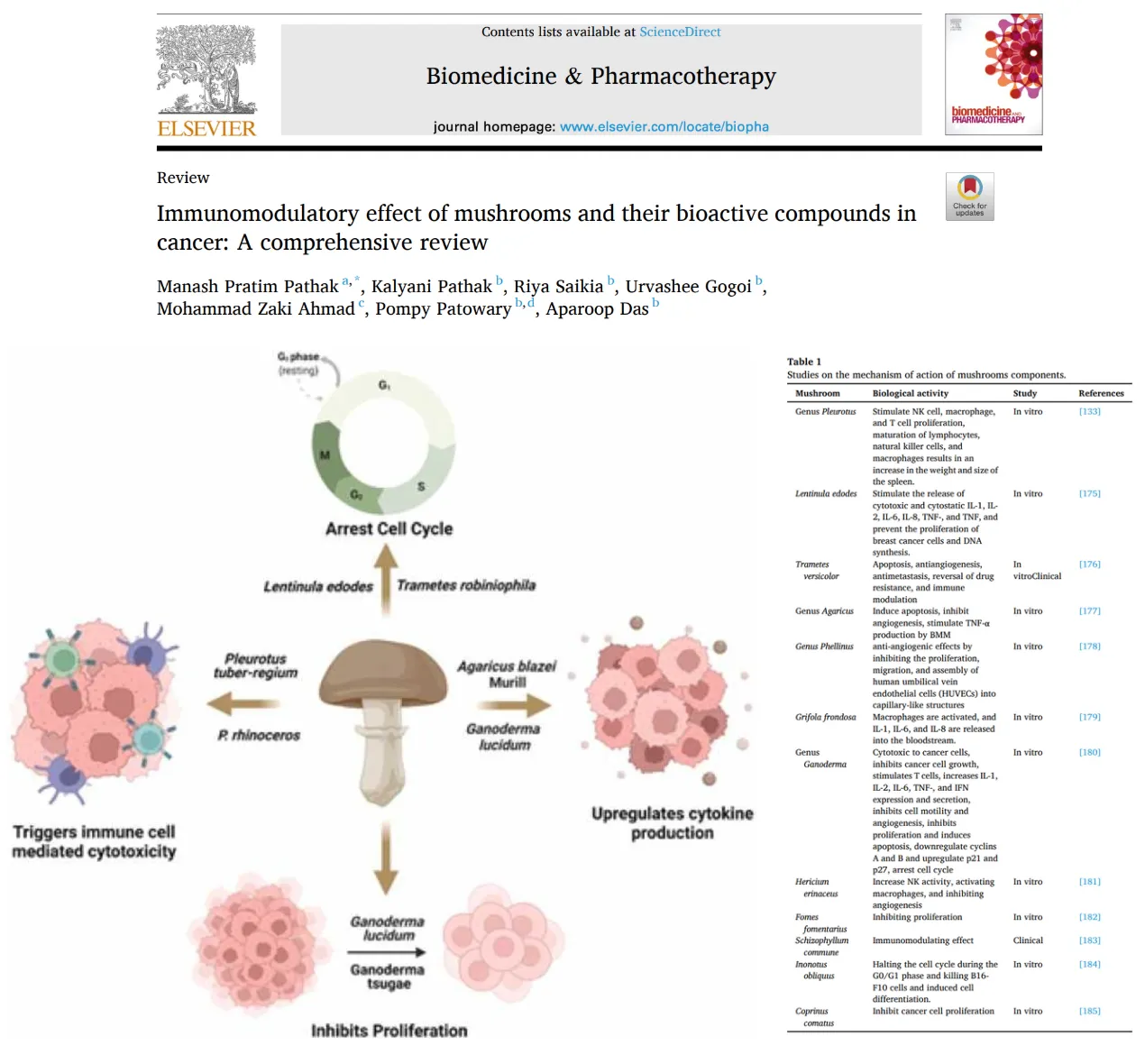
Medicinal mushrooms demonstrate significant promise in cancer prevention and treatment—supported by mechanistic, epidemiological, and emerging clinical evidence:
Epidemiologist and Foundation Administrator, McCullough Foundation
www.mcculloughfnd.org
Please consider following both the McCullough Foundation and my personal account on X (formerly Twitter) for further content.
Source
Featured image source: https://www.usf.edu/news/2024/chemo-drug-may-cause-significant-hearing-loss-in-longtime-cancer-survivors.aspx
************















Chemotherapy has been judged to work in around 2 percent of cancer patients and these are usually for cancers of the blood or the lymph system.
As to surgery, many experts have pointed out that unless the cancer stem cells are removed, the ‘daughter’ cells will just reproduce more powerfully elsewhere.
Good info Gordon, thanks
And thanks Belyi too
I was only talking about this with my daughter this morning. Her friend has had a “successful” mastectomy and is under pressure to agree to chemotherapy. My advice was “Research thoroughly before agreeing to that. Probably best to give it a miss, but clearly your decision”.