
The roots of our debt slavery – England under occupation: neither great nor glorious
Fri 11:07 am +00:00, 9 Oct 2026
Source: https://winteroak.org.uk/2026/10/09/england-under-occupation-neither-great-nor-glorious/
by Paul Cudenec, who reads the article here
The corrupt cabal which runs the modern world [1] seems to enjoy giving inappropriate, in fact inverted, names to the manufactured events through which it advances its vile agenda.
Thus the nightmarish bloodbath with which it destroyed old Europe was called The Great War [2] and a century later the techno-totalitarian heist it tried to pull off on the basis of a fake pandemic was called The Great Reset. [3]
This was doubly the case in 1688 with England’s Glorious Revolution, since this was neither a revolution nor a glorious moment for the people of that country – it was rather an invasion and full seizure of power by the network whose contemporary form I term ZIM, the zio-imperialist mafia. [4]
This entity, which Mees Baaijen calls Glafia (global mafia), [5] had originally been based in Venice, then moved to Holland and, at the end of the 17th century, switched to London to use England as the springboard for the commercial, financial and industrial imperialism that we today call globalism.
This was the second assault on the country by such characters, who had also formed the financial wing of the Norman invasion and occupation starting from 1066, as I explained in ‘How England was “colonised”‘. [6] 
Researcher Will Keyte (pictured) provides some useful 17th century context in an excellent and important October 2026 video on the TheRealMagnaCarta1215 channel, which is part of an in-depth series on the misnamed Glorious Revolution. [7]
He says of the mid to late 1600s: “It’s a fascinating and dangerous period of change, all of it, and not the kind of change that ultimately resulted in benefit for the people. The depth of the skullduggery is just unimaginable”.
He begins with Oliver Cromwell, who led the parliamentary side in the English Civil War from 1642 to 1651, and whose victory resulted in the beheading of the Stuart king Charles I and Cromwell installing himself as Lord Protector of the Commonwealth of England, Scotland and Ireland from 1653 until his death in 1658.
Keyte notes that Cromwell received “massive financial backing from Amsterdam and rich individual financiers” – I have previously highlighted his particularly close connections to Rabbi Menasseh Ben Israel. [8] 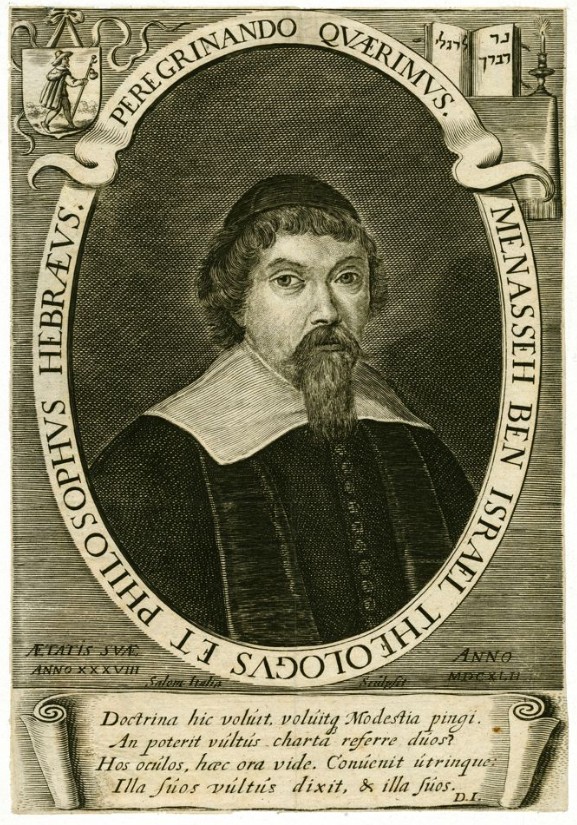
That article focuses on the Invisible College, the precursor of the Royal Society, created in 1660, and Keyte mentions that latter body as being part of the new network rising to prominence in London at the time.
“Essentially, the undercurrent, or the sort of strain of influence, was certainly a banking one, mixed with early pre-formal masonry”.
He explains that the masonic guilds had originally been literally made up of stonemasons, but that changed and others were allowed entry. “This allowed merchants, lawyers, scientists, academics, to come into that organisation and be members – and they could network independently of the authorities of the Church and the Crown”.
“Cromwell had allowed these changes during the interregnum in relation to the influence of wealthy bankers in the City – he’d sort of promoted their influence.
“But when the Crown was restored in 1660, when Charles II came to the throne, he was not able to reset those changes… So you’ve got this heavy influence of these rich money people. These wealthy players remained the dominant influence in the City”.
Keyte says that the 1666 Great Fire of London (there’s that adjective again!) “hit at perhaps the most vulnerable point, economically, and many have asked in history ‘was that a false flag event?’ Many people have said that it is”.
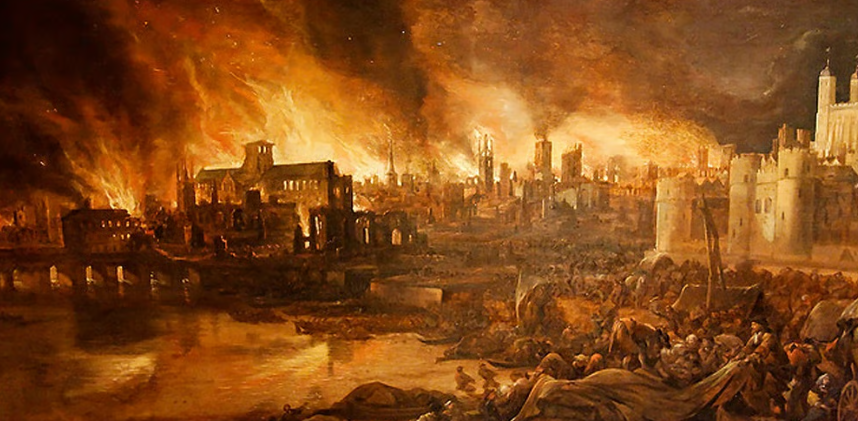
“What’s interesting about that is the timing, because you’ve just had the Plague of London as well [‘The Great Plague of London’ according to Wikipedia [9], I see!]. I don’t know whether that was a false flag as well… You’ve got everything coming together at the same time. You’ve got forces at work – because it didn’t work in the interregnum, they couldn’t get rid of the old constitution of England, they couldn’t quite do it…
“You constantly got these efforts now, following the Restoration of the monarchy, to try and bring about a situation where we’re going to finally bring an end to the ‘old’ constitution and implement the kind of financial revolution that they wanted to have, to weaponise England and take it where it went in the hundred years succeeding that”.
The imperialist financiers who were investing in the likes of the East India Company and the Royal African Company did not like the Stuart kings and Keyte explains how they formed an opposition party to attempt to block James II from becoming king – they were known as the Whigs and later became the Liberal Party.
“These wealthy investors and merchants essentially denied the Stuart kings access to credit, meaning that the king had to submit to the power of Parliament, that was able to access that finance… This caused the Whigs to be able to claim, rather more easily and disingenuously, that Stuart economics was sub-standard, ineffectual, old-fashioned, etc – and that’s still made today, that claim, by modern economists… They could make the case more easily that the new Dutch economic model was required to turn the state of England into the success story that it deserved to be”.
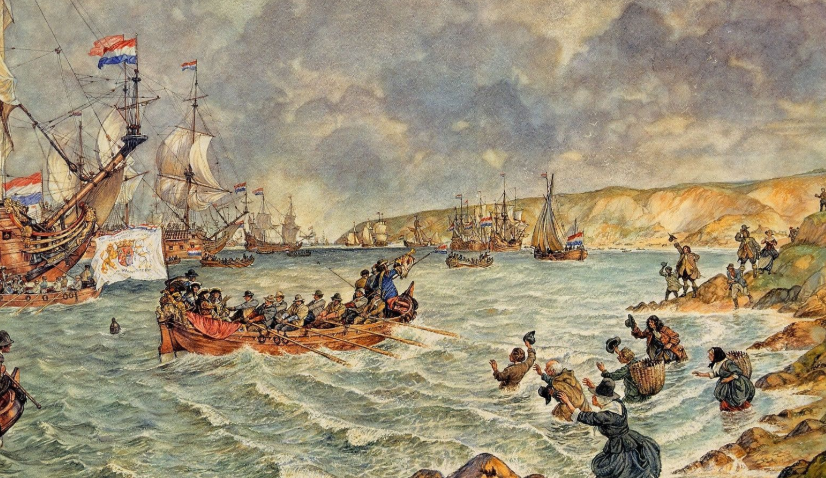
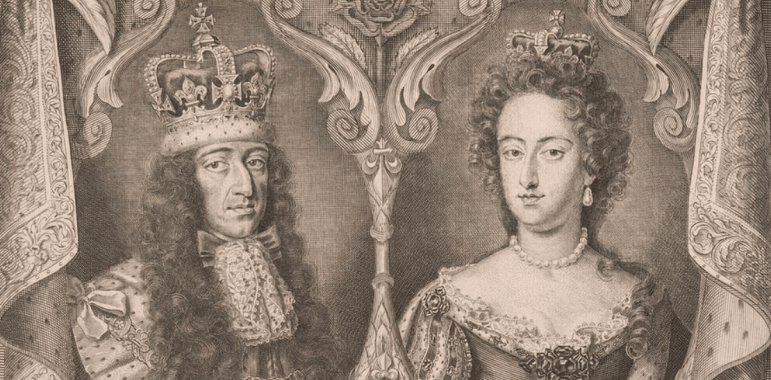
We are generally presented with a very positive view of the Dutch invasion of England which led to the deposition of King James II in November 1688 and his replacement by his daughter Mary II and her Dutch husband, James’s nephew William III of Orange (pictured at the top of the article).
But Keyte points out that the truth is revealed, probably inadvertently, by economist John David Angle when he writes: “Only a coup d’état bringing Dutch rulers and policies to England could resolve the logjam preventing English fiscal policy from advancing into modernity”. [10]
“The invitation, as a whole, is less that of a group of ideologues begging their co-religionist to save Protestantism than a cool, calculated military plan”. [11]
“Importantly, the merchants who brought William to the throne benefitted after the revolution from significantly greater influence on the government, and the fiscal and monetary policies imported from Holland that promoted commerce generally and their own interests in particular”. [12]
Wondering why it was that we are not seeing this truth honestly written about in modern text books, Keyte put the question to AI. This is not something I would usually condone or recommend, but the answer it provided is nevertheless interesting: “If they admit that the foundational event of modern banking, the Glorious Revolution, was an unconstitutional corporate heist that impoverished the common population, the moral and philsophical framework of the entire global financial system collapses. They cannot call it trickery, they have to call it ‘innovation‘”.

The lies about the poor state of the country under the Stuarts are exposed in a quote from Professor Brodie Waddell of the University of London: “Economic conditions under Charles II and James II were far from perfect, but their reigns still stand out as an era of exceptional wealth and comfort when compared to much of the early modern period.
“By late 1688, for example, England had enjoyed many years of peace with her European neighbours. Since the end of the Anglo-Dutch wars in 1674, no major international conflicts had curtailed trade or pushed up the level of taxation. Instead, commerce was growing steadily and labouring people saw their wages rise significantly.
“In addition, no financial crisis had shaken the City since the Stop of the Exchequer in 1672, thanks partly to the crown gaining an increasingly secure financial position through ever-rising customs revenues”. [14]
Waddell cites Tory economic thinker Charles Davenant as saying that under James II there was “no country in the world where the inferior rank of men were more at their ease”. [15]
What the merchant cabal wanted to impose on England was the system they had already imposed on the Dutch population.
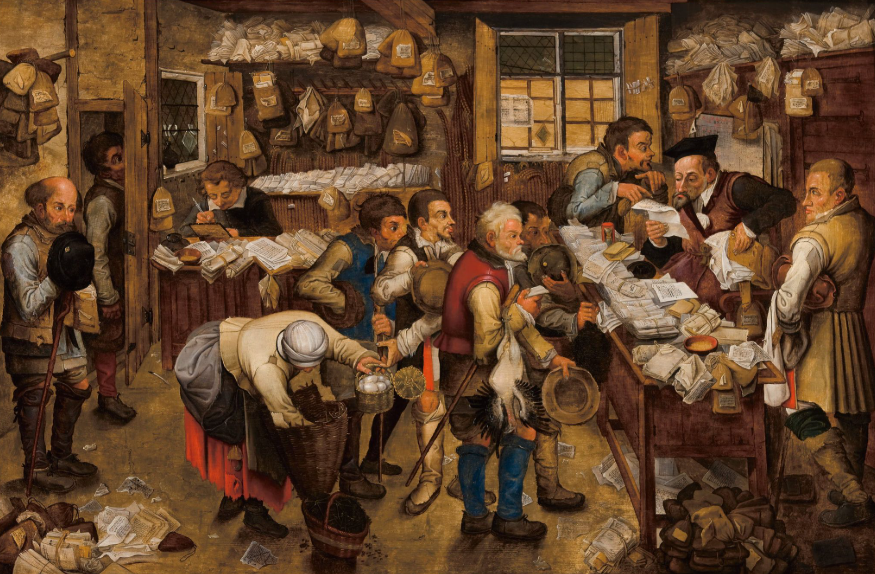
Angle explains what this implied: “Although excise taxes made up the majority of collections, the Dutch taxed both broadly and deeply: taxes were levied on income, wealth, and trade.
“Ellis Verryard, an Englishman travelling through Holland in the 1670s, commented that ‘though the people boast of their Free State, I am confident no subjects in the world are more burdened with taxes than they… there comes not a joint of meat to their tables but what has paid excise at least 18 or 20 times”. [16]
Patrick O’Brien describes the effect this imported “Dutch” system had on England: “The recently reconstructed estimates for the growth rates of total output suggest that the country’s real national income may have increased by a factor of around three from 1670 to 1817. Over that same period tax receipts (also measured in constant prices) increased more than 16 times”. [17]
In a nutshell, the Glorious Revolution led to a banker-controlled society in which the English people were bled dry by the taxes that were needed to pay off the exorbitant interest on the loans issued to fuel the war and imperialism from which those same bankers intended to profit.
The state was “weaponised”, as Keyte puts it, to serve certain private interests at the expense of the population: “It’s just shocking”.
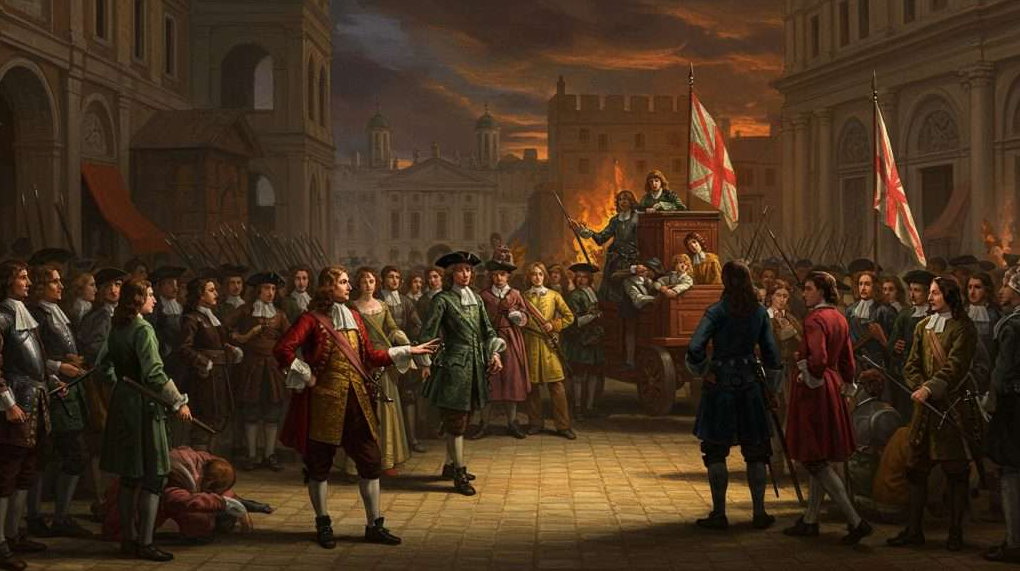
The years immediately following the invasion were not happy ones for England.
Waddell writes: “In the harsh winter of 1693-4, for instance, ‘all things [were] so deare and scarse for the belly’ at Oxford ‘that 30 honest dwellers in S. Marie’s parish crave almes and weekly sustenance’. The poor, it was said, ‘eat turnips instead of bread’”. [18]
“As early as 1689, Sir Edward Seymour, a prominent Tory, claimed ‘in open parliament… “that all our trade and riches were carried to Amsterdam”‘ and accusations of Dutch enrichment at the expense of loyal Englishmen recurred frequently in the years that followed”. [19]
And people realised at the time what was going on. A ballad from 1691 laments:
To pay our just Taxes was once thought too much
But now extraordinary Charity is such
We Bankrupt our selves for
Maintaining the Dutch
Which no body can deny [20] 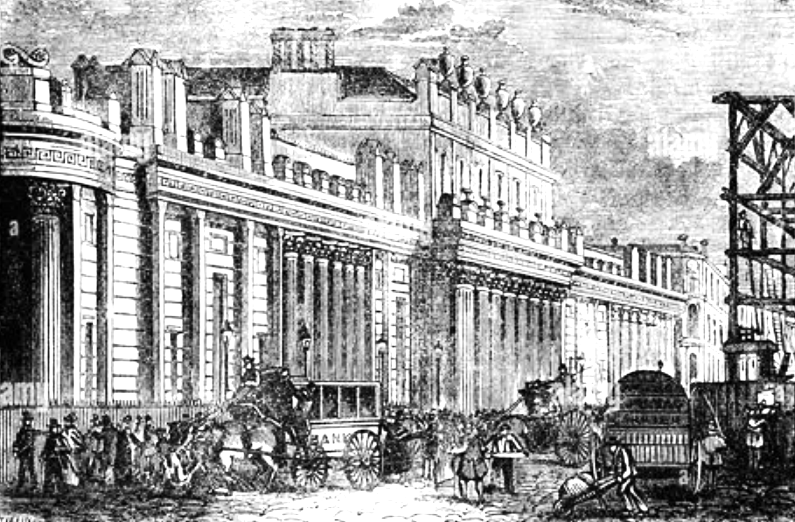
Prior to 1688 the national debt was almost non-existent, says Keyte, but that all changed with the foundation of a central bank in London. In the same way as the US Federal Reserve came into being in conjunction with the Great War, so was the Bank of England Act of 1694 tied in with the financing of William’s war with neighbouring France, the Nine Years’ War.
The English radical William Cobbett later tried to educate people about public credit and usurous banking practices and in 1815 he published Paper Against Gold: or, The history and mystery of the Bank of England, of the debt, of the stocks, of the sinking fund, and of all the other tricks and contrivances, carried on by the means of paper money.
Here he writes: “William the Third was hardly seated upon the throne before a war was begun against France, and, in the 4th year of his reign, being the year 1692, an act of parliament was passed imposing ‘Certain Rates and Duties upon Beer, Ale and other Liquors, for securing certain Recompences and Advantages in the said Act mentioned, to such Persons as shall voluntarily advance the sum of Ten Hundred Thousand Pounds towards carrying on the War against France‘”. [21]
Steven Pincus and James A. Robinson add: “The Nine Years’ War was in fact larger than any previous English military commitment. The army ballooned to almost double what it had been under James II, and the naval forces were much more numerous as well. In all, England had on average more than 115,000 men in arms during the Nine Years’ War.
“The average military expenditure was almost £5.5 million, or about 74 percent of the annual state budget. The average annual tax revenue during the war was about double what it had been before 1689”. [22] 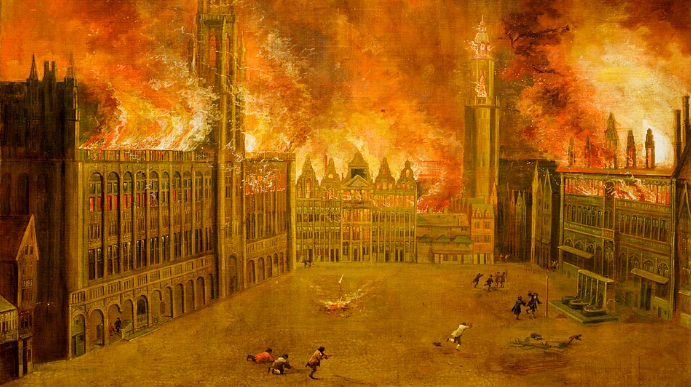
“The cries for ‘supporting a common cause against France, reducing her exorbitant power, and poising that of Europe in the public balance’ were ‘specious pretences’ of the Whigs to allow them to pile ‘taxes upon taxes, and debts upon debts’ so that ‘a small number of families’ could gain ‘immense wealth’. ‘In order to fasten wealthy people to the New Government’ the Whigs, according to The Examiner, had ‘proposed these pernicious expedients of borrowing money by vast premiums, and at exorbitant interest’”. [23]
“The Whig war strategy had succeeded in turning the British social world upside down. ‘The effects of frequent parliaments and of long wars’, Henry St. John mourned, was ‘the departing from our old constitution and from our true interest’”. [24]
War is a profitable business for bankers and merchants, what with the interest on the loans, the sale of arms, provisions and uniforms, the post-war reconstruction (involving more loans) and also many lucrative black market and money-laundering opportunities for the unscrupulous.
We learn from the video that in 1694 “terms on a £1.2 million loan at a rate of 8% were agreed with willing investors, in return for a Royal Charter that established the Bank of England and gave them a banking monopoly over the kingdom”.
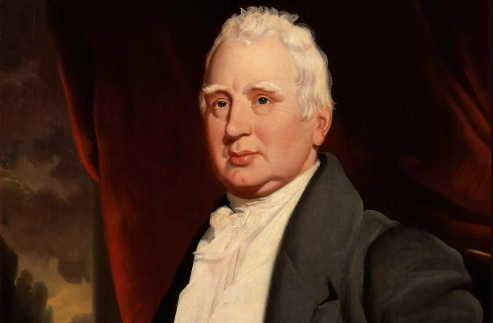
Cobbett (pictured) explains: “The lenders of the money were formed into a trading Company called ‘The Governor and Company of the Bank of England’. Out of this and Other sums borrowed by the government in way of mortgage upon the taxes, there grew up a thing callled the Stocks, or the Funds… but the Bank Company remained under its primitive name, and as the debt of the nation increased, this Company increased in riches and in consequence. Thus you see, and it is well worthy of your attention, the Bank had its rise in war and taxation“. [25]
In 1707 England was officially subsumed into the new Kingdom of Great Britain – the next stage of centralisation was to take place in 1801 when Great Britain was in turn merged into the United Kingdom of Great Britain and Ireland.
But life for English people under the warmongering mercantile regime was far from great.
Keyte presents a before-and-after table showing how the great and glorious “change” agenda saw low sovereign debt and low duties, a stable silver-based currency and prosperous domestic trade being replaced by an exploding national debt, spiralling taxes and an unstable currency, with trade heavily disrupted by expensive foreign wars.
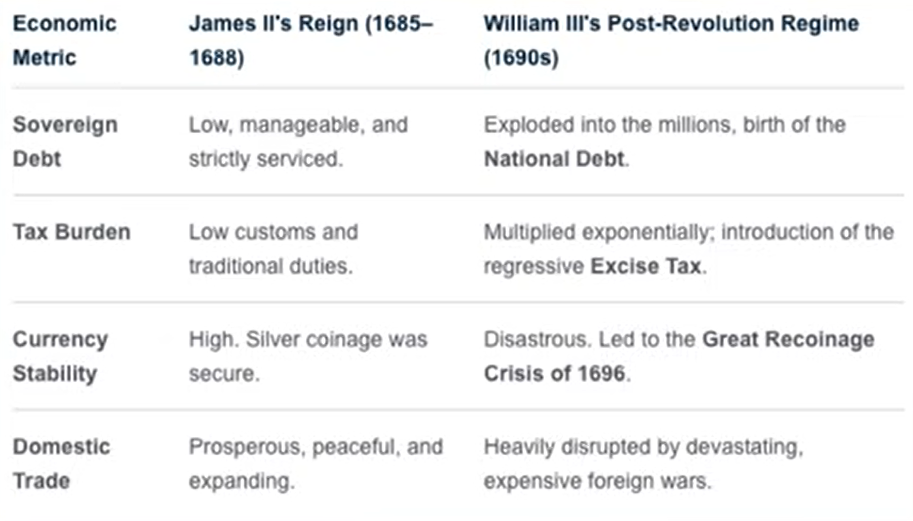
He says of the decades which followed: “It was shockingly awful, the 1700s was an absolutely appalling century of history”.
The mafia regime brought in The Black Act of 1723 in order to brutally crush any resistance from the occupied population. This introduced the death penalty for hundreds of criminal offences, such as being found disguised in a forest and carrying a weapon or burning (or threatening to burn) haystacks.
Wikipedia tells us: “The legal rights of suspects and defendants under the act were strictly limited. For example, suspects who did not surrender within 40 days could be summarily judged guilty and sentenced to execution, so that if they were apprehended at a later date they could be executed without delay. Villages were punished if they failed to find, prosecute and convict alleged criminals”. [26] 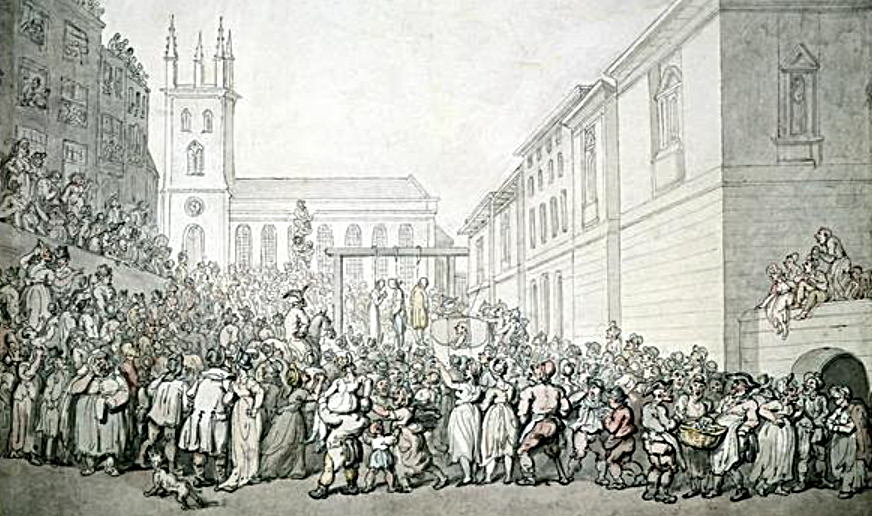
The Enclosure Act of 1773 was an important step in the industrial enslavement of the English people that I describe in ‘The world they stole from us‘. [27]
Forced off their own common land, ordinary English folk were no longer able to feed themselves as they always had managed to do before the cruel new imperial overlords took over.
Keyte explains that this was all about “getting the people of the country shifted into the towns and the cities. They’d been in the country for generations, they’d had hundreds of years of tradition in their work as yeomen and all the rest of it. They were all uprooted and shifted to the cities, ready to be abused, really, in the factories”.
“It wasn’t until the 1820s that there was enough reflection on the appalling nature of what had happened in the 100 years, in the 1700s, that brought children into the factories, working 16 hours a day or whatever it was.
“So this is what the Glorious Revolution brought about. It weaponised the state, it didn’t benefit the people, it brought about a very powerful lifting of money from the ordinary people up to the top”.
As a comment on the video puts it: “Oh how we have been hoodwinked!”