
How Covid totalitarianism infrastructure was facilitated post 9/11
Fri 1:48 pm +00:00, 21 Aug 2026 1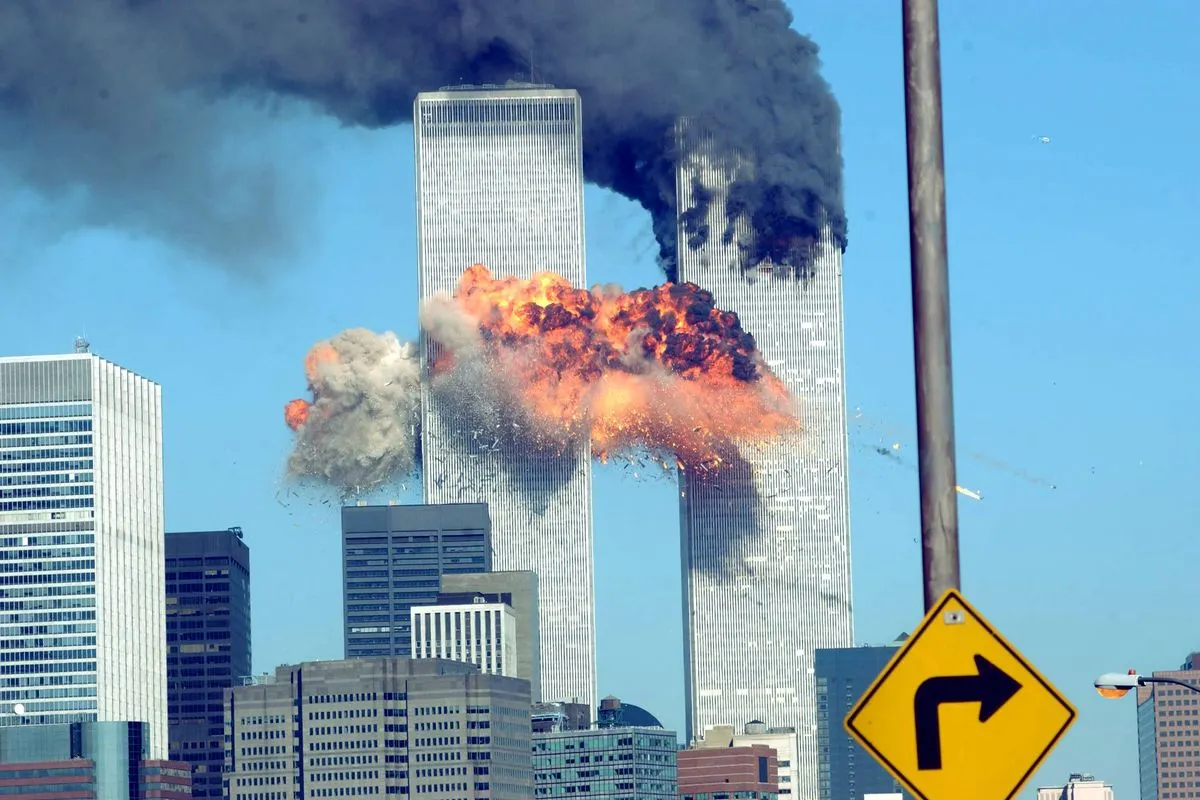
Source: https://escapekey.substack.com/p/911
This essay is not about controlled demolition, insider trading, or who knew what in advance. The question here is simpler. What institutional infrastructure was developed as a direct consequence of the event, what did it connect to, and what is the net function of the system that now exists?
The purpose of a system is what it does.
In 1976, a claimed swine flu outbreak at Fort Dix was projected as a potential pandemic threat, triggering the first mass federal vaccination campaign in US history. Forty-three million Americans were vaccinated before the programme was halted after cases of Guillain-Barré syndrome. At the precise time of the Fort Dix episode, a conference convened in Rougemont, Switzerland, brought together pharmaceutical industry executives and senior public health officials to discuss surveillance and vaccines. Walter Dowdle — the CDC’s deputy director — delivered both the opening and closing remarks.
Two years later, CDC Director William Foege signed the first US pandemic plan — the same year as the Declaration of Alma-Ata, calling for global centralisation of information, education, drugs, and vaccines. The structure was ‘the third way‘ applied through health: neither exclusively state nor market, but a managed system in which a carefully selected ‘civil society organisation’ (NGOs) provides the purposive ethic.

The Health Planning Agencies of America

Selective / Primary Health Care
The model originates at the London Bankers’ Clearing House — where participants agree to common standards, transactions are evaluated against those standards, and they either clear or they don’t. Röpke’s ‘third way‘ social market economy then engineered central bank monetary policy to reign supreme above party politics through the Bundesbank following the Second World War — the clearing function elevated above elected officials. The Bundesbank became the template for the ECB through Maastricht, while the Bank of England was granted its independence in 1997 — under Blair, in the same vein as his ‘Third Way‘.
The same model was carried into international governance through Leonard S. Woolf’s 1916 International Government and the League of Nations, later United Nations by Alfred Zimmern, into health through Alma-Ata in 1978, and into the developing world through the IFDA’s ‘Third System‘ — applied to the G77 nations in the same year. Blair and Clinton committed to a ‘Third Way‘ in the late 1990s, but by then it had been running across global governance in multiple domains for decades. With Kofi Annan reforming the UN in 1997, Reinicke and Deng implemented the ‘trisectoral’ version through the UN in 2000, but the model had been running through health since 1978 and through banking for almost two centuries.
The domain changes — the mechanism remains the same.

Own nothing. Clear everything.

Any Old Ethic Will Do

International Government

The Third System

The Third Way.

Kofi Annan
William Foege went on to launch the Task Force for Child Survival in 1984 — convened by WHO, UNICEF, the World Bank, and the Rockefeller Foundation — and later introduce the Manhattan Principles — One Health — at the Rockefeller Centre in 2004, which later became the Berlin Principles in 2019. One person, three decades, connecting the first US pandemic plan to global vaccination to One Health — starting with pharma executives meeting in Rougemont.
In 1991, the European Vaccine Manufacturers association was founded to create a favourable policy climate for big pharma. The following year, the European Scientific Working Group on Influenza launched at Courchevel, funded by the same pharmaceutical companies whose products it would go on to recommend.
That same year — 1992 — saw four things happen at once. The WHO published ‘Our Planet, Our Health‘, pulling climate, biodiversity, and disease into a single frame, carrying forward a line that traces back to the 1968 UNESCO Biosphere Conference. Recommendation 3.2 of that conference connected environmental degradation to zoonotic disease, while recommendation 3.3 specified that man must be ‘balanced with his environment‘.
That balancing principle would be put into practice through H5N1 in 1997 (zoonotic transmission justifying animal surveillance, poultry vaccination, and mass culling), the 2001 Pilanesberg Resolution (integration of animal, human, and environmental health surveillance), SARS in 2003 (triggering new disease control centres), One Health in 2004 (merging human, animal, and environmental health governance), and ultimately the Pandemic Treaty which converted recommendation 3 from the 1968 UNESCO Biosphere Conference into binding international health law.

The Berlin Principles

The ESWI

Use and Conservation of the Biosphere
![WHO Pandemic Agreement [April, 2024]](https://substackcdn.com/image/fetch/$s_!HHbL!,w_140,h_140,c_fill,f_webp,q_auto:good,fl_progressive:steep,g_auto/https%3A%2F%2Fsubstack-post-media.s3.amazonaws.com%2Fpublic%2Fimages%2Fb69c8066-0498-4924-af63-1344abb2ec85_1206x612.png)
WHO Pandemic Agreement [April, 2024]
Also in 1992, the Earth Summit in Rio produced Agenda 21, the UNFCCC, and the Convention on Biological Diversity. Joshua Lederberg published ‘Emerging Infectious Diseases‘, the report that led to Clinton’s 1996 surveillance directive. And in December — six months after Denmark’s referendum rejection of the Maastricht Treaty had stalled political integration — the European Council passed Directive 92/117/EEC, mandating monitoring of zoonoses across all member states. The regulatory integration that voters rejected at the ballot box became a technical channel beyond voter reach.
In 1996, Clinton signed Presidential Decision Directive NSTC-7, tasking the Department of Defence with building a global infectious disease surveillance capability. The DoD established GEIS — the Global Emerging Infections Surveillance programme — in 1997, with partner laboratories worldwide and a mandate for real-time genomic data collection.
That same year, a three-year-old died in Hong Kong from what was initially an unexplained respiratory illness. ESWI-connected researchers claimed the cause was H5N1 — a determination which led to seventeen attributed cases and five deaths over the following months. A Lancet paper later confirmed the founding case had died from Reye’s syndrome caused by aspirin, published on the same day as a second Lancet paper, by the same network, asserting that the case proved H5N1’s pandemic potential. The same pharma-funded network that claimed the diagnosis went on to write the 1999 WHO Pandemic Plan.
What actually killed the child made no difference to the outcome: mass culling was normalised, animal surveillance was installed, and the groundwork for One Health was laid. Margaret Chan, who ordered the cull of 1.6 million chickens, later became Director-General of the WHO.
But human surveillance lacked.

Agenda 21

A UNFCCC/CBD synthesis.

Convened in Private

The Department of Defense

The 1997 H5N1 Pandemic That Wasn’t

H5N1 – Part tWHO
In September 1998, the CDC published a single journal issue that reads, with hindsight, like a project plan for everything that followed. Volume 4, Number 3 of Emerging Infectious Diseases maps onto what would be built after 2001 with precision. HHS Secretary Donna Shalala opens with ‘Collaboration in the Fight Against Infectious Diseases‘. Anthony Fauci discussed new and reemerging diseases. William Foege wrote on lessons from smallpox eradication. Meanwhile, papers on BSE and CJD (the culling precedent set in the UK in 1996 on the advice of a Wellcome-funded Oxford team that included a young Neil Ferguson), on emerging zoonoses, on influenza (with Robert Webster calling for an ‘early warning system for humans‘), on climate change and infectious diseases, on surveillance and information technology, and on communicating disease to the public. Closing the issue, D.A. Henderson wrote on ‘Bioterrorism as a Public Health Threat‘, naming smallpox and anthrax as the two agents of special concern — three years before the anthrax letters arrived.
In 1999, the WHO published its Influenza Pandemic Plan. Every author was either an ESWI member or an adviser — a relationship the BMJ investigated in 2010, confirming undisclosed financial ties between the WHO’s pandemic advisers and the pharmaceutical companies funding the ESWI. The plan specified stockpiling, priority groups, liability waivers, expedited approval, media strategy, and workforce training — the complete operational template, written by a pharma-funded lobby group and adopted as WHO guidance.
In 2000, four developments locked the governance model into place. The UN Global Compact brought corporations into the UN framework through ten principles covering human rights, labour, environment, and anti-corruption. The Millennium Development Goals established the first version of development-by-indicators, which the SDGs would expand to seventeen goals with 231 indicators. UN Security Council Resolution 1308 declared HIV/AIDS a threat to international peace and security — the first time the Security Council treated health as a security issue. And Reinicke and Deng published ‘Critical Choices‘ under the UN Vision Project, funded by Turner’s UN Foundation and the Rockefeller Foundation, with Maurice Strong, Achim Steiner, Jimmy Carter, and Klaus Schwab among the participants — proposing trisectoral governance as the operating model, with a five-step process: agenda-setting, standards, knowledge, markets, mechanisms.
The governance template that every post-9/11 clearing function would follow was specified the year before the triggering events.

The Sustainable Development Goals

The Road to Algorithmic Authoritarianism

Trisectoral Networks
In July 2001, the WHO issued a call for contributions to a Global Agenda on Influenza Surveillance and Control. The submission deadline was September 7, 2001 — four days before the Twin Towers came down.
In June 2001, Dark Winter — a senior-level bioterrorism simulation — was held at Andrews Air Force Base, simulating a covert smallpox attack through mock National Security Council meetings. Participants included former CIA director James Woolsey and New York Times reporter Judith Miller, both of whom became among the loudest voices blaming the subsequent anthrax attacks on Iraq. The exercise script included fabricated news clips linking Iraq to bioterrorism — a narrative deployed operationally within four months.
On September 10, 2001, Secretary of Defence Donald Rumsfeld announced that the Pentagon could not account for $2.3 trillion in transactions. The accounting offices investigating these discrepancies were in the section of the Pentagon struck the following morning. The investigation did not resume. In 2018, the Federal Accounting Standards Advisory Board adopted Statement 56, allowing government agencies to modify public financial statements to prevent disclosure of classified activities.
The accounting trail was made formally undiscoverable.

A Health Chronology
The Triggering Sequence
Between September and December 2001, a series of events occurred in rapid succession, each producing its own permanent infrastructure, each connecting to the others in ways the news coverage did not make visible.
9/11 triggered surveillance and built the financial enforcement architecture. Anthrax tied it to biosecurity. Enron tied it to corporate accountability.
September 11 produced the security apparatus. The PATRIOT Act — 342 pages covering surveillance authorities, financial tracking, immigration controls, and the fusion of intelligence and law enforcement — was drafted, debated, redrafted, passed through both chambers of Congress, and signed into law on October 26. Six weeks. Legislation of that complexity ordinarily takes months of committee work, and the compression raises an obvious question about how much of it was already written.
The Department of Homeland Security followed in November 2002, consolidating twenty-two federal agencies, while the invasion of Afghanistan — launched October 7 — created the permanent overseas military presence through which DoD surveillance laboratories would subsequently operate.

The National Strategy for pandemic influenza

One Health – Part 1: 1992 – 2020
The PATRIOT Act also produced the financial clearing function that now carries every other layer. Title III installed the infrastructure through which financial surveillance and conditional access to the banking system now operate. Section 326 mandated customer identification programmes — the legal foundation of Know Your Customer which now carries ESG screening, sanctions compliance, and programmable conditionality. Section 312 imposed enhanced due diligence for correspondent accounts — the compliance burden that enables de-banking. Section 313 prohibited US correspondent accounts with foreign shell banks. Section 314 mandated information sharing between government and financial institutions. And Section 311 gave the Treasury power to designate foreign banks as ‘primary money laundering concerns‘ and cut them off from the US financial system — the sovereign kill switch, later used against Iran.
Twelve days after the attacks, Executive Order 13224 froze the property of persons connected to terrorism — the foundation of a sanctions architecture since expanded into human rights, corruption, cyber, and climate. The Treasury gained access to SWIFT messaging data, making every international bank transfer accessible to US intelligence — the precursor to ISO 20022, which now carries compliance data inside the payment message itself.

The Clearinghouse

ESG: Farage

SWIFT

ISO
The same Act built the domestic surveillance backbone.
- Section 215 let the FBI obtain ‘any tangible thing‘ without probable cause — the legal basis for the NSA bulk metadata collection revealed by Snowden. When exposed, the programme wasn’t dismantled: the USA FREEDOM Act shifted data custody to the telecoms — same data, different custodian.
- Section 505 created National Security Letters — customer records demanded without court orders, recipients gagged, over 300,000 issued between 2003 and 2006.
- Sections 403 and 414 mandated biometric travel documents — the legal origin of the digital identity chain running from ICAO biometric passports through Aadhaar through the EU Digital Identity Wallet through Ukraine’s Diia.
- Section 802 broadened ‘domestic terrorism‘ to include acts ‘intended to influence the policy of a government by intimidation or coercion‘ — broad enough to cover civil disobedience and organised dissent.
The PATRIOT Act didn’t create one surveillance programme. It created the surveillance state.
The anthrax letters arrived in October, three weeks after 9/11. The letters went to news media offices and to two Democratic senators — Tom Daschle and Patrick Leahy — both raising concerns about civil liberties provisions in the PATRIOT Act. Both received anthrax. The Act passed the Senate 98–1.
More importantly, anthrax bridged terrorism to biology. Without that bridge, the Bioterrorism Preparedness Act of 2002 would have had no triggering event. It was anthrax — rather than 9/11 — that made ‘bioterrorism preparedness‘ a legislative category, connecting the national security apparatus to public health. The Act was sponsored by Billy Tauzin, who upon leaving Congress became President and CEO of PhRMA — the pharmaceutical industry’s lobbying group.

Clare Sullivan

A Marshall Plan for Ukraine

The Collegium International
Enron collapsed in December 2001, producing the Sarbanes-Oxley Act — mandatory internal controls, CEO/CFO certification, independent audit committees. This compliance architecture migrated from financial reporting into ‘business ethics‘, then Corporate Social Responsibility, then ESG — each step widening what corporations must report on, each justified by the scandal that preceded it.
The widening wasn’t aimless. ESG attached scoring to social and environmental objectives formalised in 2015 as the UN Sustainable Development Goals — seventeen unchallengeable goods against which every corporate activity could be measured. Each SDG carries indicators — normalised surveillance data against which progress is tracked — and COVID showed what governance-by-indicator looks like when applied to a single goal: case counts and R numbers as the benchmark, threshold triggers as the gate, lockdowns and vaccine passports as the outcome.
The same logic applies across all SDGs, and when several breach at once, the result is what’s considered a polycrisis which calls for a ‘meta-crisis‘ framewotk — compound emergencies justifying continuous, compound governance, with planetary boundaries as the scientific framing and SDG indicators as the measurement layer.
The emergency becomes permanent, because there’s always at least one indicator in the red.
Impact investing — private returns on social objectives, public money absorbing the risk — depends on this entire scoring infrastructure. Without SOX there’s no carrier for ESG. Without ESG there’s no corporate enforcement of the SDGs. Without the SDGs there are no standardised metrics to cost things relative to. The chain runs from Enron’s accounting fraud to the programmable settlement layer, each link justified by the crisis that preceded it.
China joined the World Trade Organisation on December 11, 2001, restructuring global supply chains, offshoring manufacturing at scale, and creating the concentration risks that the BIS Innovation Hub’s Project Insight was later designed to map.
Four events in three months — each justified by its own crisis, and each producing permanent infrastructure. None of it was reversed when the crisis ended. It only grew.

The Enron Code of Ethics

COVID-19

Meta-Objectives in the Meta-Crisis

Planetary Boundaries

At Arm’s Length of Epstein
What Was Built on Top
The infrastructure produced in 2001–2002 did not stay in its original domain.
The bioterrorism bridge produced Project BioShield (2004, $5.6 billion for biodefence countermeasures), BARDA (2006), and the 2005 DHS National Response Plan, folding pandemic scenarios into homeland security. Michael Chertoff — co-author of the PATRIOT Act — became Homeland Security Secretary and released the 2005 National Strategy for Pandemic Influenza, the first framework pulling animal health, human health, and national security under one umbrella. The person who drafted the surveillance legislation wrote the pandemic plan that would use it, then showed up on the Transatlantic Working Group on Content Moderation — security, health, and information control through a single career.
The 2002 US Pandemic Plan made the merger explicit, stating that ‘issues are similar to those confronted in planning for biological and chemical terrorism‘. The same document acknowledged that masks had ‘no appreciable effect on community spread‘ during the 1918 pandemic and that port screening was ‘not likely to be effective‘. Every measure known to be ineffective in 2002 was deployed in 2020.
A World Bank report (June 2006) then laid out every element of the COVID-19 response fourteen years in advance: social distancing, school closures, stockpiling, IMF fiscal flexibility, business continuity plans, compensation funds, and media campaigns.

The Global Digital Compact

The US Pandemic Plan, featuring Nancy Cox

The 1968 Launch Event
The climate content ESG carries was developed between 2014 and 2018 at Waddesdon Manor — Jacob Rothschild’s estate — through private forums attended by Bank of England, PRA, and FSB staff. The frameworks produced — transition risk, physical risk, stranded assets — fed into Carney’s ‘Tragedy of the Horizon‘ speech, the TCFD, and the NGFS, which now calibrates Basel capital requirements. As with the conference on health and security, The Rothschild branding was removed before the frameworks reached the regulators.
By September 2015, the health architecture was also being refined behind closed doors. The Epstein archive show a Geneva conference titled ‘Preparing for Pandemics‘ was originally the Rothschild Conference on Health and Security, funded by the Edmond de Rothschild Foundations, with the WHO Director-General, Gates Foundation, and the CDC all participating. The branding was removed before public release — the same pattern as Waddesdon, as Total Information Awareness, as every case where the thing was built and the origin disappeared.
The same archive shows the health and financial chains running through a single intermediary. Epstein routed IPI’s Gates Foundation correspondence on polio, designed JPMorgan’s impact investing vehicle (Project Molecule, February 2011), and in April 2016 received from Lawrence Summers a specification for sovereign digital currency — each unit numbered, every transaction traceable, aid disbursement as entry vector.
Pandemic governance, impact finance, and programmable currency through one switchboard, while the operator’s name was removed from every output.

The Waddesdon Papers

Stranded Assets

Basel 3.1

Health and Peace

Epstein

Epstein II

Switchboard Operator
At the surveillance layer, DARPA launched Total Information Awareness in 2002 — mass surveillance of all electronic transactions, communications, and travel. ‘Cancelled‘ after public outcry in 2003, its component programmes survived under different names. DARPA also funded AvesTerra — hypergraph population tracking through Georgetown — up and running by September 2019. A Georgetown whitepaper from April 2020 proposed making surveillance permanent for COVID contact tracing.
The Financial Action Task Force expanded its mandate to terrorist financing after 9/11, with greylisting as the sovereign settlement mechanism — raising a nation’s cost of capital without military intervention. SARS in 2003 triggered the IHR 2005 revision, expanding WHO authority to include the PHEIC declaration — the legal instrument used to declare the COVID pandemic.
At the information control layer, Clinton’s 1998 ‘information terrorism‘ framing was put into practice after 9/11: a 2002 Air Force paper classified misinformation as contributing to terrorist objectives, a 2007 military paper placed it within ‘information operations‘. Dissent became a component of terrorism. UNESCO’s COMEST launched ‘ethics declarations’ across energy, water, space, and climate, constraining what was politically acceptable opinion, while the ICSU SCRES placed similar ‘ethics declarations’ upon scientists.
By 2020, the Trusted News Initiative deployed the working infrastructure — content moderation, algorithmic suppression, professional sanctions — built on frameworks laid after September 11.

The Financial Action Task Force

Conservation and Global Surveillance

The Ethical Approach

The grand Chessboard.
The simulations continued the pattern of Dark Winter. Johns Hopkins ran the 2017 SPARS Pandemic Scenario — a coronavirus outbreak with vaccine safety dilemmas and messaging failures. In October 2019, Johns Hopkins, the Gates Foundation, and the WEF convened Event 201, simulating a global coronavirus pandemic, run by the same people who led the response.
Event 201 sat within a five-month window in which six systems reached readiness at once. In August 2019, BlackRock proposed the Going Direct Reset at Jackson Hole. In September, AvesTerra was complete. On September 7, the BBC launched the Trusted News Initiative. In October, the NTI and Gates Foundation published the Global Health Security Index. In December, Heidi Larson — founder of the Vaccine Confidence Project and the Global Listening Project; wife of Peter Piot — told the WHO Vaccine Safety Summit: ‘we are all dependent upon vaccines now‘.
Financial restructuring, surveillance, information control, readiness scoring, crisis simulation, and vaccine messaging — all pre-positioned in the same window, all deployed through COVID less than three months later.

One Health – Part 2: Rockefeller, NTI & CORDS

The Global Listening Project

Holistic Global Health Security
The 2003 Resolution
On May 28, 2003, the World Health Assembly adopted Resolution WHA56.19 — calling for vaccine manufacturing capacity, stockpiles, uptake targets, publicly funded R&D, liability frameworks, public-private partnerships, and equitable access. Every item benefited the pharmaceutical companies funding the ESWI. Every item appeared in the COVID-19 response. The resolution also called for a ‘model plan‘ — the earliest formal call for what would become the Pandemic Treaty.
In November 2004, the WHO convened a meeting with the vaccine manufacturers themselves — Johnson & Johnson, GlaxoSmithKline, AstraZeneca, Aventis, Merck. The industry produced a wish list: liability protection, government-funded R&D, long-term guaranteed contracts, accelerated approval pathways, and increased flu vaccination uptake to build the production capacity needed for a future pandemic. They received everything they asked for. Theresa Tam — later Canada’s Chief Public Health Officer during COVID — attended in official capacity.
2003 also brought SARS — which triggered new disease control centres and enhanced surveillance — and PEPFAR, which deployed $15 billion in conditional health aid across Africa. PEPFAR required ‘one national strategy, one national coordinating mechanism, and one monitoring and evaluation system in each host country‘ — harmonised data across 39 countries, compatible with WHO, World Bank, and DoD systems. Described as a single-disease initiative, it expanded within two years to cover tuberculosis, maternal health, laboratory capacity, and geographic information systems. Mark Dybul, who ran PEPFAR, later co-authored the Georgetown AvesTerra deployment paper with Peter Piot.
AIDS was the entry vector. Surveillance was the output.

Resolution WHA56.19

WHO meets big pharma in November, 2004.

PEPFAR

The Georgetownian Dystopia
The Deployment
In March 2020, every pre-positioned system went live at once. The WHO declared a PHEIC using the IHR 2005 authority — triggered by SARS, enabled by the bioterrorism bridge that anthrax built. The response followed the World Bank’s 2006 blueprint. The Going Direct Reset was implemented through the Fed’s emergency facilities. The Trusted News Initiative coordinated suppression of dissenting opinion. AvesTerra was proposed for permanent deployment. The measures the 2002 pandemic plan acknowledged were ineffective were deployed worldwide. And the entire response ran on indicators — case counts, positivity rates, R numbers, vaccination percentages — normalised surveillance data driving policy at machine speed.
Nothing was improvised. The health plan was written in 1999. The bioterrorism bridge was built in 2002. The blueprint was published in 2006. The financial restructuring was proposed in August 2019. Information control launched in September 2019. The simulation ran in October 2019. Deployment began in March 2020. Three months between the last preparation and activation.

COVID-19 and the Pandemic Treaty
The Net Function
Read sequentially, the documents describe a five-step chain. An ethic is declared — biosecurity, public health, corporate responsibility — which generates the political mandate. The ethic is turned into a standard: the PATRIOT Act’s surveillance authorities, the Bioterrorism Preparedness Act’s procurement framework, Sarbanes-Oxley’s compliance rules. The standard is applied through a clearing function — DHS screening, WHO pandemic classification, ESG scoring — that checks whether a given entity meets the conditions. The entity either settles — clears the checkpoint, gets the funding, keeps market access — or it doesn’t. And the outcome lands — with you. Comply with the ethic, and you’ll be alright. ‘Save lives’, ‘don’t kill granny’, ‘get vaccinated to protect others’ — the ethic is positioned so no reasonable person could possibly object.
Ethic. Standard. Clearing. Settlement. Outcome.
Every chain that runs through the post-9/11 window follows this sequence. Anthrax declared the ethic of biosecurity, while the Bioterrorism Preparedness Act set the standard, BARDA and BioShield built the clearing function, Operation Warp Speed settled the procurement… and Poland was ordered to pay €1.3 billion for vaccines it would destroy. Enron declared the ethic of corporate responsibility, Sarbanes-Oxley set the standard, ESG built the clearing function, Basel capital weighting settled the pricing — and Nigel Farage’s bank account was closed.
The ethic differs, but the mechanism is the same throughout.

The Black Swan Factory

Eleven Gates
The health layer runs from Johnson’s Comprehensive Health Planning Act (1966) through the 1976 swine flu episode and Foege’s 1978 pandemic plan, the Declaration of Alma-Ata (1978), the Task Force for Child Survival (1984), the Children’s Vaccine Initiative (1991), the ESWI (1992), the WHO Pandemic Plan (1999), GAVI (2000), the bioterrorism legislation (2002), and the Manhattan Principles (2004).
From there it went to the World Bank blueprint (2006), CORDS (2007, Rockefeller Foundation and NTI), and the Global Health Security Agenda (2014, with a Private Sector Roundtable seating Abbott, Pfizer, Merck, BlackRock, Gates Foundation, Rockefeller, and NTI alongside sovereign governments at White House summits) — itself an extension of the Global Health Security Initiative launched directly after 9/11.
By 2019, the Global Health Security Index was ranking every country’s pandemic readiness. By 2022, the call was for ‘Holistic Global Health Security‘ — merging health, climate, governance, economic policy, and social determinants. The chain ends at the Pandemic Treaty, which writes this merger into international law.

Kennedy

The PSRT

The Global Health Security Agenda

The Pandemic Treaty
The corporate governance layer runs from Enron through Sarbanes-Oxley, ESG, the EU Taxonomy, and into the ISSB and ISO certification stack. The surveillance layer from NSTC-7 (1996) through GEIS, DARPA/AvesTerra, and the Georgetown deployment proposal. The supply chain layer from China’s WTO accession through concentration risk into BIS Project Insight. The financial settlement layer from ISO 20022 messaging through the BIS unified ledger into programmable CBDC with compliance built into the wallet.
Each layer was built by different people under separate mandates, and each is individually defensible. The point at which they connect — health surveillance feeding into financial settlement feeding into supply chain mapping feeding into corporate compliance feeding into AI-driven classification — belongs to nobody. The plan is compartmentalised, because you’re not meant to pick up on it.

The Unified Ledger

Maxwell

A Total Absence of Responsibility
9/11 sits at the centre of this picture not because of what happened on the day, but because of what was built in the months that followed.
The pre-positioning ran from 1966 to 2001. The triggering events arrived between September and December 2001. The construction ran from 2002 to 2006. The dress rehearsals from 2009 to 2019. The activation came in 2020. The codification is underway now — through the Pandemic Treaty, the EU AI Act, the unified ledger, and the Pact for the Future’s Emergency Platform.
The purpose of a system is what it does.
What this one does is run every significant human activity through a five-step chain — from an ethic nobody voted on, through a standard nobody reads, through a clearing function nobody monitors, to a settlement that either clears or doesn’t — and the outcome lands on you. And the same architecture is presently being integrated with future central bank digital currencies, where every transaction will be conditional upon your adherence to the ‘ethic’ nobody was invited to vote on.
The architecture that makes this possible was installed, piece by piece, in the years after September 11, 2001, using the political capital that the event generated — and it ends with all power concentrated with the same organisations which begun this trajectory almost 200 years ago.

The UN Emergency Platform

The Financialisation of Compliance

‘It’s the central banks, stupid’

Black Tuesday











WW1 enabled the Spanish Flu vaccine to kill 20 million plus. COVID was the updated version targeting 2 billion and more.