
If Viktor Orban represents the seedy underbelly of the Hungarian state, then Peter Magyar represents the entrails
Sat 8:21 am +00:00, 8 Aug 2026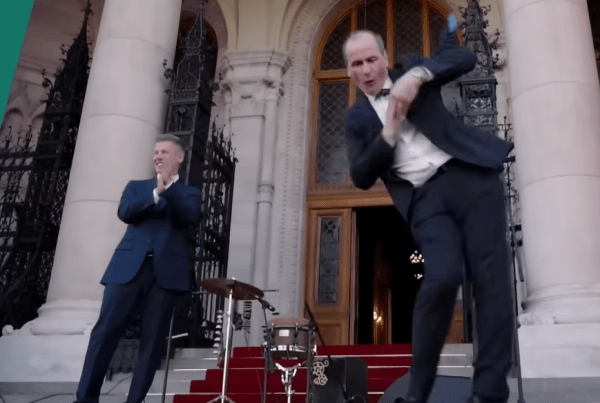
Source: https://www.unz.com/article/hungarian-rhapsodies/
Wife-beater, insider trader, party animal and substance abuser. These are just some of the appellations absent from the campaign posters of the recently elected Prime Minister of Hungary. Peter Magyar is among the new breed of pretentious political candidates seemingly camouflaged by the expectation of smear campaigns and character assassination—while actually being guilty of some misconduct. Modern voters now overlook the personal flaws of their political saviors, but while the private life of Magyar is a soap opera worth ignoring, his professional life isn’t much better. Magyar worked under Viktor Orban for 14 years before astroturfing himself into opposition and receiving the blessing of the Western establishment. Thus, two very different factions think he works for their interests: neoliberals in Brussels and center-right populist reformists in Hungary. Magyar, just like his dancing Minister of Health, is one slippery customer.
The first thing to notice about Peter Magyar is that his surname is an ethnonym—a custom we are more used to seeing with the likes of Mark Cuban, Zach Polansky, David Deutsch, Rosa Luxembourg, Anne Frank and Frank Litvak. My Hungarian friends assure me that in the case of Peter Magyar his labelling is organic rather than kosher certified. Indeed, Magyar has taken up the pro-Palestine cause in what constitutes perhaps the biggest departure from the Orban doctrine, the other being a U-turn toward Ukraine. Most notably, Magyar pledged to continue Hungary’s tough line on immigration and even repatriate guest workers. It’s therefore unsurprising that this package of policies proved popular in a country that essentially lacks any relevant left-wing party. Jubilation on the streets of Budapest seemed a bit much, but I’ve noticed that such moments of cheap political euphoria tend to erupt in countries whose football team is not very good. Besides, some of them believe they just voted their way out of Orban’s dictatorship in a landslide.
If it wasn’t for the tempered statecraft of Viktor Orban over many years Hungary wouldn’t have the kind of visibility and relevance on the world stage that its neighbors lack. Orban is a man who stuck to his guns on geopolitical realism and national sovereignty—resisting migrant quotas, the Soros NGOs and the eurozone currency. The price for keeping Hungary safe was famously a €1 million per day fine payable to Brussels. The gripes against Orban’s rule, rather generic and exaggerated in nature, related to the financial success of various side ventures run by him and his extended family. Accusations that he consolidated the media, judiciary and other institutions among political allies and friendly elites may as well be a slur against a broad patriotic coalition with the expected acquiescence of opportunistic system players. There are far worse cliques who can run the media. If Viktor Orban represents the seedy underbelly of the Hungarian state, then Peter Magyar represents the entrails.
Just weeks into the Magyar administration saw his signature issue of tough borders be comprehensively undermined by the EU Migration Pact coming into full effect. Orban had previously blocked its implementation, but a beaming von der Leyen in Brussels last month told the story of who the victor was in the long-running saga. Some EU funds have now been unfrozen, for which Magyar thinks himself a masterful negotiator, however the fix is in for Hungary to receive large numbers of migrants from other EU countries at some point in the future. Thousands have already marched in protest and branded Magyar a traitor. His response was to watch comfortably from a balcony, just as Ceausescu used to do.
Magyar also sold out on the veto of Ukraine’s EU accession, celebrating this as a masterful stroke of negotiation that Orban had supposedly been unable to achieve for years, rather than comprehending the greater principle at play. Magyar’s deal secured greater minority rights for the Hungarians of western Ukraine—precisely what the Russian minority has been deprived of in Ukraine. Meanwhile, Magyar has now pledged to increase defense spending from 2 percent of GDP to 5 percent by 2035, and has committed to replacing the forint with the euro by 2030. For someone with the reputation of a ladies’ man, it’s looking as though from 9 to 5 he only has eyes for von der Leyen.
Viktor Orban—who, in 20 years of governance had relatively few scandals—was rather charitable to Magyar throughout the election campaign, focusing on policy instead of tabloid controversy. He may have been better off heeding the timeless wisdom of Plutarch and the man who is unfit to rule a country if he can’t rule his own house. Magyar is trashed and vilified by those who know him best, like his ex-wife Judit Varga, the former Minister of Justice. She claims Magyar was violent, brandished knives in the home, secretly recorded her with a spy necklace, and once faked a suicide before driving off in his pajamas when paramedics arrived. Admittedly, the couple with three children stayed together beyond the natural course of healthy relations because party officials had requested that they wait to divorce until after the 2022 election. They say politics makes strange bedfellows, but sometimes also familiar ones. It only got worse for Magyar since his most recent ex, Evelin Vogel, corroborated this character profile, and also recorded him admitting to insider trading. More recently, Magyar stole a man’s phone in a drunken nightclub altercation.
The bravado that Magyar is known for behind closed doors sometimes makes an appearance through the patriotic posturing and spiel famous among Central European chauvinists: irredentist dog whistles. He recently described Hungary as “perhaps the only country in the world that borders itself,” and referred to Slovakia as “Upper Hungary.” Sometimes Hungarian nationalists even claim the Croatian port city of Rijeka, which is also claimed by Italian nationalists like Giorgia Meloni. If land could be fabricated to appease all of the claims of European irredentists, Europe would be the second-largest continent instead of the second smallest.
Another quasi-nationalist initiative that Magyar has been tinkering with is the Visegrad Group (V4)—a multistate bloc comprising Poland, Czechia, Hungary and Slovakia. Magyar wants to bring in Austria and possibly Slovenia or Croatia as a way of making it less Orbanite and something he could get credit for. A V6 alliance might just be the engine that powers this politically sluggish region to greater influence and autonomy beyond mere internal matters of infrastructure and border enforcement. The main problem, however, is that the voting rules of the EU take into consideration population size, meaning even the V6 would still fall well short of the 35 percent required for a blocking minority.
The inability to foresee central Europe’s endless friction with Brussels is the great oversight of Orban and to a lesser extent Poles. Instead of hoping to one day succeed in reforming the EU from the fringes, the obvious solution was to simply break away and form their own union. The last man to unite all of these lands was Attila the Hun in the fifth century, so it would be somewhat poetic if a Hungarian took the lead once more. The modern Visegrad realm is however a rather top-heavy bloc thanks to emerging power Poland. Its cultural and spiritual capital, Krakow, would make a good fit for an alternate Brussels, alas Poland is seemingly unaware of its own ascendency and stuck in the old mindset of seeking validation from its moral inferiors in the West. Winston Churchill famously called Poland a “greedy hyena” for taking a small patch of land from Czechoslovakia after the Munich Agreement, but it has ultimately been Poland that has had the last laugh: not a single one of its postwar neighbors survived beyond 1989, while the UK may not survive much longer either.
What the EU currently desires of Poland and its understudies is to be a battering ram against Russia. Friedrich Merz leads the way in this obsessive quest to prolong and expand the Slavic slaughter in the East—either for masochistic reasons or for a new Generalplan Ost (depending on what he thinks his ancestry is). Corporate bankruptcies in Germany are now at a 20-year high, with automakers particularly crushed by Chinese competitors. The shift to a wartime economy and mass production of tanks has been given the green light.
War and death are at the core of everything that the EU now does. The current trend in social policy is the rollout of assisted dying laws, perhaps one of the few impacts that Keir Starmer and Emmanuel Macron will be remembered for as they leave office. And who else should assist in the euthanasia agenda but the new Hungarian PM, who recently appointed lawyer Judit Zeller to further the program in Hungary’s Ministry for Social Affairs and Family. This morbid political class is hardly different from the occultists and Kalergiites who conceptualized the EU long ago. People will say it’s a coincidence, but the formal establishment of the European Union occurred on November 1, 1993—which is the Day of the Dead by some interpretations.
The death of meaningful European identity is the other agenda in concert with the nihilist creed. What started with pan-European universalism to meld away native identities ended up with invaders queuing up outside government offices to get their EU residence papers, as seen in Pedro Sanchez’s Spain. Another 3 million are expected to come to Spain through family-reunification laws. In Latvia, the new center-left government is bringing in unprecedented numbers of migrants: 3.5 percent of the country’s 1.8 million population in one year. Thus, the self-necrotizing apathy of Western liberalism marches eastward—a pathology that Aleksandr Dugin calls occidentalosis. The lessons of the Roman Empire expanding in its dying years seems lost on the EU commissioners, as they mop up the remaining Balkan backwaters and plan for states around the Black Sea. Even Europe’s cultural centerpiece—a song contest of ideological kitsch and synthetic overkill—has become territorially promiscuous to the point of inviting Australia and Canada in 2027. Perhaps someday all members of the Five Eyes alliance will take part and the name Eurovision will start to make sense.
The first real bulwark in the East against neoliberalism is the Turkic world, a fact not lost on Viktor Orban during his tenure. Turkic countries are famously despotic and corrupt, but come with some benefits like social conservatism and traditional values. Orban consequently sought closer ties and even made Hungary an observer state of the Organization of Turkic States (OTS). At a summit in Kirgizstan, Orban referenced Hungary’s “Turkic roots” as the “descendants of Attila.” In 2023, he called President Erdogan a “dear brother”—something he has never done to his other friends Trump or Netanyahu. There’s not been this much intimacy between the countries since Zsa Zsa Gabor had a fling with Kemal Ataturk in 1937.
Adventures in Altaic kinship have not historically boded well for Europeans, as any student of history would know. Constantinople itself fell thanks to a spectacular new type of cannon that was developed by an ingenious but unscrupulous ballistics expert from Hungary. The name of that fifteenth-century kingmaker who did business with the Ottomans? Orban—a name seemingly destined to play a role in diplomatic affairs. There are currently three high-ranking politicians in Hungary with the name Orban, including the new Deputy PM Anita Orban, but none are related to the other.
Hungarians are an exceptional nation and they have proved this far beyond the borders of their pastoral homeland. There is something in the water, it could be said, of the Pannonian Sea that dried up millions of years ago and left the Great Hungarian Plain as the sought after realm to be contested by only the fittest of races. Multiple Indo-European tribes curdled in this Carpathian crucible, with the broth spiced by an addition of Altaic tribes following the Eurasian Steppe to its natural landing pad.
The empirical evidence speaks for itself: Hungary has won more Olympic Gold medals per capita than any other country (excluding microstates). The superiority is arguably just as clear when it comes to cognitive abilities. The greatest chess player of all time (Bobby Fischer) was half Hungarian, as was the best female player (Judit Polgar, whose surname indicates Turkic Bolgar ancestry). The best poker player in the pre-modern era (Stu Ungar) was Hungarian on both sides, as was the man Einstein called smarter than he (John von Neumann). Other prodigies include inventors Laszlo Biro, Erno Rubik and Edward Teller, as well as macro trader and philosopher George Soros.
The arts are where the Hungarian genius takes a darker turn, or at least shows an unhealthy affinity with the weird and eccentric. 1930s musician Rezso Seress earns the distinction of composing Gloomy Sunday—a song so melancholic it has been linked to many suicides and was banned by radio stations. Even the celebrated Hungarian composer Franz Liszt produced music that was polarizing to Western ears, such that Eduard Hanslick said of his Piano Sonata in B: “Anyone who has heard it and finds it beautiful is beyond help.” Gene Simmons, who went by the name Demon in rock group KISS, was born in Haifa to Hungarian parents before moving to New York. The anecdote widely spread in the 1990s about why KISS wore such vivid face paint was that they were trying to hide their Jewish, Italian and Native American ancestries.
America has very much been a land where the entrepreneurial could realize their dreams from the streets, which is what Budapest-born escapologist Harry Houdini did. His successor, illusionist and serial sex pest David Copperfield, also has Hungarian ancestry. But the real star of the dark arts was Hungarian actor and horror icon Bela Lugosi, whose Transylvanian pedigree was ideal for Hollywood’s golden years of casting for such figures as Count Dracula, Tarneverro and Ygor.
Among the elite of comedians, Hungarians are vastly overrepresented on account of such luminaries as Rodney Dangerfield, Jerry Seinfeld, Louis CK, Ernie Kovacs, Robert Klein, Soupy Salas and Bill Maher. Perhaps former Trump advisor Sebastian Gorka can be added to the list as an unwitting comedian, for while his mother translated David Irving’s work into Hungarian he opted for pro-Israeli subservience. Gorka once took the goyslop meme to a new low at a CPAC meeting, warning attendees that the Democrats “want to take away your hamburgers!”
The ancient Huns, as we know from the writings of Ammianus Marcellinus, consumed their patties raw, only slightly warming meat by placing it “between their thighs and the backs of their horses.” But in their heyday it was they who dictated terms of tribute from the Germans and ransacked cities as far as Mainz, Reims and Orleans. Suffice it to say they would not think much of Magyar’s obsequiousness to Ursula von der Leyen and Brussels. One can’t sit on two chairs (or ride in two saddles), and yet this is what he has attempted to do. The one lesson from the Orban administration is that you can’t square being pro-EU with being pro-Hungary on demographic sovereignty. Magyar and his supporters may think he has the golden touch, but the EU diktats will come soon enough and may as well be floated down the Danube from its German headwaters and Strasbourg periphery. Hungary could have once more become the cockpit of Eastern Europe, as historians used to call it, but instead it has chosen to go with the flow and be another obedient yellow star in a sea of many.