
Should Russia destroy NATO headquarters in a demonstration to the world of their modern missile tech?
Tue 1:10 pm +00:00, 7 Jul 2026 2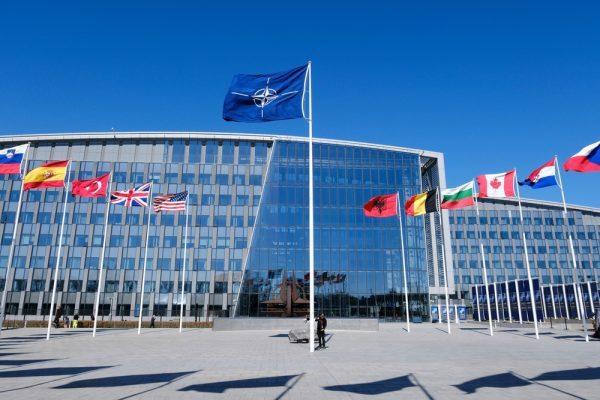
According to the Gemini AI, the most streamed event in history was the November 15, 2024 professional boxing match between Jake Paul and Mike Tyson, which attracted an estimated global audience of just over 100 million, peaking at 65 million concurrent live viewers. I’ll admit I only vaguely remember anything about that sports event and until I glanced at the Wikipedia page wasn’t even sure which boxer had won.
But if the Russian government were sufficiently shrewd in its understanding of political psychology and media strategy, it could stage a match of its own that would probably attract a vastly larger global audience and have a geopolitical impact far greater than did Paul’s eight-round unanimous decision.
In ancient times, two large armies preparing for battle might occasionally decide to save lives by instead allowing the single combat of their two respective champions to decide the outcome. Or at least such Homeric legends have become part of our literary traditions.
The grinding war between Russia and Ukraine has now lasted well into its fifth year and a few weeks ago it surpassed the length of the First World War. Deaths have certainly run into the many hundreds of thousands, probably totaling over a million, and additional hundreds of thousands have been seriously injured, enormously tragic losses for those two largest and closely related Slavic peoples.
With the European NATO countries backing Ukraine becoming more and more directly involved in the conflict, there has been increasing talk of the possible employment of nuclear weapons. But their use could very easily spiral out of control, leading to the destruction of most of human civilization.
It would obviously be far better for the world if this war could instead be brought to a rapid end by single combat between the champions of the two sides. Oddly enough, there is a real possibility of exactly that situation, and I think that such a contest could possibility draw a global live streaming audience of a billion or more.
Russia could arrange the match, forcing the participation of its NATO opponents, and would almost certainly win. And by doing so before such an enormous worldwide audience, the Russians would gain their greatest global propaganda victory since they beat the West into space by launching the Sputnik satellite into orbit nearly seventy years ago.
Russia’s adversaries in the West totally dominate the world media, and they can normally spin the facts howsoever they choose. But a live audience of a billion would be immune to all such obfuscating clutter, and people in every nation on earth would know what they had seen. “The propaganda of the deed” would sweep all before it.
Back a couple of years ago Russian President Vladimir Putin had actually challenged the West to exactly that sort of “21st-century high-tech duel.” But Western leaders had ignored him. He should now revive that same proposal, but in mandatory rather than voluntary fashion.
Over the last couple of weeks, the Iran War has largely gone into abeyance. So many of the peace terms of the signed “Memorandum of Understanding” have been ignored or violated that the agreement seems to have largely collapsed but without combat operations so far resuming.
Meanwhile, as if on cue, the war between Russia and Ukraine has greatly heated up and may now be taking a very dangerous turn, and that was the main subject of my article last week.
The crucial development was that Ukraine has suddenly begun launching huge waves of drone and missile attacks against Russia, even hitting important targets deep within that enormous country.
One of the sections in my article had been entitled “Russia’s Unsuccessful Ukraine War” and in it I summarized some of this situation:
Meanwhile, Russia’s war against a much weaker Ukraine has already lasted longer than its colossal Great Patriotic War against Nazi Germany. Yet Russia has still failed to capture much of the territory of the four eastern oblasts that it had officially annexed and incorporated back in September 2022.
Casualty figures are hotly disputed, but I think that the Russian forces have probably suffered many hundreds of thousands of dead and wounded, including at least a couple of hundred thousand fatalities. Although Ukrainian losses have likely been far greater, such Russian casualties still loom very large in a population of about 143 million, especially one that has low fertility rates, rates that are far below replacement levels. Hundreds of thousands of severely wounded or maimed Russians may have become a grim and unwelcome sight across all the cities, towns, and villages of that huge country.
Russia is far stronger than Ukraine and Iran is far weaker than America, but the results of the two conflicts have been exactly the opposite of what might have been expected.
Worse still for the Russians, there has been a steady escalation in the boldness and size of the Ukrainian strikes deep within Russian territory. Last month, Moscow was attacked by many hundreds of heavy drones, and earlier this month St. Petersburg suffered a similar fate. For huge Ukrainian attacks to be regularly striking Russia’s most important cities represents a tremendous national humiliation.
The sharp contrast between the battlefield achievements of Iran and Russia was shown on the front page of this weekend’s edition of the Wall Street Journal. One story reported the great destruction the former had inflicted upon America’s Persian Gulf bases. Meanwhile, another described the very successful recent waves of Ukrainian drone attacks against Russia’s prized Crimea territory, which had led to a severe fuel and electricity crisis and forced the declaration of a state of emergency.
Ukraine has also begun successfully attacking Russian oil refineries, inflicting substantial damage upon that country’s main export industry.
Last month, a Ukrainian drone strike on a college dorm killed 18 young women studying to become teachers, and there is considerable speculation that this atrocity was deliberate, intended to embarrass Russian President Vladimir Putin and demonstrate his weakness in the face of such brutal attacks.
Indeed, the Ukrainian government has now grown so self-confident and aggressive that it recently threatened to expand the war by attacking neighboring Belarus, a longtime Russian ally.
Meanwhile, advances in drone technology seem to have drastically reduced the pace of Russian progress on the battlefield, with signs of a deadlock developing.
- How Russia Can Defeat Ukraine and NATO
Ron Unz • The Unz Review • June 29, 2026 • 8,200 Words
Since then, the difficulties resulting from all these effective Ukrainian blows have even worsened.
Many major Russian refineries have been damaged by these long-distance drone attacks, even those in distant Siberia. The result has been a severe shortage of fuel in many parts of the country, including in the capital of Moscow, with first-hand observers confirming that Russians have been restricted in their gasoline purchases and often forced to wait in long lines to buy it. The problem has become so serious that Kremlin spokesman Dmitry Peskov admitted that Russia was urgently seeking to import replacement supplies from overseas. This obviously constituted a major national humiliation for one of the world’s largest oil producing countries, and potentially a serious blow to the Russian economy.
The huge drone strike against St. Petersburg had coincided with the annual meeting of the prestigious St. Petersburg Economic Forum, timing that was obviously aimed at embarrassing the Russian government.
For centuries the Crimean Peninsula has been one of Russia’s greatest national jewels, with its major city of Sebastopol being one of Russia’s most important naval bases. But the Ukrainian drone strikes have become so severe that its territory has been mostly cut off from the rest of Russia, almost transformed into an island.
Stanislav Krapivnik is a Russian-born former American military officer who moved back to his original homeland some years ago and now lives in Moscow. He is extremely sympathetic to Russia in the current conflict, but in his interview with Prof. Glenn Diesen a few days ago he fully confirmed the very serious problems Russians were now facing both from those shortages and from the constant terror attacks against civilians by Ukrainian drones in border regions. He considered this an absolutely unacceptable situation that couldn’t be allowed to continue, and that a conventional or nuclear war with Europe was unavoidable.
Dr. Gilbert Doctorow spent many years working in Russia on various business ventures, and although he now lives in Belgium, he still regularly visits that other country and also monitors its situation both through his personal contacts and by watching the leading political discussion shows.
I’d followed his regular weekly appearances on Andrew Napolitano’s podcast and over the last year or so I’d noticed that he had grown increasingly skeptical of Russian military progress.
In one of those recent interviews he explained that he’d published a short piece on his Substack bearing the inflammatory title “Is Russia Losing the War?” His column was translated into Russian and republished on some well-regarded media outlets in that country, demonstrating that such harshly critical views were no longer considered beyond the pale. That surprising development helped prompt my article.
Doctorow argued that the great improvement in the quantity and effectiveness of Ukrainian drones seems to have completely halted Russian military advances and largely negated any Russian advantages in manpower:
As these media point out with reference to Ukrainian monitors reporting gains and losses of territory, the Russian spring offensive this year has produced dismal results, capturing in May something like 130 square kilometers of Ukrainian held Donbas, whereas a year earlier the Russian advance was 10 times greater. The explanation they offer is the progressively more impactful and destructive Ukrainian drones which are raining down on the battlefield and make large troop formations impossible.
I note that the Russian state news remains entirely silent on these reports. They are not challenged, meaning they are likely correct…
Meanwhile, the latest reports in the FT make the point that I had been making in past weeks, namely that the drone warfare is a great leveler. A force of 10,000 to 20,000 drone operators is all that Ukraine needs to hold its own against the half million Russian soldiers deployed in the Special Military Operation. The fact that Ukraine has lost millions of soldiers to death, severe injury and desertion now counts for nothing…
In an interview with Prof. Diesen a few days later, Doctorow reiterated those same points, arguing that Russia was facing growing economic problems along with a great deal of dissatisfaction with the unsuccessful conduct of the war.
According to his account, Russian hawks were demanding far stronger military action, heavily pressing President Putin in that regard.
Doctorow even argued that over the last year or two, Putin’s behavior increasingly reminded him of Soviet leader Mikhail Gorbachev during the last years of his rule, giving endless vacuous speeches without taking any decisive action to confront his nation’s growing problems. This had eventually prompted the 1991 palace coup by hardline Soviet elements that was intended to sideline Gorbachev but quickly precipitated the collapse of the USSR. If matters continued, he wondered whether Putin might not suffer a similar fate.
When I’d first heard his speculation that Putin might be removed from power by harder-line Russian elements due to his unsuccessful conduct of the war, I dismissed it as totally outlandish. But after another week of Ukraine’s successful attacks, I was much more open to the possibility when Doctorow repeated it in his most recent interview:
For the last several years I have argued that the main reason Russia has been having such a very difficult time subduing Ukraine is because it has actually been at war with all of NATO while refusing to publicly acknowledge that fact. In my article, I repeated a few paragraphs of what I’d written over the last couple of years summarizing this strategic situation:
One strange aspect of this current conflict is that Russia has essentially been fighting NATO with both hands tied behind its back. NATO missiles using NATO targeting intelligence and key NATO personnel—legally laundered through the fig-leaf of its Ukrainian proxy—have regularly struck deep inside Russia, inflicting many serious blows, including sinking the flagship and other vessels of Russia’s Black Sea fleet, but Russia has refused to respond in kind. So in effect, the NATO countries have constituted a safe haven for producing and assembling the military hardware and systems used to equip Ukraine’s forces without suffering any risk of Russian retaliation. Russian cities have been struck by NATO missiles but NATO cities and their populations have not faced any similar threat…
Every objective observer recognizes that the current conflict amounts to a NATO proxy-war against Russia, with NATO supplying the massive financial support, advanced weaponry, training, targeting intelligence, and even key personnel that have allowed Ukraine to give Russia so much trouble. With such full NATO backing, the Ukrainians have frequently inflicted stinging losses upon Russia’s far superior forces. Indeed, by the standards of international law, NATO had long since already become a co-belligerent in the conflict, though for geopolitical reasons the very cautious Russians have refused to publicly declare that reality and take retaliatory measures.
Such caution is not unwarranted. Taken together, the countries of the NATO alliance have a combined population of nearly one billion, their recent annual military spending is 54% of the world’s total or about $1.3 trillion, and their aggregate GDP is nearly $50 trillion. By contrast, Russia’s population is only 138 million, its military spending is $145 billion, and its total GDP is $2 trillion. So Russia seems outmatched roughly 7-to-1 in population, 9-to-1 in military spending, and 25-to-1 in GDP. All these financial figures were given in nominal dollars and use of much more realistic PPP dollars would shrink these ratios by a factor of two or more, but a huge imbalance would still remain. Similarly, the inclusion of Russia’s close ally China would more than equalize these figures, but China’s military forces are almost entirely pointed towards the Taiwan Strait, the South China Sea, and other nearby coastal areas, so its vast power cannot be easily brought to bear in the European theater, where Russia confronts NATO…
Given that NATO’s total population and industrial base is so many times greater than that of Russia, if the alliance holds firm, Russia might eventually be ground down over time. What was originally intended as a very limited punitive attack against Ukraine lasting just a few weeks has now gone on for well over three years, producing huge casualties on both sides, and it must be brought to an end. Meanwhile, the lack of any sufficiently strong Russian retaliation against NATO has merely emboldened the Western leaders to take more and more reckless and provocative actions, actions that at some point might result in a catastrophe for the world.
Unfortunately, the conflict now seems to be following exactly the sort of dangerous trajectory that I had been warning against.
Prof. John Mearsheimer is one of our top foreign policy scholars of the Realist school and had attracted great attention for presciently predicting a future Russian war with Ukraine many years before it eventually broke out.
In his interview with Prof. Diesen a few days ago he noted that at their recent meeting the European G7 nations had promised to accelerate their support for the long-range bombing campaign of Ukraine against Russia, becoming very open about their total military support for those Ukrainian attacks. Russian pranksters had confirmed Estonia’s direct involvement in attacks against St. Petersburg.
He explained that Western elites have convinced themselves that Putin was the devil incarnate and that a direct, full-scale NATO war against Russia was almost inevitable within the next few years or so. Therefore, they were providing full support to Ukraine while pledging to greatly increase their own military spending and working to reorient their very large industrial base toward weapons production. In effect, they were rearming themselves in preparation for a World War III against Russia, an exceptionally dangerous situation.
The Russians have quite understandably become very concerned by these growing attacks on their own country and by the European threats to greatly escalate them.
Much of Mearsheimer’s academic career had been spent during the years of the old Cold War against the Soviet Union. From that perspective, the military attacks and provocations that the NATO countries were regularly undertaking against nuclear-armed Russia seemed absolutely unthinkable. So he fully understood why many Russian hardliners such as strategist Sergey Karaganov had become convinced that it was necessary for Russia to fully reestablish the strength of its deterrence capability against the West.
Even so, when he joined Karaganov for a joint discussion of these issues last month, he was somewhat taken aback by the latter’s proclaimed willingness to have Russia use its enormous nuclear arsenal to end the war with Ukraine, if necessary by fighting and winning a nuclear war against NATO that might involve the annihilation of one or more NATO countries. Unfortunately, Mearsheimer believed that Karaganov’s views were now growing increasingly popular among large segments of the Russian political elites.
Over the last couple of weeks I’ve probably watched 20 or 30 interviews with leading Western analysts on the Ukraine conflict, generally doing so on the podcast channels of Prof. Diesen, Andrew Napolitano, and Lt. Col. Daniel Davis.
Nearly all of these individuals had views broadly aligned with those of Mearsheimer. They were strongly sympathetic towards Russia’s position and they believed that the Ukraine war was taking a very dangerous turn and needed to be shut down while being unsure how this could be accomplished given the strong European commitment to the conflict.
Unlike Doctorow, few of them believed that Russia was facing a military deadlock on the battlefield or that Putin’s political position was in any serious danger. But they acknowledged the very damaging blows that Russia had recently taken from the Ukrainian drones and missiles supplied by NATO and that NATO planned to sharply increase its military commitment going forward.
When President Donald Trump had originally come into office, the Russians had been very hopeful that he would be able to shut down the war just as he had promised during his campaign, and his favorable summit meeting with Putin in Anchorage, Alaska almost a year ago had seemed to confirm those hopes. But nothing had come of it, and at the recent G7 meeting Trump had completely reversed those sentiments, declaring his enthusiastic support for Ukraine’s war effort and that he was considering providing the country with another $90 billion in financial support.
So if the Russians intended to finally put an end to the war, they would be forced to achieve that result through military means.
But how could this be accomplished?
A large majority of these analysts disputed Doctorow’s assertions that powerful Ukrainian drones have now stymied Russian advances on the battlefield, so they argued that Russia should merely redouble its attacks, break the Ukrainian line, and seize the remainder of the Donbas plus perhaps some additional territory such as the cities of Odessa and Kharkov. The interview of Col. Douglas Macgregor from a few days ago was fairly representative of this perspective.
They might be correct, but some of them have been predicting the imminent collapse of the Ukrainian front lines for the last three or four years, so I’ve gradually grown skeptical that this will happen.
Closely related to this is the proposal that Moscow must “take the gloves off” and begin prosecuting its war with far harsher means. Missile strikes should be used to decapitate the Ukrainian government, and some of them argue it may be necessary to give Kiev and other major Ukrainian cities “the Grozny Treatment,” much like how Russia destroyed so much of Chechnya during the Second Chechen War. Indeed, Doctorow himself advocated bringing the war to an end by this sort of decapitation strategy.
But I have huge doubts over this. If Russia killed Zelensky and most of his leadership, wouldn’t the West then just use its media power to transform him from a figure widely despised as dictatorial, incompetent, and corrupt into a heroic dead martyr while finding and elevating some new symbolic stooge to take his place?
The Chechens were a tiny population of around 1.5 million, roughly 1% of Russia’s size, while despite the combat losses and heavy emigration, Ukraine’s population is probably still at least a couple dozen times larger. And since the Chechens lacked any of the powerful, offensive NATO weapons that have been given to Ukraine, they could only inflict any damage upon Russia itself through terrorist attacks.
More than a thousand years ago, Kievan Rus’ became the foundational site of Russian civilization, so the Russians would surely feel uncomfortable leveling that ancient city to the ground. But even if they gritted their teeth and did so, how would that possibly stop the missiles and drones that are hitting Russia?
The last point is the most crucial one, ignored by nearly all of these analysts.
The government of Ukraine is a NATO puppet regime and the Ukrainians troops in the field are merely disposable cannon-fodder. The entire war has been orchestrated by the NATO leadership with the aim of weakening Russia, so killing Ukrainians or seizing their cities would hardly have any impact upon NATO decision-makers or bring the conflict to an end.
Suppose that the optimism expressed by Macgregor and others turned out to be correct this year, and a Russian breakthrough allowed them to gain full control of the Donbas oblasts, then quickly followed that up by seizing Odessa, Kharkov, and even Kiev. They would thereby reduce Ukraine to a landlocked western rump-state, run by a different pro-NATO regime and peopled by the extremely Russophobic Ukrainians of that region. But couldn’t that much smaller Ukraine continue bombarding Russia with missiles and drones in exactly the same way?
If a ceasefire occurred, wouldn’t this new Ukraine then be heavily restocked with NATO weapons and be able to restart the war against Russia whenever NATO decided it should do so?
Prof. Diesen was the host of many of these interviews, and he was one of the very few analysts to make this crucial point, missed by so many others.
As he emphasized, Russia and Ukraine can’t decide when the war is over. NATO started the war in 2014 and only NATO can decide to end it. So none of the missiles and drones that Russia fires into Ukraine have any strategic significance, and even sweeping Russian victories on the Ukrainian battlefield would hardly resolve Russia’s severe strategic predicament.
The crucial point is that Russia cannot bring the war to an end by defeating Ukraine. The only way of doing so is by defeating NATO or forcing it to sue for peace.
This is exactly why some of the bolder analysts sympathetic to the Russian position have begun to reluctantly shift towards Karaganov’s views. They agree that Russia must begin striking the NATO countries in order to force them to abandon their support for Ukraine, thereby allowing the war to come to an end.
But I am very skeptical that most of the sorts of attacks they advocate would achieve success rather than merely prompting a new cycle of escalation on both sides.
For example, the Russians have located a number of the European factories that are producing the drones and other armaments for Ukraine, and they have published that list, suggesting that these were all considered legitimate military targets. But I doubt that a missile strike against any of these would intimidate the NATO leaders and force them to make peace.
Even under the best of circumstances, hits against European factories would inevitably result in some collateral damage and civilian casualties, and Western media power would massively magnify these, making them the entire focus of what their populations were told. Russia would be further demonized as having launched an entirely unprovoked attack against European cities, thereby confirming all the previous accusations made against it.
For example, the recent Ukrainian attacks against Russian refineries led to massive retaliatory strikes against Kiev a few days ago. Russia argued that all the targets hit were legitimate military ones and many of the analysts I heard seemed to accept those claims. But the Western media outlets portrayed them as brutal terroristic attacks against innocent civilians, and their megaphone was far larger. Indeed, although Lt. Col. Davis was quite sympathetic to the Russians, he tended to agree that many civilians had obviously been hit.
Another possibility would be a Russian strike against some NATO military facility, perhaps somewhere in one of the small Baltic countries that have been involved in the drone attacks against St. Petersburg. But just as the Western media had successfully covered up the great destruction the Iranians had inflicted upon America’s Persian Gulf bases, they surely would do the same in this case. NATO leaders sitting in London or Paris would hardly be intimidated by a Russian attack a thousand miles away in tiny Latvia, and they would instead use it to reinforce their narrative portraying the Russians as the deadly and aggressive enemy of Europe, requiring redoubled military support for Ukraine.
Indeed, Mearsheimer was firmly convinced that such small Russian conventional attacks against NATO targets would be completely ineffective in reestablishing Russian deterrence. Instead, NATO would merely respond in kind, leading to several rounds of conventional strikes and counter-strikes, producing a full-fledged NATO war with Russia.
Mearsheimer believed that after this cycle of conventional Russia-NATO escalation, the inevitable ultimate result would be that Russia would be forced to go nuclear in order to intimidate NATO, and Karaganov’s own scenario seemed along similar lines.
Although Britain and France both possessed their own nuclear retaliatory capability and America has an enormous strategic nuclear arsenal, Mearsheimer still felt it was unlikely that the West would respond in kind to any such small Russian nuclear demonstration strikes on NATO countries. Instead, NATO would then back down and finally terminate its financial and military support for Ukraine, allowing the war to come to an end.
Perhaps the noted scholar is correct, but I think “unlikely” seems a very thin reed of hope for us to accept. It seems very possible that NATO would respond with its own tactical nuclear weapons, leading to mutual nuclear exchanges that could easily escalate and destroy most of human civilization.
For more than eighty years the world has avoided using nuclear weapons in battle, and I believe that absolutely every other option should be considered before we allow that genie out of the bottle.
Even if nuclear war between Russia and the West did not result, surely many other countries would immediately feel the need to develop or acquire nuclear weapons of their own, resulting in an unprecedented wave of dangerous proliferation. Furthermore, Israel’s bloodthirsty and extremely irresponsible government might take advantage of the Russian precedent to begin using its own nuclear arsenal against Iran or other countries that it viewed with great hostility.
One problem with all these proposals is that they involve the Russian use of weapons systems also found in the NATO arsenals, thereby naturally enabling tit-for-tat responses, and this includes both missiles and tactical nuclear weapons. Also, the proposed NATO targets are generally small or peripheral ones, not the sort that are likely to intimidate NATO’s top political leadership and bring them to heel. Perhaps the Russian use of tactical nuclear weapons might do so, but perhaps not, and the broader risks would be enormous.
Therefore, for the last couple of years I have regularly argued that the Russians should instead reply upon those weapons systems in which they enjoyed absolute superiority:
Russia currently has the world’s largest nuclear arsenal, with the estimated number of its warheads somewhat outnumbering America’s total. Much more importantly, it also deploys a very powerful suite of unstoppable hypersonic missiles as either conventional or nuclear delivery systems. Despite our own gargantuan annual military budget, comparable in size to that of the rest of the world combined and many times greater than what Russia spends, all American efforts to develop these same sorts of advanced missile systems have been marked by years of repeated, embarrassing failure.
A few months ago, Russia also successfully demonstrated its revolutionary new Oreshnik hypersonic missile system, which even in its purely conventional version provides striking power
similar to that of a nuclear warhead, thus allowing Russia to inflict unprecedented destruction without crossing the nuclear threshold…
Under the right circumstances, Russia could use these weapons to establish its escalation dominance over the European NATO countries, thereby giving it the leverage it needed to bring the Ukraine war to an end.
Beginning in 2024, I have repeatedly argued that instead of targeting the territory of a small and peripheral Baltic state or some obscure military base, the Russians should instead use the uniquely powerful weapons they possessed to unleash a demonstration strike against the very heart and central symbol of their NATO adversary:
The idea is a simple one. Russia should publicly declare that it now considered NATO a co-belligerent in the Ukraine war and that Russia would therefore retaliate against the Western alliance. But instead of any lethal attack against NATO armed forces, the retaliation would initially take the form of a live demonstration of superior Russian strategic military power.
The Russians could announce their plans for a hypersonic missile strike against the NATO headquarters building in Brussels, Belgium, with the attack scheduled for 12 noon in three days’ time.
That sort of advance warning would attract enormous international attention and coverage, certainly becoming the world’s top news story during the several days that followed, and easily penetrating any obfuscating layers of Western media. Providing NATO with plenty of time to evacuate the building and those nearby would prove that Russia sought to absolutely minimize any loss of life, thereby refuting years of inflammatory Western propaganda.
Given the intent of the operation, the Russians could publicly suggest that NATO defend its HQ by ringing it with all of its best anti-missile defense systems, thereby allowing a real-life test of the two competing technologies. NATO leaders and highly paid military contractors who had spent years or decades boasting of the great effectiveness of their enormously expensive anti-missile systems could prove the sincerity of their convictions by courageously locating themselves in the targeted HQ building at the time of the attack.
Assuming that the multi-missile strike still succeeded in totally leveling the NATO HQ, the result would be few if any unnecessary human casualties along with a simultaneous demonstration that Russian hypersonics were indeed unstoppable by any NATO defenses, with obvious political implications for the citizens of the Western alliance. The city of Brussels would have acquired a huge new hole in the ground, a very visible local landmark that would surely appear on the front pages of every newspaper in the world, perhaps even eventually converted into a permanent political monument.

During 2024, I had grown concerned that NATO was directly involving itself in Ukraine’s war against Russia, and this included orchestrating successful attacks against Russia’s early warning strategic radar installations intended to detect incoming nuclear missiles. I regarded this as a very dangerous development and believed that unless Russia responded in sufficiently strong fashion, such NATO involvement might steadily increase.
So in early June of that year I published my first piece suggesting that President Putin target the NATO HQ with his hypersonic missiles in order to demonstrate the superiority of his weapons technology and fully reestablish Russian deterrence.
At the time, my proposal was widely criticized as far too risky, likely to result in a direct NATO war with Russia. But it provoked more than 450 comments and was widely discussed.
Perhaps coincidentally, a few months later Russian President Vladimir Putin publicly challenged the West to a “21st-century high-tech duel” in which his own hypersonic missiles would face the best NATO anti-missile systems:
“If Western experts believe [the Oreshnik can be intercepted], let them propose a technological experiment to us and those funding them in the West, particularly in the United States. Let them select a target, say in Kyiv, concentrate all their air and missile defense systems there, and we’ll strike it with the Oreshnik. Then we’ll see what happens. We’re ready for such an experiment. Is the other side ready? […] It would be interesting for us. […] Let’s conduct this experiment, this technological duel, and see the results. I think it would be useful for both us and the Americans.”
Since then, matters have taken many dark and dangerous turns, with a rising tide of Russian anger and outrage over NATO’s involvement in Ukrainian attacks. So what may have seemed like a dangerously risky and provocative proposal when I made it two years ago now seems far more moderate and restrained by comparison with other options under consideration.
Therefore, I think that Putin should now dust off his 2024 proposal and make it mandatory, challenging the West to a “high-tech duel” over its own NATO HQ that cannot be ignored or avoided.
An important aspect of the proposed attack would be that NATO should be provided with every possible advantage in defending its own headquarters building, including plenty of advance notice and an exact scheduled time-window for the missile strike. So by still destroying the NATO HQ while defeating NATO’s best anti-missile defense systems, the Russians would have demonstrated that they could destroy at will anything, anywhere throughout Europe. NATO defenses were useless and Russia possessed full escalation dominance.
Every credible expert I have read over the last few years has agreed that due to their combination of speed and maneuverability, hypersonic weapons are virtually immune to interception by any anti-missile defense system. But I suspect that only a sliver of Westerners are fully aware of that reality, or that the Russians uniquely possess that military technology. Once those facts were brought home to them in such unmistakable fashion they might take them to heart.
They would not be the only ones. The Russian announcement that they planned to strike the NATO HQ would surely dominate the world media during the three days that followed and attract a vast crowd of journalists and curious onlookers to the safe periphery of the 100 acre NATO HQ campus.
Such a direct test of Russian missiles against NATO anti-missile defenses would capture the imagination of the world, and I think that the live-streaming of that scheduled event would attract the largest audience in the history of the Internet, quite possibly numbering a billion or far more. Many hundreds of millions of Indians and Chinese would probably be glued to their screens at the appointed hour.
A Russian victory against the best defenses that NATO could provide would surely cause many countries around the world to reassess their purchases of Western military technology, especially missile defense systems. This would strengthen the unfortunate lesson learned by the Gulf Arab states during the recent Iran War.
But the greatest impact would obviously be felt by the Russians and the Europeans.
Over the last few years Russia has endured numerous attacks orchestrated by NATO, including strikes against its vital early warning radar installations and the destruction of many of the strategic bombers in its nuclear deterrent triad. A number of top Russian generals have been assassinated in Moscow, and there have been repeated, unsuccessful attempts on the life of President Putin.
Russia has failed to forcefully retaliate for any of these blows, and that surely accounts for the bitterness of many Russians such as Karaganov, helping to explain his wild talk that Europe was “the source of all evil in human history” and that Russia should consider using its nuclear arsenal to annihilate major portions of that continent. Normal people naturally thirst for vengeance under such circumstances, and I doubt that a small Russian missile strike against some obscure NATO military base in the Baltics would satisfy him.
But I think that the Russian destruction of the NATO HQ in the heart of Europe, taking place in broad daylight before a global audience of unprecedented size would fall into a very different category. Although probably not a single life would be lost, he and others like him would certainly be very pleased by the massive worldwide humiliation of his antagonists.
And as I wrote last week, once the Russians had established their complete escalation dominance by winning in the “high-tech duel” fought over the NATO HQ, there would be important political consequences and the Russians could leverage their strategic superiority to force an end to the Ukraine War:
Over the last year or so, Putin’s lack of effective retaliation against NATO attacks has cost him some popularity. His approval numbers are still very high, but considerably lower than they used to be. However, once he destroyed the NATO HQ in such a ultra-high-profile strike seen by billions all across the world, I think his approval ratings would soar to 95% or 98%. That would fully solidify his domestic political position and show the NATO leaders that their plan to gradually push him from power was absolutely hopeless.
Perhaps NATO would threaten conventional retaliation. For example, their leaders could try to strike Moscow with hundreds of heavy drones or Storm Shadow missiles, or attack Russian refineries deep within the country or other important infrastructure, or even hit a college dormitory full of teenage girls in a terror attack.
But they have already been doing all of these things, so this would hardly constitute much of a retaliatory threat. And the fact that the NATO officials would understand that they all now had targets on their backs and could be annihilated within minutes by new Russian missile strikes might lead them to think twice before taking such actions. Lack of any effective NATO retaliation would leave these political leaders even weaker and less popular than they already were, perhaps pushing a few of them from power.
NATO might soon agree to abandon Ukraine, cutting off the supply of money and weapons that keeps that country afloat, in which case the regime would collapse, ending the war.
If the NATO leaders remained obdurate, the Russians could next explain that they regarded the NATO factories producing weapons for Ukraine as legitimate military targets. Britain has reportedly promised to ship some 120,000 drones to Ukraine. So the Russians could declare that they would destroy a couple of those British drone factories, again with three days’ advance warning and a scheduled time-window in order to absolutely minimize any loss of life. They would then go ahead and destroy those factories.
If more coercion were still needed, the Russians could next announce that they would target and destroy one of three drone factories on a list without indicating which one in advance. So all three factories would need to be fully evacuated, further demonstrating that Russia now exercised absolute veto power over European military production.
Once the Russians began destroying the NATO factories producing weapons for Ukraine, Western insurance companies would surely declare that they would prohibit the corporations they covered from using their industrial facilities for such obviously dangerous purposes. It had actually been lack of insurance that shut down the tanker traffic in the Strait of Hormuz, and similar lack of insurance would shut down the production of NATO weapons for Ukraine, forcing the latter to surrender.
Suppose that the NATO countries proved especially stubborn. Perhaps the British might even involve themselves in another deadly terror attack against a girls’ college dormitory in Russia. The aggrieved Russians could then declare that they would retaliate by destroying the rather elegant MI6 Building in London, once again providing plenty of advance warning and then leaving it as rubble.

Government officials would surely hate having had to permanently relocate from such an impressive, prestigious headquarters building to some non-descript office space somewhere, so they would exert huge pressure on the British government to end its war against Russia lest other attractive official buildings be similarly destroyed. The hundreds of MPs are justifiably proud of their Palace of Westminster, now almost two centuries old, and they would hate to risk losing their Houses of Parliament to a Russian missile strike.

After publishing my article, I was gratified to receive a note from an American currently living in Russia:
I always look forward to your post, but had to reply to this one because I am a proRussia, nonRussian American living in Crimea.
Your assessment of what Russia MUST do and soon is spot on. My two other American friends living here concur.We just hope and pray that Putin acts forcefully as you suggest, and soon.
On Sunday afternoon Diesen interviewed Steve Jermy, a former commodore in the British Navy and a well-regarded military analyst, whose very early skepticism on the success of America’s Iran War proved entirely correct.
Like many others, he was struck by the remarkable sense of impunity that the NATO leaders seemed to assume that they and their countries possessed. They were currently having their Ukrainian proxies attack Russia with the drones and missiles they provided while publicly declaring that they were preparing for a direct war against that country. But they never seemed to consider that Russia might strike back against them.
Jermy emphasized the extreme weakness of NATO defensive systems against ordinary ballistic missiles, let alone the unstoppable hypersonic ones. He believed that if a full-scale war did break out, Russia would simply target and destroy many of Europe’s vulnerable energy facilities and perhaps also mount a submarine blockade of fuel imports. Europe would have no effective defense against such attacks and unless the British and French took the extremely dangerous step of deploying their nuclear weapons, the Europeans would soon be forced to sue for peace.
Unfortunately, the European energy infrastructure destroyed could not be quickly or easily replaced and even after the war ended, the continent would suffer a serious and long-lasting economic collapse.
The analysis that Jermy provided seemed very sensible to me and was quite similar to what I had been considering.
During 1999 NATO spent months bombing Serbia, ultimately forcing the break-up of that small state, but for generations prior to that no European country had been attacked from the air and in the quarter-century since, only Ukraine and now Russia have suffered that fate.
The political leaders and major media outlets of the NATO countries have been gleeful when the missiles and heavy drones that they produce and help target have successfully struck Russian cities and industrial facilities, and they may have even been involved in the repeated attempts to assassinate Putin. But the notion that their own countries might be at similar risk of attack from the air would be utterly unimaginable to them. That is the bubble of perceived impunity that Russia must penetrate if it wants to bring its Ukraine war to a successful conclusion.
I think that the best and quickest way of doing so would be to have hundreds of millions of Europeans watch as their NATO HQ in Belgium was rendered a smoking ruin. Such an outcome would obviously be far better than for much of the continent’s vital civilian infrastructure to later suffer that same fate.
After publishing my article, I was especially pleased that my analysis attracted a supportive response from one of our most level-headed commenters, an Icelandic citizen calling himself “Niceland”:
Reluctantly I admit our host is correct. He was early, if not the first, pointing out Russia should takes the gloves off and use its advanced missile technology to send a message to the Europeans – for example by destroying the NATO headquarters.
I think the Russians were waiting for Trump, carefully hoping he would move to bring this conflict to an end. It didn’t turn out that way. Trumps approach to Iran and continuing support for Ukraine indicates strongly he isn’t going to move decisively to end this conflict. His statements and apparent intent to end this war is now null and void. I’d say – hope is lost.
We are faced with very harsh reality in Ukraine, a war that is now more likely than not to spiral into something much worse. Meaning, what will heavily nuclear armed Russia do if backed too deep into a corner by endless attacks from NATO allies via their Ukrainian proxy?
Both the U.S. and Israel are learning the hard way what can happen in such situations, suffering rain of Iranian missiles. They don’t like it, kicking and screaming the Trump administration is trying to deal with losing situation, and the Israelis are certainly not happy facing this new reality. That particular situation should give the Europeans pause to think the Ukrainian situations through. Apparently they are not and seems to be lost in la-la land. It’s time for Russia to shift gears. Some bold moves now are needed to force the Europeans to face reality and settle this war. We are approaching point of no return if this will be allowed to go on. They perhaps think a major victory will be won if Vladimir Putin loses control in Russia. I’d say think again, who or what will replace him – a regime sharing the views of Sergey Karaganov, ready to launch nuclear weapons against Europe to defend mother Russia? Good luck with that.
This can’t go on, it’s time.










NATO is effectively already defunct. That’s why Turkey and UK have made a new treaty to cooperate on all fronts. London is the central command point for European war now, not Brussels, which is entirely expendable as it always was.
Maybe so but, all the more reason to choose the symbolic NATO headquarters. He posits the Russian attack as a demonstration of Russian power rather than an act of war per se. A pre announced demonstration to avoid any casualties and to demonstrate the ineffectiveness of western defence systems, and the superiority of Russian hypersonic missiles