People should be judged as individuals, based on their character, words and deeds, not race, gender or religion
Mon 9:03 am +00:00, 24 Aug 2026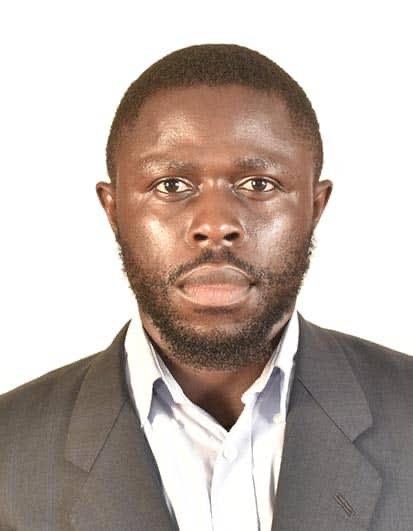
Source: https://henrymakow.com/2026/08/unseen-cameroon-a-journey-thro.html
Atumo Ezekiel Acha
This updates an article I posted six months ago, a reminder of the desperation driving millions from the third world to migrate to the West. I want them to stay and build their own countries. That’s why I am supporting this brilliant young man who sent me a movie screenplay asking for help getting it produced. I couldn’t do that but didn’t want his plight to fall on deaf ears.
I sent him $100 for each article.
“You have no idea how much this means to me, it’s going to go a long way, helping my entire family.”
The West must defend its European identity while helping the Third World to thrive at home.
People should be judged as individuals, based on their character, words and deeds, not race, gender or religion.
Atumo is an exceptional young man. They want to divide us but the only division is this: humanity vs. Satanists.
The Tears We Cry Under the Rain: A Desperate Plea from the Shadows
“There is a particular kind of silence that descends upon a village when hope has been systematically dismantled. It is not peaceful; it is heavy, thick with the scent of unfulfilled potential and the lingering fear of the next knock at the door. I am writing this from that silence, a place that the world seems to have agreed to forget.
Returning to the village was not a choice; it was a surrender. After narrowly cheating death at the hands of the Amba rebels and finding that the city of Bamenda offered only the crushing weight of unemployment, constant harassment, and the sight of bodies on the streets, I retreated to what I thought would be my sanctuary.
But the village holds its own brand of agony.
Determined not to be consumed by the hopelessness surrounding me, I decided to fight back–not with weapons, but with work. I poured my soul into a vision: small-scale pig farming. I joined a Njangi (a community investment group), and with the trust of my neighbors, I secured a loan of XAF 1,700,000.
I spent months sweating under the sun, building the sty with my own hands, tilling the land to plant maize to lower feed costs, and investing every franc into my sows and boars.
It was my lifeline. It was my proof that, even in a war-torn land, I could carve out a future.
Then came the swine fever. In a matter of weeks, it decimated everything. It didn’t leave a single pig alive.
When the last animal died, something inside me broke. The suicidal thoughts became a daily, deafening whisper. End it all, they said. The debt is too large. The reality is too cruel. But every time those thoughts reached a fever pitch, I looked at my parents and my younger siblings. My life is not mine alone; if I leave, the debt remains, a crushing legacy for them to bear. So, I stay. I wake up, and I go to clear farmlands for others, penny by penny, trying to pay back the Njangi.
As September approaches, the air in our village grows even more suffocating. It is the time of school resumption, but here, there is no school. The Amba rebels have declared that no government functions shall exist within their territory. Schools that dare to open are trapped in an impossible, fatal dilemma: hoist the separatist flag and be executed by the military, or remain closed and watch an entire generation be lost to illiteracy, crime, and drug abuse.
I watch my parents weep–not just for our poverty, but for the future of my younger siblings. We are a people living in a pressure cooker, caught between the iron fist of the state and the volatility of the insurgency.
The Invisible Crisis
Our suffering is not just limited to the violence. It is in the malaria that claims lives because a hospital visit is a luxury we cannot afford.
It is in the desperate, futile reliance on herbs that cannot stop the parasites. It is in the feeling that we are crying under the rain–
our tears are shed, but because the sky is already weeping, no one notices.
We are neglected by our government and invisible to the international community.
A Call for the Forgotten
I have plans–small, practical, human-scale projects–that could revitalize this community and provide a sense of purpose for our youth.
But in a place where survival is the only currency, capital is non-existent. Without help from the outside world, these dreams remain cruel illusions.
I am not asking for pity; I am asking to be remembered. We are a people standing in the middle of a storm, holding on to the faint, flickering hope that someone, somewhere, will look our way. We are still here. We are still striving. And we are still praying for a light at the end of this tunnel.
The world may have turned its back, but we are still here, hoping for a savior.
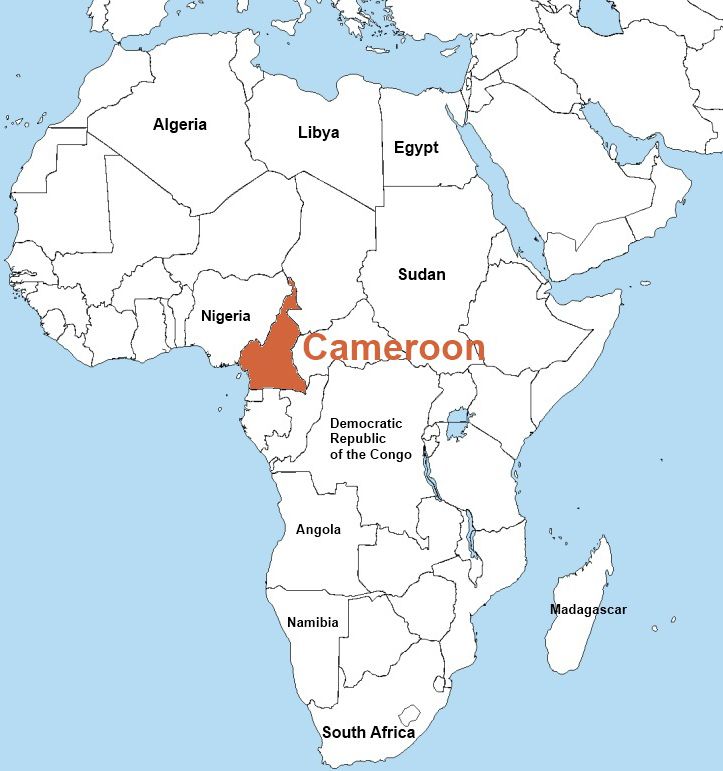
Unseen Cameroon: A Journey Through Turmoil
From Feb 21, 2026
by Atumo Ezekiel Acha
(henrymakow.com)
I am 29 years old old and hold a Bachelor’s degree in Law.
Today, I am a ghost in my own country. I live hand-to-mouth, trapped between the brutality of the military and the extortion of the rebels. There is no job, no steady meal, and no bed that feels like home. Every sunset brings a terrifying silence, and every sunrise feels like a mockery of the effort I’ve poured into a life that refuses to work out.
I have fought through forests and bullets, but as I stand here today, the thought of ending it all is the only thing that feels like a quiet escape from a land that has forgotten I exist.
In Cameroon, time hasn’t just flown; it has curdled.
The mist over the Northwest hills of Cameroon used to mean life; now, it only hides the dead. I am a son of this soil, born into a family of ten where my parents valued the sheer number of hands more than the dreams inside our heads.
By Grade 4, the well ran dry. My education became a debt paid in sweat, clearing virgin forests in Mamfe under a scorching sun to fund a Bachelor’s degree I earned in 2018–just as my world began to burn.
The Anglophone crisis (see below) turned my graduation into a funeral for my future. I tried to cling to the earth, tending two acres of cocoa, but the land became a graveyard. In 2019, the sky fell. I watched three of my companions executed by the military right before my eyes. I survived by a miracle of words, only to be cast into a different cage. The “Amba” rebels demanded 250,000 francs–a fortune I didn’t have–and seized my farm when I couldn’t pay.
I fled to Bamenda, but the city offered no sanctuary. A 50,000-franc salary at a bar couldn’t even cover a 20,000-franc room. I retreated to my village, only to be met by a different darkness: the suffocating weight of “night molestations” and witchcraft. Desperate, I turned to the church, but the pastors were merely vultures in robes, stripping me of my last coins from construction sites to “sow seeds” that never bloomed.
We are a nation trapped in a shackle of few individuals . While the world marches toward the mid-21st century, we are tethered to the fading pulse of a 93-year-old ghost. Paul Biya, a man who has held the presidency for over 43 years, is now less a leader and more a rumor. In this “Ugly Nightmare,” he joins the ranks of Equatorial Guinea’s Obiang Nguema and Uganda’s Yoweri Museveni–monarchs in suits who have transformed republics into their families affairs, keeping their people in perpetual bondage.
The Great Silence
Since the October 12, 2025, elections, the silence from Cameroon’s Presidency has been deafening. Officially, Biya was declared the winner with a comfortable majority, an eighth term secured. But the streets tell a different story. Issa Tchiroma Bakary, once the fierce “voice of the regime” as Minister of Communication, became the unlikely face of hope. Repented and galvanized, he broke ranks to contest the 2025 elections. By all parallel vote counts, Tchiroma won the hearts of a youth population desperate for air, yet the results were openly declared in favor of Biya, just as they have been for decades.
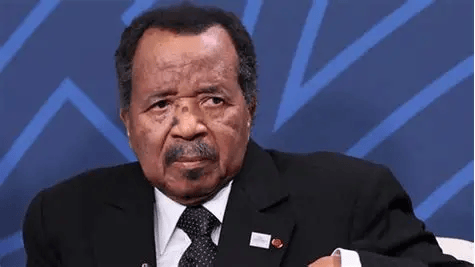
But Biya has vanished. He is absent from ongoing the African Union General Assembly; he was a no-show at his own high-profile birthday celebrations. At every turn, he is “represented.” The common question waggling on every lip from Maroua to Buea is: Who is ruling Cameroon? The answer whispered in the corridors of power points to the “masquerades” behind the curtain. First Lady Chantal
The Debt Trap
This brings us to a bitter irony. While the common man cannot afford basic commodities , the government continues to borrow. The IMF and international creditors keep pouring billions into a vessel with a shattered bottom. Why does the IMF continue to lend to a country heavily indebted and incapable of showing where the money is spent? These loans do not build schools or hospitals; they lubricate the machinery of a dying regime, leaving the next generation to inherit a debt they never signed for.
The Anglophone Tragedy
Nothing illustrates our descent into disaster better than the Anglophone Crisis. What began in 2016 as a dignified protest by Common Law lawyers and teachers’ syndicates against marginalization was met not with dialogue, but with the cold steel of military repression.
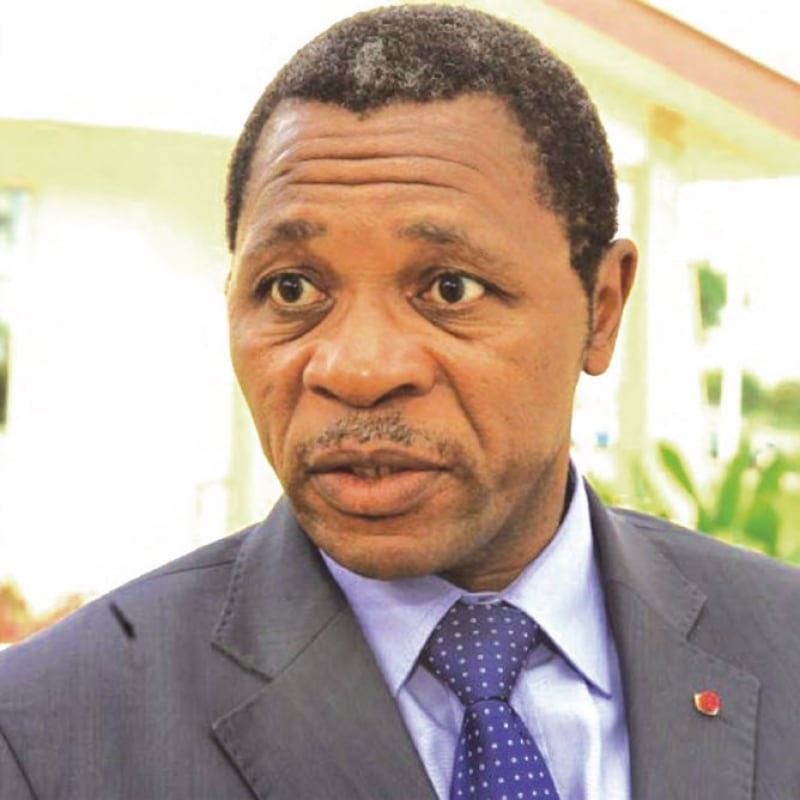
Paul Atanga Nji, the Minister of Territorial Administration and a staunch Biya stooge, became the iron fist of this crackdown. His refusal to acknowledge the legitimacy of Anglophone grievances turned a spark into a forest fire.
From that fire emerged the “Amba” rebel groups. They came in the disguise of liberators, promising to protect the marginalized, but they have now become a nightmare that rivals–and sometimes exceeds–the military’s brutality. Today, the Northwest and Southwest regions are “dead cities.” I have seen the eyes of children who have forgotten the sound of a school bell, replaced by the sounds of gunfire. Millions have been displaced, and famine now stalks the valleys.
The World’s Apathy
The most painful part of this journey through turmoil is the global indifference. One of the world’s deadliest wars is happening in plain sight, yet the international community remains largely silent. We are a footnote in the global news cycle, a “low-intensity conflict” that claims lives with high-intensity frequency.
As I walk through the streets of my country, I see a people battling hunger, fear, and a profound sense of abandonment. We are caught between the anvil of military violence and the hammer of rebel extortion. Cameroon is a beautiful, diverse nation being bled dry by a leadership that refuses to let go, even as its grip turns to dust. We are waiting for a morning that feels a lifetime away, asking the world to finally look at us–not as a statistic, but as a people who deserve to be seen.
—–
Update- “As for my screenplay, am willing to let it to anyone to polish up if it doesn’t meet standard and am also willing to work on any storyline presented to me. I didn’t study Theatre Arts, I would have but i had no one to orientate me when I went for the Bachelor admission. I write because it’s inborn. It’s something I can’t but do.
If I were in Canada, my greatest ambition would be to take regular and over time jobs to save money and go back to school..
It will be of utmost happiness if i am an academic Doctor like you .
I already did my canada visa Biometric Entry since 2023, all i need now is an employment letter, invitation letter, etc to visit Canada. with this, the embassy of Canada will gladly issue a visa. Once am there, I will seek for an asylum. I think i have a very strong case for an asylum, in January 2025, the military raided our homes and brutalized us, i still have a video of my case.”