
Full Spectrum Dominance in a Multipolar World – Nothing Lasts Forever
Mon 3:45 pm +00:00, 22 Dec 2025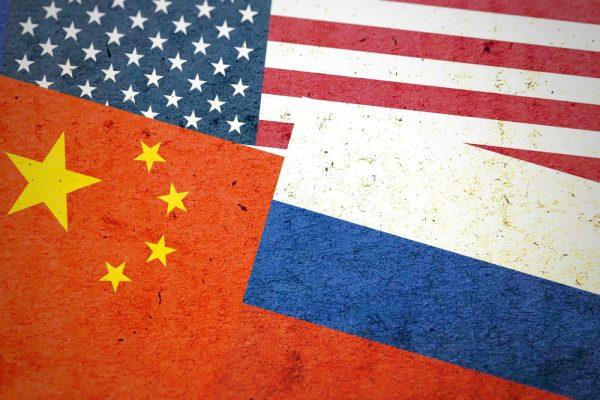
Source: https://www.unz.com/article/full-spectrum-dominance-in-a-multipolar-world/
In February 2025, the first full month of Donald Trump’s Second Coming, the new Secretary of State Marco Rubio is asked what he thinks of China’s assertion that present and future international relations should be conducted within the framework of a “Multipolar World.” Rubio accepts that terminology, but his interpretation is not at all the same as China’s. He dances around the issue and equivocates that multipolar world systems sometimes do happen, in the course of political history – and so do Great Power rivalries, and so do “abnormal” unipolar systems, in which one state or empire, like the United States, enjoys hegemony over all the others.
China advocates for equality among state actors. China stands opposed to American hegemony. China, along with most other states and their advocates, wants a multipolar, multilateral world system ordered by International Law, and mediated within the United Nations. In response, Rubio (representing Donald Trump, of course) launches into an entirely spurious claim, without any compelling evidence, that “China wants to be the most powerful country in the world and they want to do so at our expense, and that’s not in our national interest, and we’re going to address it.”
Rubio emphatically insists that Uncle Sam needs to prevent an entirely fabricated nightmare fantasy from happening, by force if necessary – to defend the “Homeland,” and its many far-flung “national interests,” and the “Free World” at large, from the Chinese menace. Rubio wants a world divided by “spheres of influence,” in which one nation – the USA, not China, and not Russia – reigns supreme over all others, and really does ultimately control the world, by military force, presumably forever. And the world is just supposed to submit to that control – also forever.
Full Spectrum Dominance
Ever since the 1991 collapse of the Soviet Union, Rubio’s world vision has been referred to by American supremacists as a unipolar system, in which the United States can and should exercise “Full Spectrum Dominance” (FSD). The US Joint Chiefs of Staff, in a 1996 publication titled “Joint Vision 2010,” introduced the concept as having the will and capability to control events, in any kind of conflict, with any kind of adversary, anywhere in the world – “to dominate the battlespace from peace operations through to the outright application of military power that stemmed from the advantages of information superiority.”
It is not clear just who subscribes to the concept, apart from American supremacists. It is not exactly a universal ideal. But, while FSD orients American foreign and military policy today, reference to it has largely disappeared from current political discussion. Here, the purpose is to review its relevance, a generation on from when the whole idea was first publicly introduced.
The meaning of Full Spectrum Dominance has changed over the past couple of decades, just as reference to it has largely disappeared. For example, after the general elections of 2024, Trump’s flame-throwing henchman Steve Bannon projected that the new administration would be characterized by “Full Spectrum Dominance” – the focus of which would be internal and extend over the entire range of domestic policies and objectives in civil and economic life. Also recently, “Full Spectrum Dominance” has been diluted and trivialized as a meme, appearing as a board game, similar to Risk.
Assuming that FSD does indeed still orient foreign and military policy, it is important to recall its original meaning and intent. And also to remember that it was foisted on the American public and the world at large, without any semblance of a democratic process. The policy was never put to a vote. It was never subject to political debate. It has never been subject to referendum or review or retraction or repeal. Nobody has ever asked if the general public actually wants the United States to have the will and capabilities to rule or police the world by force – forever. Most people would probably agree with the ancient wisdom of the I Ching – “The Book of Changes” – that nothing lasts forever.
Neocons, PNAC, and FSD
FSD broke the surface as a political paradigm most apparently during the George W Bush administration (2001-09), when it operationalized and was used to justify the so-called Global War on Terror (GWOT). It was promoted then most ardently by Secretary of Defense Donald Rumsfeld and his minions – especially his deputy, Paul Wolfowitz. The “Wolfowitz Doctrine,” corollary to FSD, still holds today that never ever again shall there be a “peer rival” to American primacy.
However, the origins of the paradigm can be dated at least as far back as the Cold War (1945-1991), evolving from the post-WWII “containment” strategy against the Soviet Union, and then, the “peace through strength” doctrine advocated most audibly by Ronald Reagan (1981-89). In the Cold War era, both sides in what was then widely understood as a “bipolar” system competed for supremacy, and both prepared to blow up the whole world with nuclear weapons, over an ideological conflict that eventually became a moot point. Bipolarity ceased to describe the world system, after the Soviet Union collapsed.
In the first decade following the Cold War, FSD terminology was openly expressed verbatim, as its initial operational concepts became the new doctrine. Starting with POTUS GHW Bush (1989-93), and then, during the two-term Clinton presidency (1993-2001), FSD developed largely within American Cold Warrior and Zionist political circles that called themselves the “neoconservative” (“neocon”) movement.
One of the major neocon voiceboxes was the Project for a New American Century (PNAC), which worked in close coordination with think tanks like RAND and the Defense Department, wherein a series of major documents, including several “Quadrennial Defense Review” (QDR) and “National Defense Strategy” (NDS) and “National Security Strategy” (NSS) reports, began to be published (the initial QDR was in 1997, the most recent NSS just released), laying out the FSD architectural blueprint for global military primacy.
Their vision of the future was always propelled by concurrent massive advances in technology, especially information technology, unleashed by and within the new-born Internet, in what Donald Rumsfeld called the “Revolution in Military Affairs.” Coincident with publication of “Joint Vision 2010,” in 1996-97, the development of “Network Centric Warfare” incorporated the Internet with military operations. Other early programs connected digital technology with the space-based Global Positioning System (GPS). These directions continue to develop apace, under titles like Force XXI Battle Command Brigade and Below (FBCB2) and Project Convergence 2021.
Neocons repudiated what they viewed as foreign policy “weakness,” the restraints of the nagging “Vietnam Syndrome,” wherein American war-making was inhibited by a legacy of failure and futility and violations of international law. They wanted a quick return to a “muscular” approach in foreign interventions, aggressive and offensive military power projection (as opposed to fighting in “defense” of “freedom” from phantom enemies), replete with “preemptive” and “preventative” wars. Israel was always a central national interest of the US military and neocons, arguably because of its pivotal Cold War political alignment, and its critical location along eastern Mediterranean sea lanes, and its proximity to the Suez Canal chokepoint, and all that that implied for anti-Soviet military strategy.
Beyond Full Spectrum Dominance, the neocons also advocated “nation-building” policies, which would forcibly re-model other countries around fatuous American ideals of “electoral democracy” and “human rights.” Imposed nation-building proved to be calamitous in Afghanistan, Iraq, Somalia, Libya, and elsewhere, and was eventually abandoned as a bad idea, during the first “America First” Trump administration. However, Full Spectrum Dominance remains to this day the foundational cornerstone of US foreign and military policy.
FSD, the GWOT, and the Enemy of the Day
Without its longtime Soviet adversary, US military and foreign policy was at a loss, in the first years of the Unipolar Moment. Dismissing the hopes of many that a “peace dividend” could ever materialize, due to the end of the Cold War, the neocon-dominated military-industrial establishment went searching for new enemies, to validate and justify the enormous and growing expenditures of taxpayer funding for forces deployed in the field and weapons then in development (such as Ronald Reagan’s “Star Wars” or “Strategic Defense Initiative” space warfare system). The search turned up only a few candidates for the role of antagonist, none of whom amounted to any kind of existential threat, nothing like the erstwhile Soviet Union.
One unsuitable set of candidates was the so-called unorganized “terror network” – which included “non-state actors” like the PLO (in Palestine), Hezbollah (in Lebanon), the Taliban movement (in Afghanistan), al-Qaeda jihadists (offspring of the CIA-sponsored Mujaheddin, also in Afghanistan), al-Shabaab (in Somalia), Abu Sayyaf (in the Philippines), the Red Army Faction (in Germany), the ETA (in Spain), the IRA (in Ireland), and the Red Brigades (in Italy). This set of candidates was unsuitable, primarily because they had no territory to conquer, and no advanced military capabilities – no air power, no naval power, no tanks or APCs, no space satellites, and no modern weaponry. They were often just militia forces wearing sandals and pajamas, armed with AK-47s, grenades, and IEDs. They could not justify the neocon ambition for FSD, nor the Pentagon’s demands for funding nuclear weapons, or aircraft carrier battle groups, or B-2 “Spirit” bombers, or ballistic missile submarines. At best, they required a new category of armed conflict, ancillary to traditional Great Power and Cold War rivalry. “Asymmetric” or “irregular” combat, and “counter-insurgency” (COIN) operations simply required a new branch of the military, materialized as “special operations forces.”
Other subjects of passing national hysteria were “rogue states” – generally third- or fourth-rate regional military powers, invariably led by scary boogeymen, like former US ally Manuel Noriega’s Panama (overthrown by Operation Just BeCause, in 1989-90), or former US ally Saddam Hussein’s Iraq (neutered and degraded by Operation Desert Storm/Shield, the first real FSD exercise, in 1990-91), Kim Il Sung’s “Communist” North Korea (a residual Cold War enemy, and then an incipient nuclear power), Gaddafi’s defiant anti-Zionist dictatorship in Libya, and Ayatollah Khomeini’s Islamist Iran (exhausted from a decade of war with Iraq, but still a supporter of Hezbollah in Lebanon and the PLO in Palestine). Also, to a lesser degree, were a few countries, like Cuba, Nicaragua (where Sandinistas were voted out of power, in 1989-90), and Serbia, all of whom had been Soviet allies in the Cold War, and now remained friendly with post-Soviet Russia. None of them were significant threats to the USA – however much the propaganda hyped them as such.
Russia was an impotent shambles – with lots of nuclear weapons – in those years. And China was considered an eventual but not an immediate serious threat. It was a rare moment, when real peace-making was possible, but that chance was squandered by neocons who would not let go of the Cold War conflict – in which they were deeply invested. In their hubris, beating their chests, the neocons argued that the 1991 Unipolar Moment presented a unique opportunity to consolidate permanent global military supremacy. Because the Soviet Union was no more, they contended, the United States had “won” the Cold War, and was therefore entitled (by “God,” presumably) to dominate not just former socialist adversaries, but the entire world, in every relevant dimension – forever. They set about making that happen, and they have not backed down one inch since then.
Uncle Sam needed a credible enemy to justify his imperial ambition, but didn’t see one, and so had to create one. The enemy emerged as a hybrid, a chimera, an ever-changing, all-occasion, amorphous, variable Orwellian antagonist, officially named “Terror” (or “Terrorism”) – which served as a duplicitous cover story for the continuation of Cold War strategies to “contain” Russia and China.
Every theater and every chapter of the ensuing GWOT has had subtextual Cold War dimensions. When it appeared that “terrorists” in one context might morph into “insurgents” in another context (as in both Afghanistan and Iraq), the lines were blurred by propaganda that made “regime change” the official objective, while Cold War strategies continued beneath the surface.
The entire plan was already laid out, much of the hardware was prepositioned, new overseas bases were built and occupied, and Full Spectrum Dominance already in the common vernacular, as early as 1996-97, during the Clinton administration, well before the WTC attack of 9/11/01. All that was lacking for kinetic operationalization was a pretext for deployment of forces – which would never have been politically feasible before the Soviet collapse.
With all the major systems in place, by the time of GW Bush’s very hinky election, in 2000, FSD still needed a triggering event to go fully operational. Perhaps it was mere coincidence that 19 al-Qaeda operatives, armed with nothing more than box cutters, pulled off a spectacular attack against the greatest military force in human history, the world’s so-called “indispensable nation,” and suckered the United States into aggressive foreign interventions – which all turned into complete and utter disasters.
Al-Qaeda leaders Osama bin-Laden and Ayman Zawahiri explained their logic many times over. The plan was to seduce the United States into a quagmire from which there would be no good way out, and where the empire would bleed to death. That turned out to be a brilliant military strategy– especially because it converged and dove-tailed so neatly with the plan for FSD, which Osama and Ayman understood quite well. The WTC attack was never about initiating war on American soil. There were no capabilities for that. It was a provocation and a trap, and GW Bush took the bait.
Now, after over two decades of military failure, trillions of dollars squandered, millions of pointless deaths, and the destruction of several civilized nations, the circle has come around to its original starting point, the Cold War, when the Enemy of the Day can once more be identified as a Great Power competitor – China or Russia, depending on the day – or their allies, especially Iran, Cuba, and Venezuela. The GWOT, once billed as a “generational war” and a “long war,” during the Bush years, and then referred to as a “forever war,” has been largely reduced to background noise. And al-Qaeda “terrorists” have turned out to be useful as American allies or proxies, in a wide set of conflicts with Russia, China, Iran, Syria, Libya, Yemen, and elsewhere in the Middle East, Asia, and Africa.
F. William Engdahl, the Roots of FSD, and the Unified Combatant Command
In his seminal analysis titled “Full Spectrum Dominance” (2009), F. William Engdahl traced the history of the paradigm from its earliest roots, and then, through its most expansive years, during the GW Bush administration, under pretext of the GWOT. The account reaches back to the Nixon and Ford administrations, in the 1970s, when Donald Rumsfeld and Dick Cheney established their personal domination of foreign and defense policy circles, as apostles of Ronald Reagan and his “peace through strength” Cold War mantra (which is still fixed in current propaganda). Their enemy was always a Great Power rival – the Soviet Union, and sometimes China. The idea of war on “terror” or “terrorists” or “rogue states” or “insurgencies” did not enter the discussion. Their focus was Communism.
Engdahl tracks those two individuals through successive administrations, including during the Carter years, in the aftermath of the Vietnam fiasco, when Americans were largely exhausted by war and alienated by Cold War jingoistic militarism. Great hopes for a “peace dividend” were dashed then, too, as multiple events unfolded in 1979, with the Soviet invasion of Afghanistan, the Sandinista Revolution in Nicaragua, the Islamic Revolution in Iran, and then Iran’s taking of American hostages, and its embargo on oil exports to the West – which followed on the 1973 Yom Kippur War in Palestine, and the “oil shock” ensuing from that engagement, and the one before it, in the 1967 Six-Day War.
This chain of events led to the first overseas command structure to assert US control of the Middle East oil trade, established in 1980 under Carter as the Rapid Deployment Joint Task Force (RDJTF). In 1983, under Reagan, that task force was reframed as the US Central Command (CENTCOM), whose “Area of Responsibility” (AOR) presently includes Afghanistan, Bahrain, Egypt, Iran, Iraq, Jordan, Kazakhstan, Kuwait, Kyrgyzstan, Lebanon, Oman, Pakistan, Qatar, Saudi Arabia, Syria, Tajikistan, Turkmenistan, the United Arab Emirates, Uzbekistan, Yemen, and now Israel. CENTCOM became one of seven geographical divisions of the current Unified Combatant Command structure. It has been the primary arena of GWOT battlefields, since 9/11/01, especially in Afghanistan, Iraq, and Syria, while Full Spectrum Dominance re-oriented America’s recurrent wars from “defense” to global offense.
Beyond CENTCOM, the greater story is the Unified Combatant Command itself, in its entirety, which has integrated the global battlefield of FSD, evolving since the post-WWII years from a scattered, uncoordinated and inefficient arrangement, wherein the several military services (Army, Navy, Air Force, Marines, Space, Cyberspace, etc.) competed with one another for funding and power. Since 2002, under the direction of GW Bush, Dick Cheney, and Donald Rumsfeld, there has been no place on the planet that is not covered by the command structure, which incorporates the seven geographic commands (CENTCOM, EUCOM, INDOPACOM, AFRICOM, NORTHCOM, SOUTHCOM, and SPACECOM) with four “functional” commands (SOCOM, CYBERCOM, TRANSCOM, and STRATCOM), in a hierarchy where STRATCOM occupies the apex position, with ultimate control over nuclear weapons and strike forces, under orders of the Commander in Chief. Any ideal of a multipolar world is completely irrelevant to this kind of force structure. It’s all about us. USA!
In Engdahl’s account of FSD and the GWOT, the focus is divided between the illegal invasions of both Afghanistan and Iraq (and elsewhere around the globe) and the concurrent Cold War containment strategy. The “redeployment” of US bases and forces from “Old Europe” to “New Europe” (which Donald Rumsfeld orchestrated) meant containment of Russia from the west. The expansion of NATO and EU membership to Poland, Hungary, Czechia, Romania, Bulgaria, the Baltic and Balkan countries, and the installation of US bases and radar and anti-missile defense systems into those spaces, was a substantial escalation of threats to Russia – which was duly alarmed, but still on its back, economically and politically, and unable to resist.
Meanwhile, Russia was contained equally from the south, as both Afghanistan and Iraq incursions (which sandwiched Iran between them) featured US military and economic presence up to and beyond the previous borders of the Soviet Union, which had ruled Armenia, Azerbaijan, Turkmenistan, Kazakhstan, Kyrgyzstan, Uzbekistan, and Tajikistan. While world attention was fixed on the horrific events in Afghanistan and Iraq, the pressures on Russia from the west and south went largely unnoticed or under-reported in Western media coverage.
The same containment strategy can be noted in regard to China, as the GWOT moved into spaces like Somalia, Pakistan, Indonesia, Thailand, and the Philippines, especially to control maritime sea lanes and chokepoints, under pretext of fighting for “freedom” from fearsome “terrorists” – who posed no direct threat to the US.
The Overseas Base Network as a Major FSD Dimension
If Marco Rubio’s alarmist scenario of China usurping American supremacy were based on realism, instead of wild exaggeration and venomous slander, it should be obvious that China would have to challenge the US Unified Combatant Command with something similar of its own – and that is not likely in the near term. Moreover, China would have to match American military expenditures, which have tripled since 9/11/01 and now approximate a trillion dollars annually – three times China’s spending. China would have to increase its force-projection capabilities, with amped-up production of aircraft carriers (its third was recently launched, compared with America’s eleven) and battle groups (cruisers, destroyers, and tenders) and ballistic missile submarines (the US has fourteen), nuclear weapons, and bomber fleets and ICBMs, not to mention space satellites, and earth-bound transmission and reception stations. Despite great strides in its military technology, China is nowhere near parity.
Furthermore, in order to usurp America’s Full Spectrum Dominance, China would have to expand its network of overseas military bases. According to WorldBeyondWar’s data, US military bases now number approximately 880, including large, medium and small installations. (Other sources count 128 major bases, but not the minor installations.) Before the 1950s, US military bases numbered 219, many of which were established during WWII or earlier. In the 1950s, in the context of the emerging Cold War, the US built 126 new bases. In the 1960s, 52 new bases were built. In the 1970s, 23 more were built. In the 1980s, 17 more were built. How many did China build?
Only three bases were built in the 1990s (including Camp Bondsteel, in Kosovo), in Clinton’s administration, but he did preside during the development of FSD, as well as initiation of anti-socialist “free trade” policies (following Reagan’s Cold War precepts), and the rapid expansion of NATO to its present 32 members, starting with Poland, Hungary, and Czechia. Then, in the 2000s, when GW Bush launched the GWOT, 48 more bases were built. 102 more bases were built, from 2010 to 2019. And since 2020, 81 new bases have been built.
These numbers fluctuate due to closures and redeployments, the dates of which are not provided easily by available data, but there are some 2,061 closures identified in WorldBeyondWar data. These would include bases in Germany (357), France (191), Canada (166), Italy (51), Vietnam (99), Laos (65), Afghanistan (32), Iraq (21), Russia (11), China (17), Greenland (17), Niger (8), Panama (33), and many others, at the conclusion of or draw-down from historic interventions and deployments.
Meanwhile, China presently operates a total of six (!) overseas bases – in Djibouti, Pakistan, Myanmar, Cambodia, Sri Lanka, and Tajikistan. Russia operates a total of 29 overseas bases – 11 of them in Armenia, the rest in Tajikistan, Kyrgyzstan, Kazakhstan, Belarus, Moldova, Georgia, Syria, and most recently, since 2023, on the Red Sea coast of unstable and war-torn Sudan. Russia’s bases in Syria used to number in dozens, but since the ouster of Bashar al-Assad and the seizure of power by the leader of a former al-Qaeda affiliate, Hay’at Tahrir al-Sham (HTS), supported by the US and Israel, in early 2025, there are now only three Russian bases remaining, and their future is uncertain. The US would like to see them all evicted.
It should be noted that other countries also operate foreign bases. Israel now has 14 new bases in Syria, since its military incursions began, in 2025; Turkiye has 131 bases, mostly in Syria, Iraq and Libya; the UK has 117; India has 19; the UAE has 12; Singapore has 11; France has seven; Canada and the Netherlands each have four; Australia, Saudi Arabia, and Italy each have two; Iran, Pakistan, and Japan each have one – all according to WorldBeyondWar’s data.
As explained by Engdahl, overseas military bases constitute one major dimension of Full Spectrum Dominance, and for that fact alone, it is clear that the US reigns supreme for its force-projection capabilities around the world. The network of bases is connective tissue that integrates the Unified Combatant Command, as well as the far-flung “national interests” of the US. If China has any ambition to usurp that kind of dominance, it will take a very long time to accomplish, and so, Marco Rubio’s fear-mongering boils down to just more incendiary self-serving propaganda – which, to be sure, is another dimension of FSD, as PsyOps and Narrative Control strategies are concerned.
It’s not just a question of numbers. Breaking down the overseas network geographically, it is clear how many US bases are purposefully positioned around the empire’s most important expected flashpoints, conflict zones, oil and gas and mineral resources, and most importantly, maritime shipping lanes and chokepoints – many of which have been GWOT theaters. Much of the base network can be considered a major feature of an entire dimension of FSD commonly referred to as “Sea Control,” which is often operationalized as “Anti-Access/ Area Denial” (A2/AD) maritime tactics and strategies. Location can be everything, and if China’s (or Russia’s, or any other state’s) ambition is to usurp US military primacy, it would have to dislodge and displace the overseas American base constellation.
Even Marco Rubio can imagine what that would mean, and why it is ridiculous to allege that “China wants to be the most powerful country in the world and they want to do so at our expense” (which is pure psychological projection). The US operates huge army, naval and air bases in Japan, South Korea, the Philippines, around the East and South China Seas; huge army, naval and air bases in and around the Persian Gulf, the Strait of Hormuz, and the Arabian Sea; huge army, naval and air bases around the Mediterranean Sea, the Black Sea, the Suez Canal, and the Strait of Gibraltar. Then, there are bases near the Straits of Malacca, Sunda, Lombok, and Timor, the Bab el Mandeb, the Gulf of Aden, the Red Sea, the Philippines and the Sulu Sea, the Greenland-Iceland-UK Gap (“GIUK Gap”) in the North Atlantic, the Northwest Passage through the Arctic Ocean; Guam, the Marianas, and Diego Garcia; and the very important passages through the Panama Canal, the Windward Passage, the Mona Passage, and the Grenada passage, off the coasts of Colombia, Venezuela, Trinidad and Tobago, and Grenada.
All of this is under the direction of the Unified Combatant Command, which incorporates all the military services through its dominant information superiority. None of this highly integrated system was ever possible while the Soviet Union existed, and today none of it is subject to question in, or by, a multipolar world, not by China, not by anybody. That’s what FSD is supposed to be all about. But domination is not the same as “hegemony.” Some definitions of hegemony insist that juridical and moral legitimacy are essential factors that distinguish it from brute force and naked aggression.
FSD in 2025
In early 2025, both Donald Trump and Marco Rubio openly confronted Panama, accusing that nation of colluding with or just permitting China to take control of the Panama Canal. They pointed to the dual Hong Kong-based CK Hutchison port facilities, at either end of the canal, as evidence that China was plotting to establish itself as a military power in the Western Hemisphere. In his inaugural address, Trump falsely declared, “China is operating the canal,” and he boasted, “We’re taking it back.”
Trump and Rubio arrogantly threatened to reassert US ownership of the canal, and perhaps to launch a military invasion to seize control, unless Panama cut China’s “malign influence” out of the picture entirely, by transferring ownership of the port facilities to a Western capitalist BlackRock-led consortium – and also, by permitting the US to “temporarily” occupy three military bases alongside the canal, and perhaps more bases, later on. Their threats and intimidation were effective. Panama knuckled under, but avoided a military invasion, while reasserting its sovereignty over the canal.
Under terms of the Memorandum of Understanding strong-armed by Trump and Rubio, the three bases have now been occupied (ostensibly “sharing” them with Panama), since April 2025. They are the same bases that the US occupied from 1914 to 1999 – the year when all 33 or so American bases were evicted, under terms of the Panama Canal Treaty of 1977 (the Torrijos-Carter Treaty). The bases are: the Panamá Pacífico International Airport (formerly Howard Air Force Base), the Cristóbal Colón Naval Air Base, and the Vasco Núñez De Balboa Naval Base (formerly Rodman Naval Station). There have been no US bases in Panama since 1999 – until now. The US also exacted Panama’s concession to conduct jungle warfare training and other operations in the country for the first time since 1999.
Where did all the pre-1999 firepower and force projection based in Panama go? It largely went into the near distance, to new locations in Colombia (seven bases), Honduras (one base), and El Salvador (four bases), on both the Atlantic and Pacific coasts, controlling all approaches to the singular primary chokepoint of the entire Western Hemisphere. Much of the force relocated to Puerto Rico (where there are now 39 bases), from where (among other things) it controls the Mona Passage – the second-most important secondary chokepoint of the Antilles. The first-most important secondary chokepoint is the Windward Passage – which is located next to the Guantanamo Bay US Naval Base (and GWOT detention and torture facility), which was built in 1903 as America’s first overseas base. The base has operated under terms of a forcible permanent lease since Castro’s 1959 revolution, in occupied territory of socialist Cuba – a Cold War enemy, spitting distance across the Windward from turbulent Haiti.
If China had any ambition to project its military force into the Western Hemisphere, it would be hard pressed to get past the US Sea Control of the entire Caribbean basin and the Pacific coast. But why fight, anyway? That isn’t China’s way. China’s ultimate ambitions may be unclear, but its interests today are primarily economic. The trading relationships it has established in Central and South America (and North America, too) depend on shipping, and therefore it needs to navigate a maritime gauntlet, transiting the Panama Canal to and from the north and east coasts of South America, along sea lanes controlled by the US. The only alternative would be to go around Cape Horn through the Drake Passage, and that’s often a bad idea, due to the length of that route, the expense of time and money, and the frequently dangerous seas. And besides, China has no obvious desire for a military confrontation.
Apart from Panama, Trump and Rubio also have made similar threats to seize Greenland from its indigenous Inuit population – and also from Denmark, the long-recognized sovereign owner of the giant island. They made some ridiculous claims to justify their threats – like how Denmark treated Inuit Greenlanders unfairly in its colonial history. The most rational claim was that China and/or Russia might attempt to gain access to Greenland’s mineral resources. And also, that China and/or Russia might amplify its presence in the shipping lanes opening up in the Arctic, due to climate change and global warming, along the Northwest Passage and Greenland’s coasts. As in Panama, Sea Control explains a lot of FSD strategy, along with resource colonialism.
There is only one US base presently in Greenland (Denmark’s sovereign territory), now called Pituffik Space Base, located at the former Thule Air Base – which was first established in 1941 as a Cold War nuclear missile and radar base, at a critical chokepoint between Baffin Bay and the Arctic Ocean. Worried that China and/or Russia might get a foot in the door, the US is pushing to build new bases – threatening military invasion and extortion if Greenland and Denmark will not concede to US ownership.
Meanwhile, Trump and Rubio have made similarly outrageous attempts to coerce Canada to join the US as its 51st state, and on several occasions, have specified their primary interest in the shipping lanes and chokepoints along Canada’s Arctic coastline. Clearly, they want to establish control of the Arctic Ocean and the Northwest Passage, before China and/or Russia can assert a significant presence there.
In 2023, six new bases were built in Papua New Guinea, explicitly for control of shipping lanes and chokepoints between the South China Sea and Australia – specifically intended to “outflank” China. Meanwhile, there are also 17 new US bases in Sweden, occupied in 2023 – coincident with Sweden’s admission to NATO. Some of these are naval facilities on the Baltic Sea and Gulf of Bothnia. There are also 15 new US bases in Finland, occupied in 2024 – coincident with Finland’s admission to NATO. Some of these are naval facilities on the Baltic Sea and Gulf of Finland. These are all obviously for Cold War containment strategic positioning. They are certainly not part of any GWOT operations. These get scant media attention, unlike new bases on the Russian side of Finland’s border that recently have been reported.
At the time of this writing, a huge US naval armada is assembling in the Caribbean. The USS Gerald Ford, the world’s largest aircraft carrier, along with 75 attack aircraft, naval destroyers, cruisers, frigates and submarines, with B-1 and B-52 bombers flying overhead, are closing in on the coast of Venezuela, threatening a military invasion. Meanwhile, several dozen open-hull skiffs and fishing boats (lanchas), and now scores of unknown occupants, have been blasted out of the water by US drones, off the coasts of Venezuela, Trinidad, and Colombia’s Caribbean and Pacific shores, in violation of national and international law. And, over the past few months, there have been several armed encounters between US warships and Russian vessels, in open waters of the Caribbean and off the Venezuelan coast. Also, Trump has unleashed the CIA to conduct covert operations in Venezuela’s interior. There is a general state of alarm throughout the region and the larger world that Trump intends to launch a full-scale war – which might be underway before this article is read.
Trump’s justification for military action in Venezuela is the false claim that its government is allegedly waging war against the US, by sending “narco-terrorists” to “poison” America with illegal drugs, fentanyl in particular (although the regional drug trade is primarily Colombian cocaine bound for Africa and Europe). But everybody knows this is all another bald-faced lie. Many critical voices are screaming that the real reason for military action is to seize control of Venezuela’s vast oil resources. (In 2003, critics similarly claimed that the real reason for the invasion of Iraq was about oil. Some 20 years later, Iraq’s biggest oil exports go to China and Iran – the actual winners of the Iraq War, in which they played no direct role.)
Full Spectrum Dominance suggests a much bigger set of goals beyond colonialist seizure of the oil fields and industrial plant. First of all, such an act would constitute “strategic denial” of Venezuelan oil to China (its biggest export customer, followed by Iran and Cuba). Second, such military action would consolidate US Sea Control of the southern Caribbean Sea, with its primary chokepoint at the Panama Canal (as mentioned above), establishing an Anti-Access/ Area Denial (A2/AD) regime that would be focused primarily on China’s (and Russia’s) maritime and economic activities in northern and eastern South America. Third, invasion would presumably be a “regime change” operation, intended to drive out the socialist Maduro government and truncate its regional alliances with Cuba and Nicaragua, while also driving out China’s “malign influence,” following the example of Panama, earlier this year.
Fourth, any aggression against Venezuela would operationalize and justify the brand new “Trump Corollary to the Monroe Doctrine,” defining the entire Western Hemisphere as the exclusive “sphere of influence” of the US, as is proclaimed in the new “National Security Strategy” (NSS), just published in November 2025. The Monroe Doctrine of 1823 proclaimed US military dominance in the Western Hemisphere, following the collapse of the Spanish Empire. It was an era of wooden sailing ships, before the Panama Canal existed. The updated doctrine comes in the age of Full Spectrum Dominance.
The NSS 2025, already the subject of scathing reviews, takes radical departure from the entire preceding series of similar documents, published from 1997 to 2022 (as mentioned above). With an introduction signed by Donald Trump himself, the NSS must be read as wall-to-wall propaganda. It is harshly critical and hostile toward China, while conciliatory toward Russia, sympathetic to complaints about its “security” – from NATO. The document is also critical of “Europe,” for its long reliance on the US military umbrella. And the document establishes “sea control” of maritime shipping lanes and chokepoints as fundamental to its military primacy. Although “Full Spectrum Dominance” is not mentioned verbatim, the word “dominance” occurs six times in reference to various US power dimensions, the most important of which is military. The words “multipolar world” and “multilateral diplomacy” do not appear in the document, nor do the words “international law” nor “United Nations.” The words “international organization” appear once – interpreted as a threat against the United States.
As the beating heart of “national security strategy,” nothing encapsulates the US policy of Full Spectrum Dominance quite like the blood-thirsty statements of the new macho Secretary of Defense (“Secretary of War”) Pete Hegseth, as spoken while Marco Rubio prevaricated about a “multipolar world,” in early 2025. Hegseth insisted that US military policy would be oriented henceforth by “lethality, lethality, lethality.” “We are prepared to do what the Department of Defense does best – fight and win – decisively,” said Lethal Pete.
He was half right and half wrong. The US has not “won” a major war decisively since World War II. Apart from rolling over such pipsqueak powers as Panama and Grenada, or even Iraq in Desert Storm/Shield, the US has lost or quit its military adventures in Korea, Vietnam, Laos, Cambodia, Afghanistan, Iraq, Syria, Libya, and Somalia. But as for “lethality,” no country since World War II has done more to kill people and break things as the USA – so on that score, Hegseth’s point was correct. We’re Number One – in this fantasy of a Multipolar World.
Backing up his henchman in reference to Venezuela, Donald Trump said, “I think we’re just gonna kill people. Okay? We’re gonna kill them. They’re gonna be, like, dead.”
Nothing Lasts Forever
Barack Obama’s neocon administration (2009-16) continued the GWOT in Afghanistan, Iraq, Syria, Libya, Yemen, Somalia, the Philippines, and elsewhere, especially across Africa. The US and NATO intervention in Libya, in 2011, resulted in widespread chaos and proliferation of weapons and violence, leaving Libya fractured and divided between Russian and Western proxy forces, as it remains today.
The chaos spread to Niger, where the US established eight military bases, including the biggest drone base in West Africa. Ostensibly, the drones were tasked with surveillance of and attacks on “terrorist” groups, like al-Qaeda, ISIS, Boko Haram, and indigenous Tuareg nomads of the Sahel. These operations were conducted in Chad, Mali, Burkina Faso, and other neighbors, as well as in Niger.
Mostly unnoticed under pretext of the GWOT, the Niger drone base stood guard over the largest uranium mines in all of Africa, located in the Aïr Mountains, near the northern town of Arlit. This was the self-same uranium that Saddam Hussein was falsely accused of smuggling into Iraq, to build his fictitious nuclear arsenal, in the lead-up to the 2003 US invasion. The French company Orano (formerly Areva) had owned and operated the mines for decades, extracting the uranium for its nuclear power and weapons programs. Apart from its purported GWOT task, the US drone base served a “strategic denial” function meant to keep China and Russia from getting their hands on the uranium.
Two years ago, following a coup, the new Nigerien government evicted the French and nationalized the uranium mines. Then, last year, the government ordered closure of the US bases and expulsion of personnel, of whom there were about a thousand soldiers and contractors. Then, the Russians arrived and began occupying those same bases. This year, the Russians announced plans to take operational control of the uranium mines, sell the uranium on the international market, and build a nuclear power plant, all in cooperation with the Nigerien government – which was only too happy to be rid of the French and Americans. Niger followed the pattern of concurrent coups in Mali and Burkina Faso, with whom Niger has now formed the Alliance of Sahel States, in a collective divorce from the Western-supported 12-member Economic Community of West African States (ECOWAS).
These events in Niger signal resistance against Full Spectrum Dominance. The entire network of overseas bases could be dismantled, given the will to evict unwelcome foreign imperialist occupation forces. No doubt, such a development would unleash Cold War strategies, as it is clear that both China and Russia are competing with the US and the greater West for access to African minerals, oil, and other natural resources, throughout the entire continent. The example of Niger also makes it clear that “national interests” of the United States are spread far beyond the “sphere of influence” it claims in the Western Hemisphere, as illustrated by this year’s developments in Panama and Venezuela.
On the other hand, the end of Full Spectrum Dominance might well come as a consequence of the abject mendacity, duplicity, and avarice that have underwritten every American military intervention since World War II. People don’t like being lied to. That certainly includes Americans, who have been led into a series of futile wars, at the immense cost of lives and treasure, in Korea, Vietnam, Laos, Cambodia, Grenada, Panama, Iraq I, Afghanistan, Iraq II, Syria, Yemen, and now Venezuela.
The pattern of self-destructive behavior has bankrupted the country, financially and morally. Now under the control of madmen like Trump, Rubio, and Hegseth, the likely future looks troubled indeed. When the collapse comes, it won’t be because of China’s “malign influence.” It will be because of karma, and because nothing lasts forever.