
World government combination of assassination and charm offensive to ease Hellth Treaty passage
Thu 10:23 am +00:00, 16 May 2024The item that got a lot of attention was me showing that the Audenz bird flu vaccine clinical trial resulted in a death rate of those vaccinated 5x higher than those who got the placebo. (0.5% deaths vs 0.1% deaths)
https://live.childrenshealthdefense.org/chd-tv/shows/good-morning-chd/who-what-you-need-to-know/

To answer your questions about the pandemics — past, present and future — Meryl Nass and James Corbett return to CHD.TV. They discuss bird flu cases and vaccination, international pushback against the WHO, how the concept of health has been manipulated and the abuse and misuse of diagnostic criteria in the sphere of medicine. This ‘Good Morning CHD’ episode is sure to keep you on the edge of your seat!.
WHO Makes Key Concessions Ahead of Pandemic Treaty Vote/ Epoch Times
‘Ultimately, the goal of these instruments isn’t to protect public health,’ states a letter in opposition from 22 state attorneys general.
|
|

| |||||||||||||||


Kevin Stocklin has a few errors in this piece, imho, including the title. But his quote from Tedros and his subtitle above are great.—Nass
The World Health Organization (WHO) has watered down some provisions of its pandemic agreements ahead of the upcoming World Health Assembly on May 27. Critics in the United States, however, say the changes don’t do enough to address the concerns over the policy.
Provisions in prior drafts of the WHO pandemic treaty and International Health Regulations (IHR) together aimed to effectively centralize and increase the power of the WHO if it declares a “health emergency.”
The release of the latest draft of the amendments, dated April 17, is the first public update on the IHR draft, which was initially made public in early 2023.
“In most areas, and for all of those which most concerned us from a legal perspective, the interim draft reflects a major retreat by the WHO Working Group from the text of the original proposals,” British solicitors Ben and Molly Kingsley wrote in an April briefing paper regarding the new amendments.
Some WHO watchers remain wary, however.
“Practically all the bad things are still there,” Dr. Meryl Nass, a U.S.-based physician and vocal critic of the WHO agreements, told The Epoch Times.
“The language is gentler, but since there is so much to be decided later, it is not clear the gentler language is meaningful.
“My best guess is that they are desperate to get something passed, so the options are likely to be either a vanilla version of the treaty … or a delay. But they fear delay because people are waking up.”
The WHO and its advocates—including celebrities, politicians, and religious groups—have launched a global campaign urging the 194 member states to sign the documents.
“Give the people of the world, the people of your countries, the people you represent, a safer future,” WHO Director-General Tedros Adhanom Ghebreyesus said at a May 3 meeting in Geneva. “I have one simple request: Please, get this done, for them.” [In other words, do something stupid again to save granny.]
He urged any countries that don’t support the agreements to refrain from encouraging other states to oppose it. [His request to countries to not “break consensus.”—Nass]
WHO ambassador and former British Prime Minister Gordon Brown on March 20 lauded “a high-powered intervention by 23 former national presidents, 22 former prime ministers, a former U.N. general secretary, and 3 Nobel Laureates … to press for an urgent agreement from international negotiators on a Pandemic Accord.”
 |
Mr. Brown called for unified global action to “expose fake news disinformation campaigns by conspiracy theorists trying to torpedo international agreement for the Pandemic Accord.”
He refuted criticisms that the pandemic treaty and IHR amendments would cede any sovereignty from member nations to the WHO.
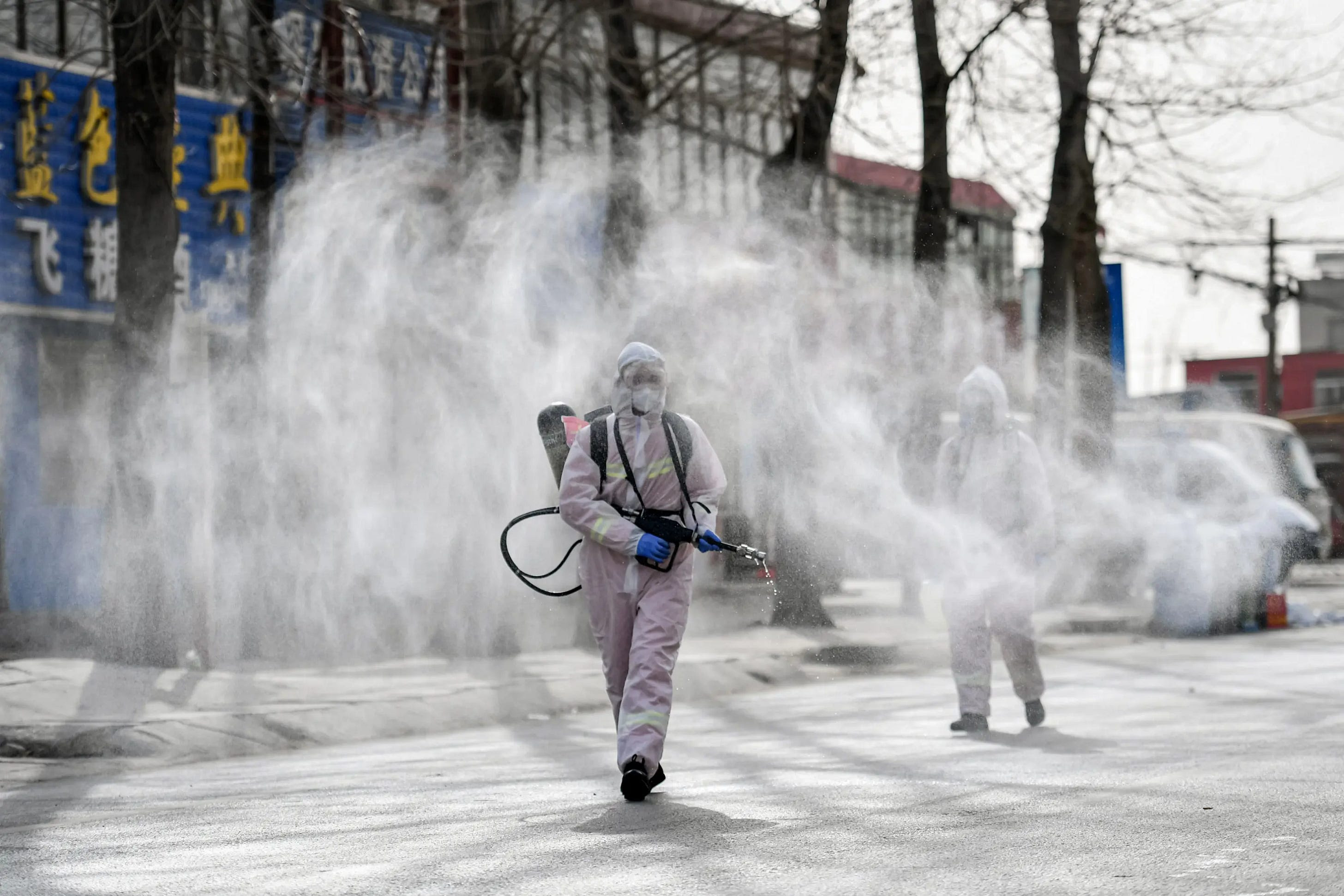 |
People in protective suits spray disinfectant on a street in Shijiazhuang, which was declared a high-risk area for COVID-19 , in northern China’s Hebei Province, on Jan. 15, 2021. (STR/CNS/AFP via Getty Images)
Critics Remain Unconvinced
Despite these assurances, however, the efforts to vest more power within the WHO continue to face resistance.
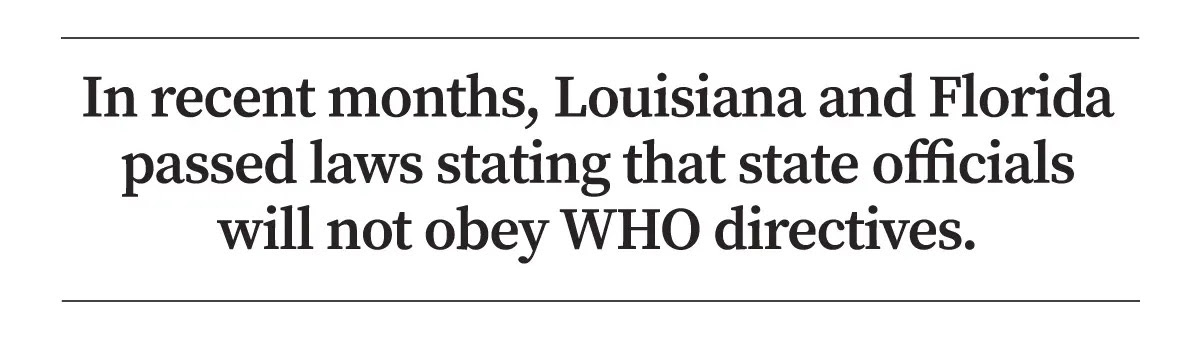
In recent months, Louisiana and Florida passed laws stating that state officials will not obey WHO directives, and other states, such as Oklahoma, are considering similar legislation.
On May 8, attorneys general from 22 U.S. states signed a letter to President Joe Biden urging him not to sign the WHO agreements and stating that they will resist any attempts by the WHO to set public health policy in their states.
“Although the latest iteration is far better than previous versions, it’s still highly problematic,” the attorneys general wrote. “The fluid and opaque nature of these proceedings, moreover, could allow the most egregious provisions from past versions to return.
“Ultimately, the goal of these instruments isn’t to protect public health. It’s to cede authority to the WHO—specifically its director-general—to restrict our citizens’ rights to freedom of speech, privacy, movement (especially travel across borders), and informed consent.”
Amid this recalcitrance, the WHO has stepped back from some of the more controversial measures. The Biden administration is involved in negotiating the WHO treaty and has expressed support for it but hasn’t stated a definite intention to sign.
The Latest Draft
Struck from the latest draft is a provision that member nations “recognize WHO as the guiding and coordinating authority of international public health response” and commit to follow the WHO’s directives during a health emergency. The latest draft also states that WHO recommendations are nonbinding.
 |
The WHO had sought powers in the previous IHR draft over “all risks with a potential to impact public health.” The latest draft seeks to limit the WHO’s authority to what it has been previously, namely the spread of diseases.
However, the global concept of One Health remains in the pandemic treaty, which could expand the WHO’s authority into new areas including global warming, the environment, farming, and food supplies.
One Health is defined in the pandemic treaty as an “integrated, unifying approach that aims to sustainably balance and optimize the health of people, animals and ecosystems.”
Also removed from the latest draft was language that eliminated respect for personal liberty in favor of “equity.” Listed among the core principles of the IHR agreement, the phrase “full respect for the dignity, human rights and fundamental freedoms of persons” had been struck in prior drafts and replaced with “the principles of equity, inclusivity, coherence.”
The current draft states that the parties would still respect individual rights and freedoms but would also pursue the collective goals of “equity and solidarity.” This issue becomes particularly important when it comes to efforts by member states to force people to take vaccines to keep their jobs—as the Biden administration did in its 2021 mandate that directed private employers to fire employees who didn’t take the vaccine or submit to frequent, often daily, testing.
Many countries and several U.S. cities instituted vaccine passports that barred the unvaccinated from entering certain public places, such as museums and restaurants. Austria passed a law during the COVID-19 pandemic criminalizing vaccine refusal.
The WHO agreements have also been criticized for promoting censorship, committing members to take steps to “counter misinformation and disinformation” about pandemics.
 |
During the COVID-19 pandemic, governments, media organizations, and tech companies collaborated to silence reports that the virus may have originated in a lab in China and that the COVID-19 vaccines didn’t stop the virus from spreading or that they may have harmful side effects.
Other provisions that were toned down include an effort to place the WHO at the center of a global surveillance system to track potential diseases, regulations to expedite vaccine production, requirements for digital health passports, commitments by member states to fund the WHO’s expanded pandemic infrastructure, and the transfer of medical technology and resources from rich countries to poor countries, including to China.
 |
A technician works in a lab at Sinovac Biotech, where the company was producing its potential COVID-19 vaccine, CoronaVac, in Beijing on Sept. 24, 2020. (Kevin Frayer/Getty Images)
Remaining in the agreements are stipulations that the WHO is “the directing and coordinating authority on international health work,” vesting power in the WHO director-general to declare a pandemic emergency. [Actually this phrase was placed into the WHO Constitution in 1948, ready to pop out when needed—Nass]
The Kingsleys’ brief suggests that the WHO agreements establish that the actions taken by governments during the COVID-19 pandemic—including lockdowns, travel restrictions, school closures, censorship, and forced vaccinations—are legitimate responses to a pandemic.
“The proposals start from the premise that the array of Covid interventions actioned during the pandemic are a suitable blueprint to direct future pandemic response behaviour,” they wrote.
TAP – You might fairly assume that Robert Fico’s opposition to the World Hellth Organisation along with his trust of Russia were behind the attempt on his life.
Leader of Slovakia Assassinated After Demanding Investigation Into COVID Vaccines
Shot by a Progressive Party Operative
|
|

| |||||||||||||||
Slovakia, a nice country in the heart of Europe, is unique in one important respect: it is the only country, out of the whole world, whose leader denounced COVID vaccines and announced a COVID inquiry into excess deaths, corrupt influence of Pfizer, and ill effects of COVID vaccines.
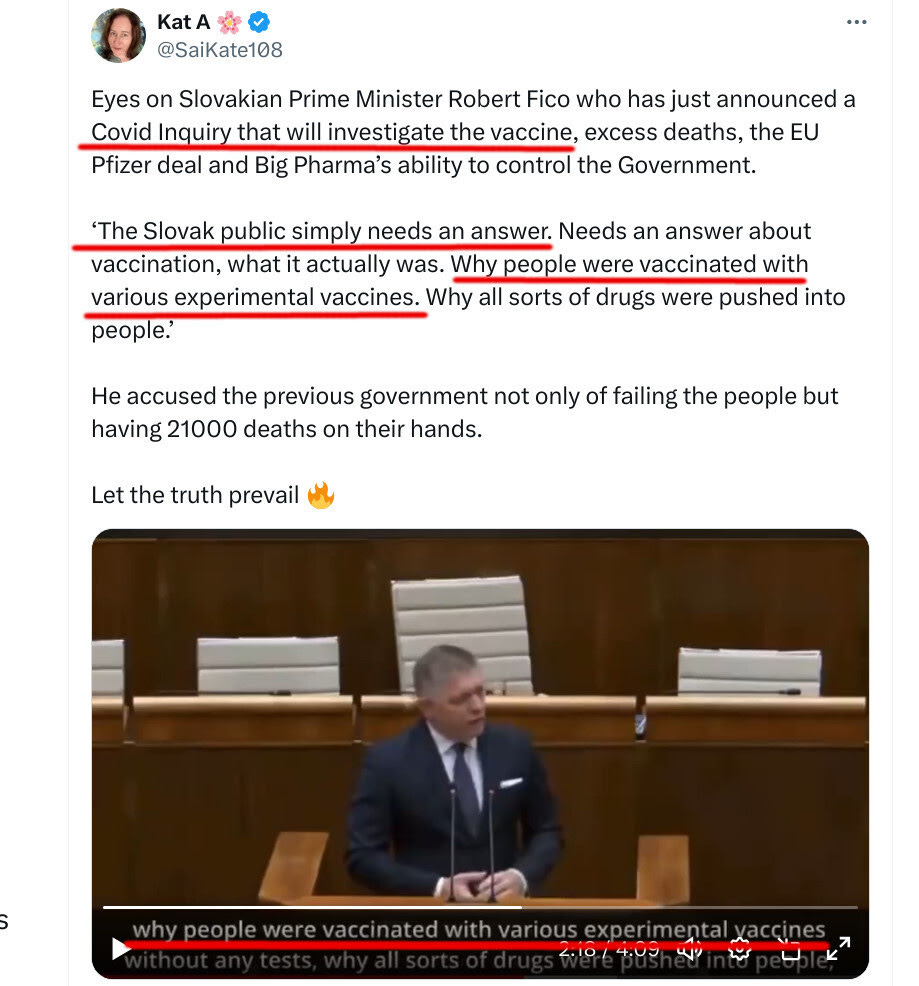
Many of us were wondering what would the outcome of this investigation be. Will excess deaths be finally correctly attributed? Will the cozy relationships between Pfizer and the media it sponsored be disclosed? What answers can we finally get, when a government is led by an honest man wanting to get to the bottom of the “pandemic response”?
Today, we have the answer.
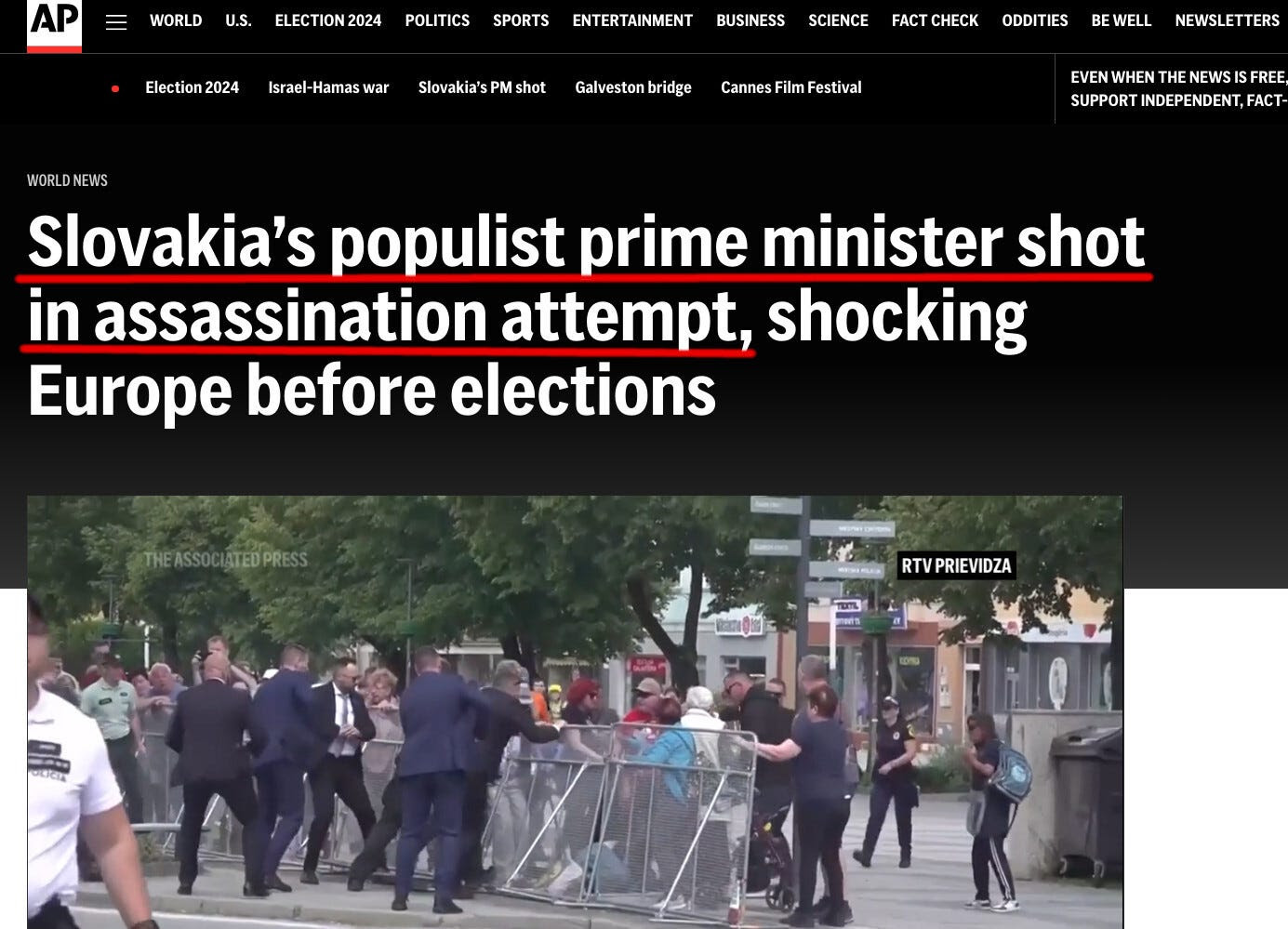
Robert Fico was shot and is now “fighting for his life” after multiple bullet wounds. Here’s a short video of the shooting:

The assassin, Juraj Cintula, is an operative of “Progressive Slovakia.” He is also the founder of the “Rainbow Literary Club”.
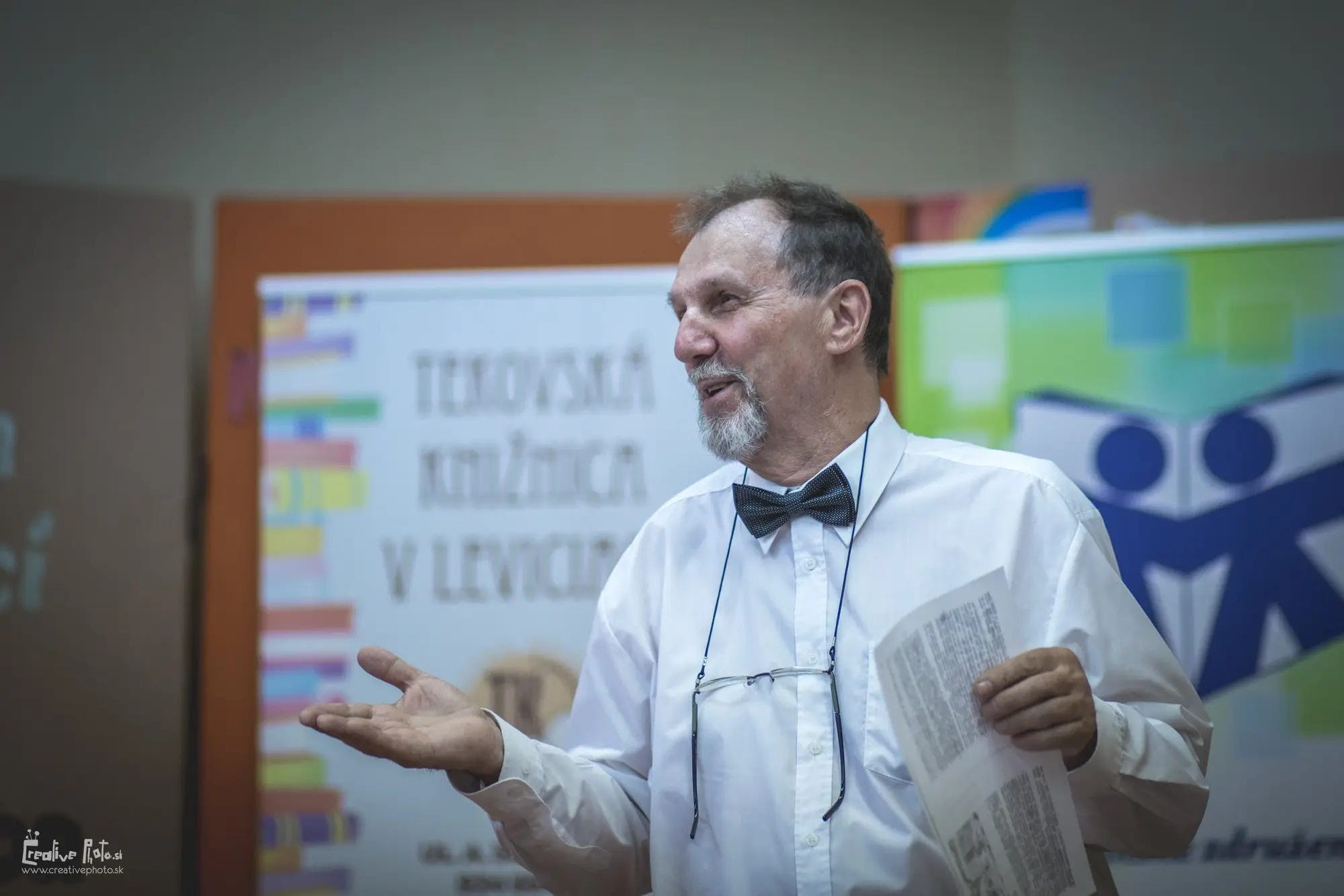 |
Juraj Cintula is a 71-year-old civilian. Was he capable of planning an assassination by himself? Was it possible for him to penetrate the state leader’s security and get to the right place at the right time, without help? In my opinion, that would be quite unlikely. He was probably not acting alone.
Did he get any help or money? If so, from whom? What are the interests whom Mr. Cintula served? I cannot speak with certainty. My guess would be as good as yours.
All we know is that the state-level investigation into COVID, possibly the only honest country-level inquiry, will likely be “postponed.”
Are you surprised?
| ||||||||||