A new Nature paper describing a rub-on “vaccine”
Tue 5:14 pm +00:00, 21 Jan 2025 This ain’t gonna be your mama’s Nivea – new with GMOs!
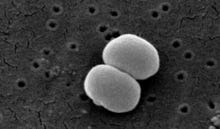
A paper hit the presses on December 11, 2024 entitled: “Discovery and engineering of the antibody response to a prominent skin commensal”.¹ You can read the Coles Notes written by Bruce Goldman of Stanford Medicine News Center here. Thanks to Anand Ram for bringing this paper to my attention. The paper describes the bioengineering of a commensal species of Gram-positive bacteria called Staphylococcus epidermidis (S. epidermidis), using a component of its membrane called Accumulation-associated protein (Aap)². Aap is responsible for biofilm formation.
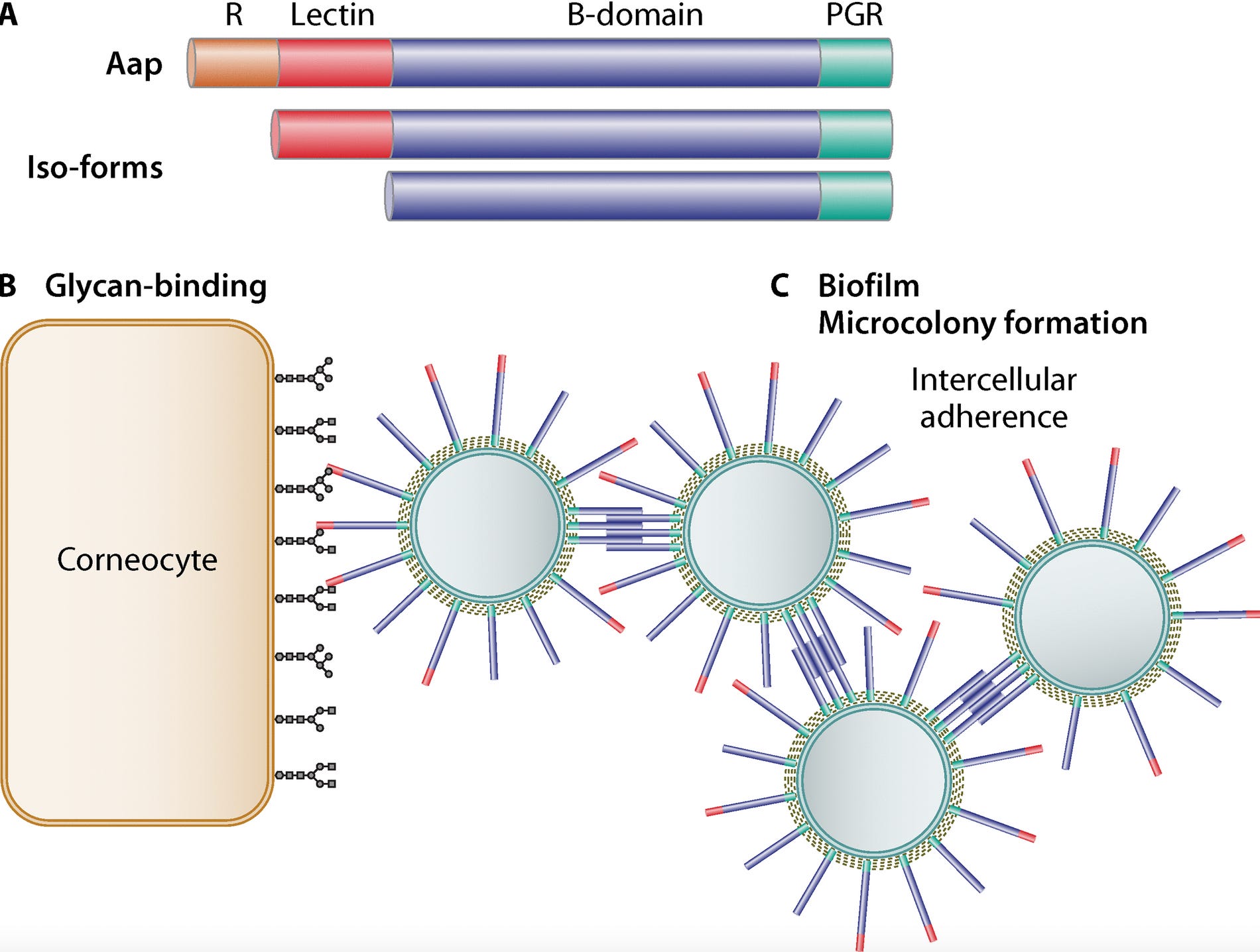
Biofilms are communities of microorganisms that form when (bacterial) cells stick to each other or to surfaces like catheters. You can imagine then why biofilm formation of S. epidermidis can be quite problematic in hospital settings. In the following schematic, you can imagine that these guys could clump together, given the right conditions.
As you can see, Aap is a long protein and has a domain that makes it sticky to other bacteria. S. epidermidis is mostly friendly and hangs out on our skin and mucous membranes as part of the normal skin flora. As long as your skin is in tact, you’ll likely never even know it’s there doing its thang. However, if your immune system is compromised, it can become a problem – sometimes living out its pathogenic potential. I would guess that these Aap protrusions probably have other functions, but their primary function is in biofilming. Even in healthy people without compromised immune systems, biofilming can occur under certain environmental conditions (changes in pH, salinity, temperature, low oxygen, low nutrients). It’s also due to something called quorum sensing. This is a system that bacteria use to talk to each other and find out if a critical density (of themselves) has been reached. When it has, genes for biofilm formation can be activated. Think of it like when a club is at capacity: the club brings the people in and the more people there are the more likely they’ll lock arms and form a “clump of people”. Sort of. So what did the authors do to this Aap region? They modified it in a specific way. Wouldn’t you know: the words that Bruce Goldman used in his article to describe the authors’ new vaccine platform was “plug-n-play”.
The authors swapped in a gene that encodes the tetanus toxin into ‘regular’ S. epidermidis (they’re working on a tetanus vaccine as a start). They swapped out a component gene of the Aap. Swap in. Swap out. And yes, that makes this S. epidermidis a genetically-modified organism since it has been genetically altered to include DNA that it doesn’t naturally carry. We shall call it GMO S. epidermidis.
With this GMO S. epidermidis, they went to work. Their first experiment included a regular S. epidermidis and the GMO S. epidermidis that encoded the tetanus toxin fragment. They rubbed the little heads of mice with a swab that was festering with either the regular S. epidermidis or the GMO S. epidermidis a few times on and off for 6 weeks, and then challenged the mice with an injected deadly dose of tetanus toxin. The mice that were exposed to the GMO version were cool, and the mice that were exposed to the regular version died. Pretty spectacular result, no? They measured antibody levels (for specificity’s sake) and found “extremely high levels of antibodies targeting tetanus toxin”. Then they played “plug-n-play” and swapped the Aap gene for one that encoded diptheria toxin. They reported the same result as for the tetanus toxin with regard to induction of “massive antibody concentrations targeting the diphtheria toxin”. Funnily, there’s no mention of who died. Sometimes, they leave that part out because it’s all about the antibodies, am I right? One of the authors (Fischbach) said that “our species’ virtually 100% skin colonization by S. epidermidis should pose no problem to the construct’s use in people.” There’s that word: should. Where have I seen that before? Fischbach goes on:
Now don’t get me wrong, what they’ve done is brilliant and the results are cool as they’ve been reported, but once again, even after “2 or 3 years”, GMO staph that we have a commensal relationship with should not just be spread all over people. Generational studies should be performed and no human should be subjected to these products unless NO HARM can be transparently demonstrated – not to us and not to animals. Environmental impacts must be assessed. This ain’t gonna be your mama’s Nivea.
Oh yeah, and Zuck and Gates partially funded this study. Forgot that part. 1 Bousbaine, D., Bauman, K.D., Chen, Y.E. et al. Discovery and engineering of the antibody response to a prominent skin commensal. Nature (2024). https://doi.org/10.1038/s41586-024-08489-4 2 Rahmdel S, Götz F, 2021. The Multitasking Surface Protein of Staphylococcus epidermidis: Accumulation-Associated Protein (Aap). mBio 12:10.1128/mbio.01989-21. https://doi.org/10.1128/mbio.01989-21 |