
Shake-Spearian Pseudonym
Wed 12:47 pm +00:00, 19 Apr 2023 1Top 18 Reasons Why Edward de Vere (Oxford) Was Shakespeare
www.shakespeareoxfordfellowship.org
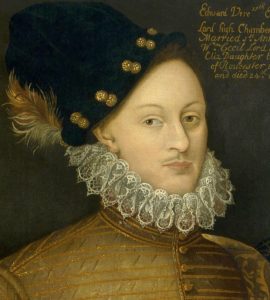
History has left us many clues indicating that Edward de Vere, 17th Earl of Oxford (1550–1604), wrote plays and poetry under the pen name “William Shakespeare.” Many people believe these clues, taken together, add up to a very strong case for Oxford as the true author of Hamlet, King Lear, the Sonnets, and other works traditionally attributed to the man from Stratford. Following are some of the main reasons for thinking Oxford was Shakespeare.
#1. Hidden Writer
Edward de Vere (Oxford) was known during his lifetime as a secret writer who did not allow his works to be published under his name. In 1589, the anonymous author of The Arte of English Poesie stated: “I know very many notable gentlemen in the court that have written commendably and suppressed it … or else suffered it to be published without their own names to it, as if it were a discredit for a gentleman to seem learned and to show himself amorous of any good art.” This 1589 book also referred to “courtly makers, noblemen … who have written excellently well, as it would appear if their doings could be found out and made public with the rest. Of which number is first that noble gentleman Edward Earl of Oxford …” (emphases added). Francis Meres said in 1598 that Oxford was one of the best writers of comedy. Yet no comedies have come down to us under his name.

#2. “Shakespeare” as a Pseudonym
In a 1578 Latin oration, Gabriel Harvey said of Oxford, “vultus tela vibrat,” which may be translated as “thy countenance shakes spears.” This may have been an inspiration for the later use of “Shakespeare” as a pen name. Pseudonyms were so common in the Elizabethan Era (the “Golden Age” of pseudonyms), that almost every writer used one at one time or another. Archer Taylor and Frederic J. Mosher, in their seminal book on pseudonymous writings, The Bibliographical History of Anonyma and Pseudonyma (University of Chicago Press, 1951), stated: “In the sixteenth and seventeenth centuries, the Golden Age of pseudonyms, almost every writer used a pseudonym at some time or other during his career.”
Pseudonyms were important because a person could be punished for saying things that displeased the authorities. For example, a man with the sadly fitting name of John Stubbs had his hand cut off because he wrote that Queen Elizabeth I was too old to marry. People in the nobility had an additional reason for hiding their identities if they wrote poetry (which was considered frivolous) or plays for the public stage (which were considered beneath a nobleman’s dignity). See quotations above from The Arte of English Poesie (1589).
“Shakespeare,” as a pen name, could be a reference to Athena, the Greek goddess of wisdom who came to be viewed during the Renaissance as a patron of the arts and learning. She is often depicted shaking a spear. Pseudonyms were used because writings that offended the authorities could subject an author to punishment. Also, where the nobility were concerned, it was considered beneath their dignity to publish poetry, which was deemed frivolous, or plays for the public theatres, which were scandalous places where thievery, prostitution, and gambling occurred.














Very interesting.